A rider who runs one Packtalk Bold on two helmets eventually faces the same purchase from two directions: a whole second unit, or a second mount kit. Cardo sells the Bold 2nd Helmet JBL kit for the second path, and at 116.96 it is the middle rung of the three kit pages the brand keeps live.
The choice is harder than the price gap suggests, because the listing makes you work for the one fact that decides everything.
Compatibility does not sit in the title or the bullets here. It sits inside the Model Name row of the spec table, and it matters: two of the ten buyers who left text on this record ordered the kit for a Packtalk Pro and found the helmet-side connector does not fit.
What follows walks the model check first, then the owner record, the spec table that wraps a passive wired kit in Bluetooth and battery rows, and the price case against buying a second whole unit. The kit only makes sense if the radio you already own is a Bold.
The short version. The Bold 2nd Helmet JBL kit is a passive second-helmet set for Cardo's Packtalk Bold: two 40mm JBL speakers, a boom microphone with a foam windscreen, a mounting clip and hook-and-loop pads, and no radio or battery of its own.
At 116.96 it sits between the base PACKTALK kit at 99.95 and the PRO/EDGE kit at 125.96, and all three prices buy hardware with nothing to pair on its own.
On our intercom comparison table the kit prices in the pricier third of everything we track, and the table counts it per rider like a full headset when it really serves one helmet's ears.
What the Bold kit is, and what it is not
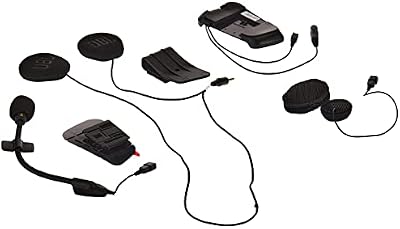
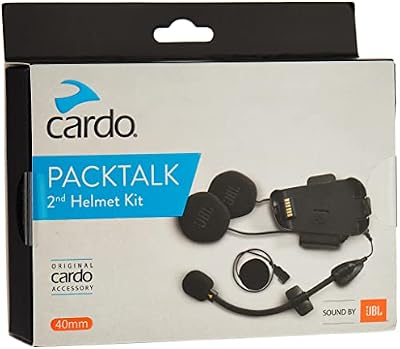
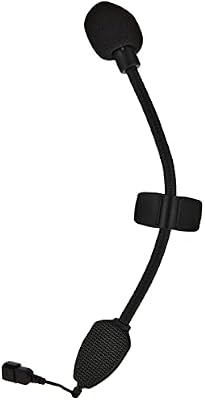
The box is a second helmet's worth of audio hardware for a Packtalk Bold. Two 40mm speakers carrying JBL sound technology, a boom microphone with a foam windscreen, a clamp-style mounting clip with an adhesive base, hook-and-loop pads for the drivers, and an inline volume module on the cable. Cardo lists the assembly at 5.9 ounces and connects it to the radio through a proprietary multi-pin connector.
What it leaves out matters just as much. There's no battery inside, no Bluetooth radio, no firmware, and nothing that charges. Every electronic capability the page hints at lives in the Bold the kit plugs into, and the speakers and microphone are dumb parts between the rider's head and that radio.
The model check is the whole purchase
Cardo prints the compatibility warning where few buyers read, inside the Model Name row of the spec table: Packtalk 2nd Helmet JBL kit, then in parentheses, will not fit Packtalk Edge, Outdoor, Neo or Custom. A highlight row adds Pro to the exclusion list, and a Compatibility Restrictions row repeats both. The title and the four feature bullets never mention the limits at all.
Two buyers have already paid for that miss. One ordered the kit for a Packtalk Pro in May 2025 and left a one-star account saying the helmet-side connector does not fit the Pro design.
Another ordered prematurely the following month, called the fix easy, and bought the right parts from Cardo's own website. The exclusion list is not theoretical on this record.
The family decode is simple once the three kits sit side by side. The base PACKTALK kit we covered in our PACKTALK 2nd helmet kit review excludes the Edge, Pro, Neo and Edge ORV lines. This Bold kit covers the Bold generation.
The second-helmet kit for the flagships covers the Pro and the Edge, and our review of that kit walks the box in detail. The helmet-side connector is what differs between generations, which is why the wrong kit fails on arrival rather than in pairing.
One availability note belongs here. Cardo also sells a Bold bundle, radio and kit together, under a different listing, and that page had no buy box on the day we checked. That gap is how our Packtalk SE review ended up describing the Bold kit as unavailable while this kit-only page sat in stock. Two listings, one accessory, and the kit-only page is the live rung.
What owners say, and what stays unmeasured
The pool under this kit is small in text even though 262 ratings sit behind the average. Ten recent texts, all confirmed purchases, and only one of them has earned a helpful vote.
That voted text comes from a repeat buyer on a third kit, positive throughout: JBL speakers, solid mounting, well designed. Another long-term owner compares generations directly and says they have run three Bolds plus a Pro, and that the older Bolds wear better in fitment, buttons and mounting.
The split the 45mm set's record carries exists here in miniature. One owner who moved this kit into place alongside a stock Packtalk setup reports hearing no difference between the two, and calls the kit a good deal for multi-helmet use because the radio they already own does the work.
No text on this kit runs the back-to-back comparison with sound profiles on and off that one owner did on the 45mm set, so the sound question stays open.
The mount draws more comment than the sound. Another owner warns that new helmets are unlikely to accept the original-style clip, and a third bought the kit just for the mount, calling it a good way to add a mount without buying a whole set. One kit arrived missing an ear foam, which is the only quality complaint on the record.
No text covers durability or rain. No owner has described how the kit holds up across seasons, and none reports wet-weather behavior, so we leave those questions open rather than guess at answers.
The spec table dresses a passive kit in radio features
The rows that describe electronics are the ones to skip. Headphone Jack reads 3.5 mm Jack, Wireless (Bluetooth) on a wired kit.
Connectivity Technology lists Bluetooth and USB. A Water Resistance Level row claims a rating for parts with no electronics to damage. Sensitivity reads 6.4 foot_ounces, a weight unit misfiled as a sensitivity figure, and Item Type Name reads SPORT_HELMET on a box of speakers and a microphone.
One row is honest by accident. Noise Control reads None, which is exactly right for a passive kit, and it sits beside a Sound Technology row naming JBL that describes the radio the kit feeds rather than anything in the box.
The real specs are the physical ones. 40mm drivers, a 20Hz to 20,000Hz frequency band, plastic enclosures, and the multi-pin connector.
On what 40mm means in practice, the physics is unglamorous: a dynamic driver needs an enclosed volume of air or a baffle to reproduce low frequencies, and a helmet interior has no enclosure, so in-helmet speakers live on midrange and on how close the driver sits to the ear. JBL tuning shapes what's there. It does not put a cabinet in the shell.
Price it against a second radio, not against the other kits
The comparison that matters for a two-helmet Bold owner is against a whole second Bold, which costs well over twice this kit's price. Against that baseline the kit is the cheap half of a two-helmet setup, and one owner states the case plainly: the radio already on the first helmet does the work.
The kit ladder prices out like this. The speakers-only 45mm audio set sits at 98.95 and carries no microphone. This Bold kit adds the boom mic and the mount for 116.96.
The Pro and Edge rung, the flagship kit, runs 125.96. On our comparison table every one of these accessory rows prices per rider like a full two-rider headset, which flatters none of them, and this kit sits in the pricier third of everything we track. That's the honest value position: the kit earns its price only when a Bold worth pairing already rides on the first helmet.
Common questions about the Bold 2nd Helmet JBL kit
Does it work with a Packtalk Pro?
No, and the record is unusually clear. Two buyers have ordered this kit for a Pro and found the helmet-side connector does not fit the Pro design. The flagship kit is the rung Cardo builds for the Pro and the Edge.
Does it work with a Packtalk SE?
The SE sits in the Bold generation, and the kit's exclusion list names Edge, Outdoor, Neo and Custom without mentioning the SE. No text on the kit's record documents an SE install, so we say only what the listing and the generation suggest, and nothing more.
Can one radio serve two helmets?
Yes, and that's the kit's whole purpose. Mount a kit in each helmet and move the Bold between them. One owner's account describes exactly that across multiple helmets, with the caveat that newer shells may need the adhesive base rather than the original-style clip.
Is the sound better than the stock speakers?
The record can't say. No owner has run the back-to-back comparison on this kit, and one owner heard no difference against stock. Placement decides more than branding inside a helmet, so seat the drivers square to the ear before judging the upgrade.
What if my helmet has a thick rim?
Thick rims are the case the clip fails on, per the owner warning on this record. The fallback documented on the PRO/EDGE kit record is the stick-on mount with a 3M-style adhesion promoter, and the catch there is one-shot placement, so measure twice before pressing it down.