Budget open-face helmets fail in a predictable place: the fit. The shells arrive intact, the visors work, and then the size inside the box runs a size off what you've measured. Our VEVOR open-face review found six of ten owner texts describing exactly that failure, and the CARTMAN record splits both ways.
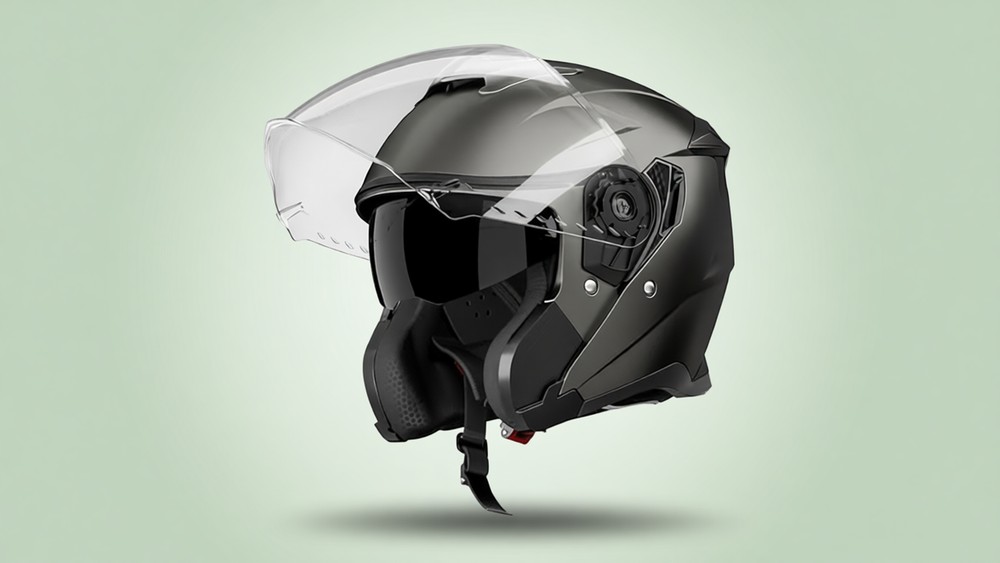
One helmet in our data runs against that pattern: the ANYPASS AP-836 open face, and the exception is the story. Its owners, when they wrote about fit, called it true to the chart and comfortable on long rides, and one fifty-year rider reports he has owned many helmets but none that fit him better.
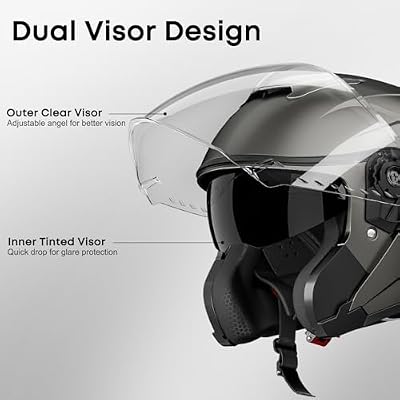
The dual-visor setup, a clear outer shield over a tinted one that pulls down inside, draws the same kind of praise: smooth running from the 200-mile owner, easiest shield removal another has tried across four helmets.
At a checked price of 53.19 the listing has come down about a fifth below our table row, which moves it from the pricier third of the open-face class toward its cheaper half. The rating holds at 4.5 across 69 buyers, steady while the count grows.
Where the price sits now
Our helmet table still carries the recorded row at 66.49, which puts this lid 8th of the 11 open-face helmets we track, the pricier third of a small class, and close to the middle of all 252 helmets. A checked price this month reads 53.19, about a fifth lower, and at that figure the AP-836 would slot between the Oumurs and VCAN rungs, into the cheaper half of its class.
The live Amazon listing is where the current figure lives, and our helmet comparison table shows where every rung sits against it. Price moves on budget listings are common, and a fifth off a mid-table lid is the kind of move that changes a buying decision.
The same-price alternative
One rung sits at almost exactly the checked figure: the VCAN V85C 3/4 open face in our data, also DOT-claimed, also without a rating on record in our row. Between the two, the AP-836's case rests on its owner record rather than its spec sheet, because the spec sheets in this class read much the same: ABS shell, EPS liner, a visor, a quick-release strap.
A fit record that runs against the class
The budget open-face class fails on sizing more than on anything else. The VEVOR MD-207 put six of ten owner texts inside that failure mode, two of them ending in returns, and our CARTMAN open-face review found the record splitting both ways. A buyer ordering blind in this class has been gambling on a tape measure.
The AP-836 record reads differently. One four-star owner calls it true to the sizing chart. A five-star owner says it fits great and looks good.
The fifty-year rider, who has replaced helmets every four years across five decades of riding, reports the fit and finish run as good as a popular brand he bought in the early eighties. The one size note in the record is mild: an owner found it runs slightly on the small side, which is a caution, not the class-typical failure.
The listing sizes run medium at 57-58cm, large at 59-60cm and extra large at 61-62cm around the head. Nobody in the record reports ordering two sizes up, which is the instruction our VEVOR review ended on. If you measure your head first and match the chart, the record says this lid arrives as charted.
The dual visor, in owners' hands
The feature that separates this listing from plain 3/4 shells is the second visor. The outer clear shield blocks wind and debris, and a tinted visor retracts inside the shell, so a rider moving from open road into shade drops it without swapping glasses. Budget listings have started copying the layout, and our CARTMAN review covers one, but the AP-836 record is unusually specific about how the setup behaves in use.
The 200-mile owner reports both visors operate smoothly and says the external shield comes off so easily he cleans it off the helmet rather than on it. Another owner confirms the face shield moves easily and adds that the helmet is eyeglass friendly, more so than his full-face modular, which matters to the many riders who wear glasses under a visor.
One worry sits on the record: one owner notes that a replacement shield might be tricky.
No parts page or spare-shield listing exists on record for the AP-836 family. The outer shield is the consumable part of any open-face helmet, and at this price the honest assumption is that a deep scratch means shopping for a whole new lid rather than a spare part.
DOT on the label, and what the shell holds
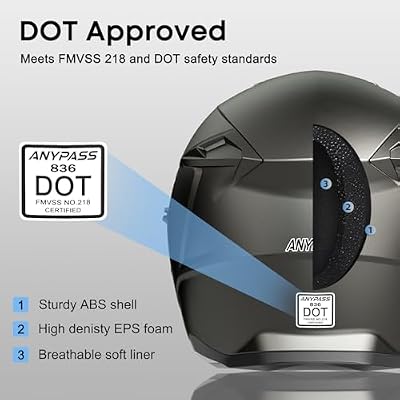
The listing bullets name FMVSS 218 alongside DOT, which is more specific than the bare DOT Approved claim our VEVOR and CARTMAN reviews found on their titles. The specifics matter less than they look. DOT helmet approval in the United States is self-certified by the maker: the maker tests against the standard and attests to it, no independent test report ships in the box, and the paperwork lives with ANYPASS either way.
What the shell holds is the standard budget build done without obvious corners cut: a high-impact ABS shell over multi-density EPS foam, removable and washable moisture-wicking pads, a quick-release buckle sized for one-handed use with gloves on, and top vents that work with the open 3/4 shell to move air. Nobody in the record reports wind noise complaints, which is a small point in the AP-836's favor at city speeds.
Who should skip it
The limits are the category's limits. A 3/4 shell leaves the chin and jaw uncovered, so aggressive riding, highway speeds and cold-weather touring all argue for a full-face instead. The AP-836 makes sense for commuters, scooter and cruiser riders, and ebike riders moving at city speeds in warm weather, which is the audience its own bullets address.
Two caveats belong next to the praise. How the lid holds up past one owner's 200 miles is untested, and another owner says it directly: time will tell. What one owner says about helmets three times the price, that it runs as good as any of them, is his read and not ours, though nothing in the record argues with it.
What we can say from our data is narrower and more useful: the fit record is the exception in this class, the price has moved in the buyer's favor, and the rating has held steady while the count grew. Browse the rest of the field in the helmet table, and more open-face breakdowns in the review archive.
Frequently Asked Questions
Does the ANYPASS AP-836 run true to size?
The record says yes, with one mild exception. Owners call it true to the sizing chart, and one reports it runs slightly small, which is a caution toward the larger size if you sit between two. Nobody in the record needed to order two sizes up, unlike the budget open-face norm in our data.
Is it actually DOT certified?
The bullets name FMVSS 218 and DOT, but DOT helmet approval in the United States is self-certified by the maker, so the proof lives with ANYPASS and no test report ships with the box. A buyer who wants the claim checked has to ask the maker.
Can you wear glasses with it?
One owner reports yes, and says the helmet is more eyeglass friendly than his full-face modular. The retractable inner visor reduces the need for separate sunglasses, which is part of the same answer.
What about replacement shields?
That is the record's open question. One owner worries a replacement shield might be tricky, and no parts page or spare-shield listing exists on record. Treat the outer shield as a consumable and assume a badly scratched one means a new helmet.
How does it compare at the price?
At the checked figure it sits in the cheaper half of our open-face class, level with the VCAN V85C rung and below the LS2 and HJC premium rungs by a wide margin. The case for it over its near-neighbors rests on the owner record: a fit that matches the chart, a dual-visor setup owners describe in detail, and a rating that has held at 4.5 while the count grew.