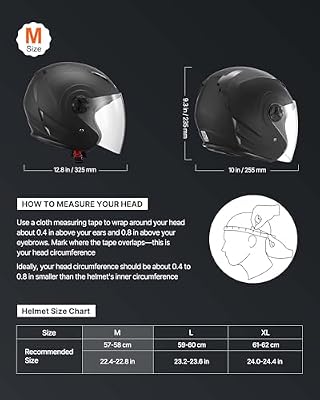
The cheapest open-face helmets carry a specific kind of risk. Shell quality usually isn't the problem, and the finish usually isn't either. Then the box arrives, and the size inside it belongs to a different head than the one you measured.
Budget helmet listings are full of returns that had nothing to do with how the helmet is made.
The VEVOR MD-207 sits near the bottom of our helmet table on price, and its review record splits exactly along that line. Riders who measured their heads and ordered well above their usual size are happy with what they got. Buyers who stuck with their normal size wrote six of the ten texts, and every one of them is about the same problem.
This review walks through what the sizing record actually says, what sits behind the DOT Approved claim on the title, and what the happy owners praise that you can check at your own doorstep.
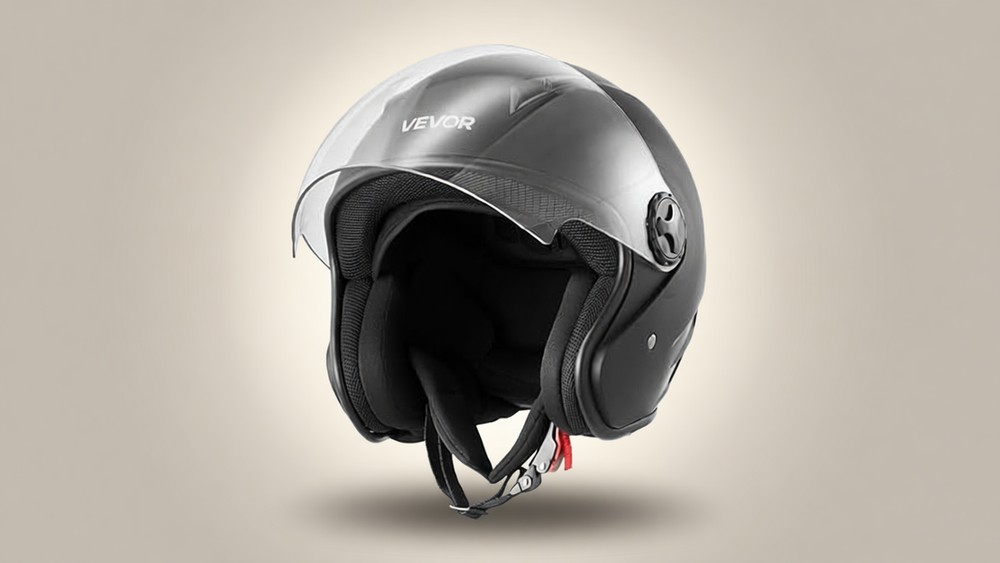
A 29.90 open face whose size chart argues with its buyers
The VEVOR MD-207 is a 3/4 open face with an ABS shell, a clear visor and a ratchet closure, and at a checked price of 29.90 it sits in the cheapest fifth of the 257 helmets we track.
The rating is 3.9 from 308 owners, and the star spread is wide at both ends, with 54 percent five-star and 12 percent one-star. Ten owners left text, and the record divides cleanly: the shell, the weight and the visor get real praise, and six of the ten texts describe a sizing problem.
Two of those ended in returns. That is the trade this listing makes: one of the lowest prices in the category, and a size chart you cannot trust on the first order. The rest of the comparison lives in our helmet table, where the live price and the exact price position render next to everything else we track.
Six texts, and every one of them is about size
Most of the critical texts describe the same failure from different angles. One owner returned a large because it was too tight. Another reports their usual XL did not fit at all, and they returned both helmets they ordered.
One text says simply that the helmet was too small, and leaves it there. A fourth owner measured their head twice, came out extra large both times, and reports that a full-face XL had already squeezed them, while this 3/4 model nearly took their ears off. That helmet now fits their wife instead.
The two most useful texts come from owners who did the work. One ordered a size up on the advice of earlier reviewers, found the large still too small for a head at the upper end of medium, and concluded they should have ordered the XL.
The other, in the helpful-sort lead, measured 22 inches around the head, followed the same advice, and reports they would buy again. Between them, the record supports one instruction: measure your head in inches, expect to go about two sizes above your usual, and do not order your hat size.
One verified one-star goes further and claims the medium, large and XL are all the same shell at roughly an XXS. Nothing else in the record backs that up, and the successful size-ups argue against it, so it stays one owner's account rather than a finding. The counterweight on the other side is a four-star owner who describes themselves as having a big dome and says this helmet fits great.
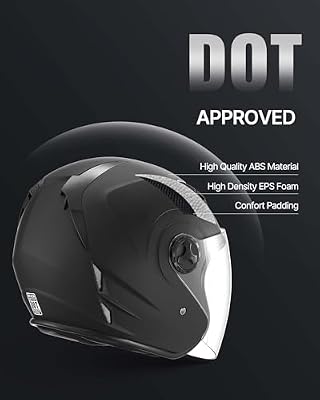
DOT Approved on the label, and nothing to check it against
The title and the product-type row in the details table both say DOT Approved. The details table carries no certificate row, no FMVSS 218 mention, and nothing else behind the words.
DOT certification for motorcycle helmets in the United States is manufacturer self-certification: the maker tests against the standard and attests to it, so the paperwork lives with VEVOR rather than on any listing page. None of the ten reviewers mentions the certification either, so the record offers no corroboration in either direction. The claim is checkable with the maker, not with the page.
One verified three-star tries to describe the build and writes that it is Styrofoam, not polystyrene, and calls it a bicycle helmet. That reasoning does not hold up. The listing's shell material is ABS, and a polystyrene foam liner under a plastic shell is the standard construction across motorcycle helmets, the source above included.
What the text actually measures is an impression of cheapness, and that impression is worth having on the record without endorsing the materials argument behind it.
What the happy owners actually praise
The positive texts cluster on things you can verify at the doorstep. The most detailed one, from August, calls the 3/4 design comfortable with good coverage, praises the clear visor for keeping wind off, and reports the helmet feels light on longer rides.
The October five-star confirms the fit came right once the size did, praises a chin strap with no tightness around the neck, and bought the black shell specifically to put military stickers on it. A four-star owner says the helmet looked and felt substantial, which is the one-text counter to the cheapness impression above.
Nobody reports wind noise, ventilation, visor fogging, or the detachable liner in use. Nobody mentions the DOT claim at all. And nothing in any review touches crash performance, which no buyer can test and no listing at this price demonstrates.
The praise is real, and all of it is the kind you can check in a driveway inside a return window.
Measure your head in inches, then order two sizes up
The decision this helmet forces is narrower than most. If your budget sits under 30 and you want a 3/4 open face, this is one of the cheapest ways to get one, and the owners who measured first ended up among the happiest people in the record.
The box holds the helmet and a user manual, nothing else, and the listing family covers medium and large variants of the same shell, so the size you need exists if you order far enough up.
If you are between sizes, or you need the fit to be right on the first delivery, the record argues against this one: six of ten texts describe a sizing failure, and two of those describe a return.
A budget helmet sibling with a calmer fit record exists in our cartman open face review, and the full price-sorted field is in the helmet table. The low price does not cost you much, but it does ask you to be your own fit technician.
Frequently Asked Questions
Does the VEVOR MD-207 run true to size?
No. Six of the ten review texts describe a sizing problem, and the strongest single account calls it at least two sizes. One owner measured extra large twice and still found this 3/4 model nearly unwearable, and the buyers who ended up happy are the ones who measured their heads in inches and ordered well above their usual size.
Is this helmet actually DOT certified?
The title says DOT Approved, and the details table carries no certificate row to back it. DOT helmet certification in the United States is manufacturer self-certification against FMVSS 218, so the proof lives with VEVOR. No reviewer mentions it either way.
Is the lining really just styrofoam?
One owner says so, but the reasoning does not hold: the listed shell material is ABS, and a polystyrene foam impact liner under a plastic shell is standard construction for motorcycle helmets. Treat the text as an impression of cheapness rather than a materials fact.
What do owners actually praise?
The chin strap, the clear visor, the light weight and the look of the shell, plus the fit once the right size arrives. All of those are things you can check at delivery, which is the right kind of praise for a helmet in this price class.
Is it worth 29.90?
On price it sits in the cheapest fifth of our helmet table, and the shell gets called substantial even by a critical owner. The cost is a sizing record that put two of ten buyers through a return. If a tape measure and a return window suit you, the price is real.