The German style half helmet might be the most honest product category on two wheels. Nobody buys one for protection statistics or for quiet. They buy it because they want to look like a dispatch rider from 1943, and they want to feel the air on their face while they do it.
That honesty is exactly why the details deserve a harder look than a premium lid would get. When the whole pitch is a silhouette, a pair of goggles, and a low price, the only evidence a buyer has is the owner record and the small print on the spec table, and on the ZGMZLBBD those two sources tell different stories.
This article walks through that record. The goggles come first, because that is where the listing and the owners disagree most. Then the DOT label, the sizing reports, the wind, and the box contents, because the box matters more here than the listing admits.
The short verdict: the ZGMZLBBD German style half helmet is a good-looking shell at 4.4 stars from 119 ratings, and its price sits in the cheapest fifth of the 257 helmets in our comparison table.
The record is candid about what that buys. You get the look, the light weight, and a fit that some owners love, and you also get four separate goggle complaints, a face mask the owners would rather not have, and a warranty row that reads No Warranty.
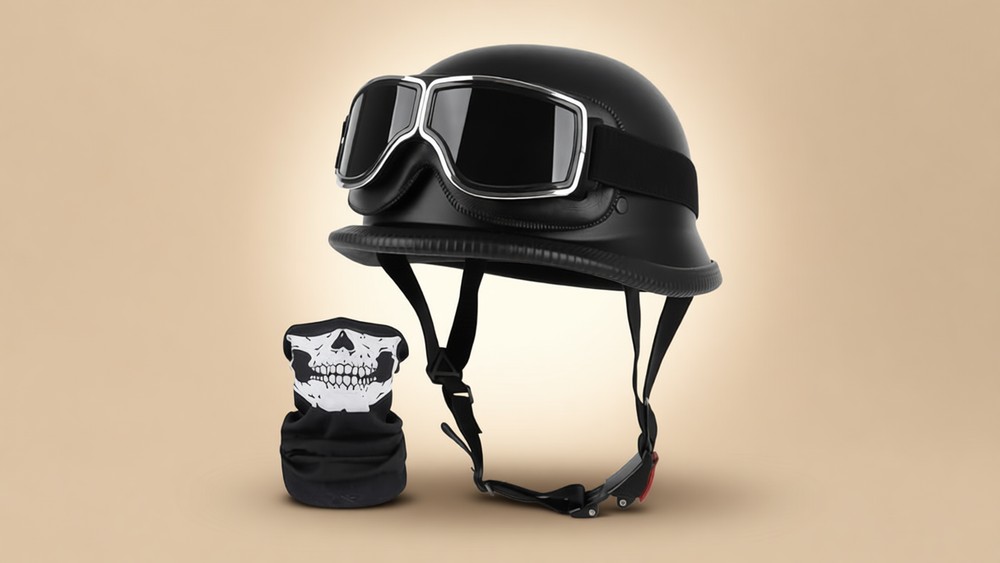
Goggles are the whole pitch, and the record splits on them
The listing leads with the goggles. Bullet three promises removable goggles that block wind, sand, and the dazzling sun, and the photos make them the second half of the sale.
The owners split. One likes them outright and says the helmet fits well, and that same owner delivers the line that recurs through the record about the face mask, which they could have done without.
The problems come from four separate owners, and they describe four separate failures. The most detailed account comes from an owner who reports the goggles are tinted with no way to remove the tint, so they cannot be used at night, and that the silver edging fell off while the goggles were coming out of the box. That owner bought clear goggles separately and suggests you plan for the same.
A second owner found the plastic not fully attached and had to snap it back into place. A third recommends super glue because the clear plastic trim may fall out. A fourth is the bluntest: the goggles are cheap and the face mask is worth next to nothing.
Four failures in a 13-text record is a pattern, not bad luck. It does not make the helmet a bad buy, because the shell is the part you cannot replace, and goggles are the part you can. But it does mean the goggle bundle should be treated as a bonus with a short lifespan, not a feature you are paying for.
What the DOT label means here
The first bullet says the helmet meets the DOT FMVSS-218 safety standard and is approved for all road traffic in the United States. That sentence names one standard twice, which is worth knowing before it sounds like two certificates.
FMVSS 218 is the DOT standard. They are the same document, so the bullet is one requirement written two ways, and DOT compliance in the United States is a self-certification.
The manufacturer tests its own helmet and attests to the result. Nobody at an independent lab touches the helmet before it ships, and the regulator's checks happen later, on helmets bought on the open market. (Wikipedia, Motorcycle helmet)
I bring this up not to alarm anyone, because every budget half shell on the market carries the same kind of label. It matters here for a different reason: this record contains no crash account at all. Across 41 ratings, not one owner describes what this helmet did in a fall, so the record neither supports nor contradicts the certification claim.
That is normal for a helmet this new and this cheap, and it is the trade every buyer at this price accepts. It just means the word approved on the box is doing less work than a buyer might hope, and the reasons to buy this helmet should come from the fit and the look, not from the safety copy.
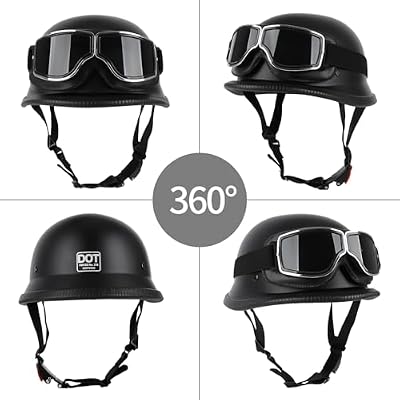
Fit, Sizing, and the Ear Plug Advice
Half helmets fit differently from full faces, and this record will not give you one answer, so I will give you all of them.
One Large wearer reports it fit perfectly and is glad they did not oversize, describing a snug fit like it is supposed to be.
Another owner measured their head, ordered to the measurement, and still thinks they should have gone up a size, though they kept it and like how it looks. A third says order one size bigger, flat out. A fourth adds a shape note: the helmet best fits round heads.
Counted honestly, that is one vote for true to size, two votes toward sizing up, and one caveat about head shape. The spec chart on the listing runs this variant from a Large at 59 to 60 cm, so measure your head before you order and read the two up-votes as the safer bet.
The weight is the quiet win. At 1.76 pounds this is a light shell, and an owner brings it up unprompted, calling it very lightweight and good looking.
The wind is the quiet cost, and the record says it in one line. An owner who otherwise likes the helmet suggests ear plugs if you do not want to hear a lot of wind.
That is the shape talking, not a defect. A German style shell sits high on the head with an open front, so there is nothing to stop the air from reaching your ears, and nobody should expect the quiet of a full face from this category.
One more practical note comes from the same detailed goggle critic, who warns that this type of helmet catches air and will move around unless you strap it tight. Between the two, plan on a snug strap and hearing the ride.
The box, the mask, and the missing warranty
The spec table is where the listing gets careless, and the details are worth reading before you order.
Included Components reads Mask, one word, which matches the owners more than the bullets do. Two of them go out of their way to dismiss the face mask, one saying it should have been left out and another valuing it at almost nothing. Yet the goggles that headline the listing appear nowhere in the included-components row.
The Warranty Description row reads No Warranty. That is the sentence I would weight most heavily in this whole record, because a helmet with a documented goggle failure pattern and no stated coverage behind it is a helmet you should inspect carefully the day it arrives.
There is also template junk in the table. The Outer Material row reads paper, which no helmet is made of. That does not affect the shell on your head, but it tells you how much attention went into the page itself, which is to say, not much.
Buy it for the silhouette, budget for clear goggles
So who does this suit? A rider on a cruiser, moped, or scooter who wants the retro look at one of the lowest prices in our comparison table, rides mostly below sustained highway speed, and does not mind sourcing their own eye protection.
Plan around three things. Measure your head and lean toward the larger size if you sit between sizes. Assume the tinted goggles will disappoint you at night and price a pair of clear ones into the total.
And check every piece of the box on day one, because the No Warranty row means the return window is the only safety net you get.
If the German look is the point, this shell delivers it with honest limitations and a price to match. If you want the same silhouette with more coverage, our SanQing German style half helmet review covers a sibling with a bigger rating record and its own lift-at-speed lesson.
Common Questions about the ZGMZLBBD
Do the goggles really work?
They work, with caveats the listing does not mention. One owner likes them outright and one keeps them on with a super glue fix, but the most detailed account reports a fixed tint that makes night riding impossible, edging that fell off out of the box, and a trim ring two other owners have found loose or detached. The practical reading is to treat them as a spare pair for bright days and buy clear goggles for anything else.
Is the ZGMZLBBD helmet DOT approved?
The listing claims FMVSS 218 compliance, which is what DOT means, and it names the same standard twice in one bullet. DOT is a self-certification system, so the manufacturer's word is the evidence at sale time. The owner record contains no crash account either way, so treat the label as the baseline every helmet in the class carries rather than a tested result.
Does it run small?
The record splits. One Large wearer is glad they did not oversize, one measured head still wanted the next size up, and one says order a size bigger with no hedging. Measure against the chart, and if you sit between sizes, the two up-votes make the larger size the safer pick.
What is the face mask like?
Two owners dismiss it in passing, one saying it should never have been included and another valuing it at almost nothing. The spec table's own included-components row lists the mask and not the goggles, which tells you what the manufacturer expects people to keep. Nobody praises it in the entire record.
Is there a warranty?
The Warranty Description row in the spec table reads No Warranty. Combined with a goggle failure pattern that four owners describe, that makes the day-one inspection the important step in this purchase, because after the return window closes there is no stated coverage of any kind.