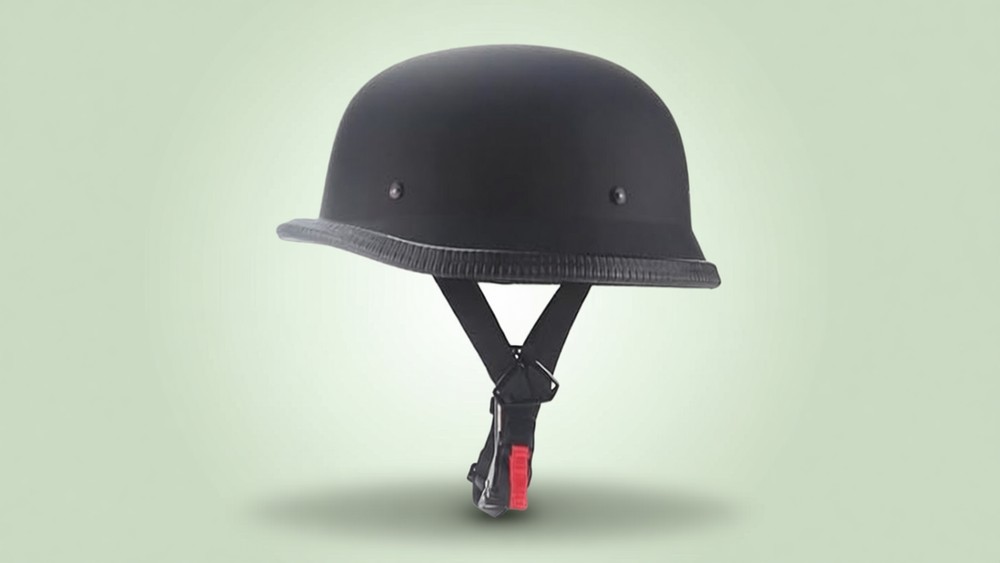
A German style half helmet is a styling decision first and a safety decision second.
The shell is short, the chin is bare, and the whole look comes from an era when dispatch riders wore canvas and shellac. The SanQing WLT-307 sells that look at one of the lowest prices in our motorcycle helmet comparison table, and it sells in numbers, which is why I think it deserves a harder look than a premium lid would get.
Cheap gear hides its compromises in small print and in an average star rating that smooths everything flat.
Three of the eleven owners who wrote anything describe the helmet rising off their head at speed. That's not a small detail, because a helmet that moves at highway pace isn't sitting where it should in a slide.
This article walks through the lift reports first, then the certification claims printed on the box, the fit and the buckle, and the trade-off the buyers describe in their own words.
The short verdict: the SanQing German style half helmet is a good-looking, light shell at 4.4 stars from 661 ratings, and the price puts it in the cheapest fifth of the 257 helmets we track.
The record is honest about what that buys. You get the silhouette and the airflow, and you also get three independent reports of lift at speed, a buckle with no warranty behind it, and a certification line on the box that names the same standard twice.
Three owners, one lift problem
Start with the pattern, because nothing on the listing warns you about it.
One owner, an experienced rider who moved over from full-face helmets, reports that the adjustment straps loosen up when riding at higher speeds from wind drag.
A second owner says the helmet wants to lift off the head at 75 mph unless the strap is cranked really tight, and mentions cutting the chin cup off before even trying the helmet on. A third keeps it short: it might lift up a bit at high speeds.
Three of eleven texts is not most buyers. It's also not one unlucky purchase. The German silhouette has a short shell with an open front, so air has somewhere to get under it, and the shape gives the wind less to hold onto at the back.
Nothing in the listing's bullets talks about aerodynamics, which means the marketing never has to argue with the physics.
What makes the reports usable rather than alarming is that all three owners still kept the helmet. The full-face convert calls it lightweight and well ventilated and likes the price. The 75 mph owner praises how it sits on the head at normal pace.
I read that as a helmet that behaves around town and starts arguing with the wind above roughly highway speed, and that is exactly the information a buyer needs before choosing it over a 3/4 shell.
What the DOT label on the box actually means
The listing says the helmet meets or exceeds FMVSS-218, DOT, and ECE-2205 safety standards. That sentence needs unpacking, because it sounds like three certificates and it's closer to one and a half.
FMVSS 218 is the DOT standard. They are the same document, so naming both is one requirement written twice, and helmets sold as DOT-compliant in the United States are self-certified by the manufacturer. Nobody tests the helmet before it ships.
The regulator's check happens after the fact, when helmets get bought on the open market and tested in a lab. Wikipedia's motorcycle helmet article covers how this works and how different it is from the European system, where a helmet has to pass type-testing at an approved lab before it can carry an ECE mark. (Wikipedia, Motorcycle helmet)
That matters here because of the ECE-2205 claim. An ECE 22.05 mark on a half shell is rare, and at this price I would want to see the E-mark label on the shell before believing it. No photo on the listing shows one, and no owner mentions finding one.
Treat the DOT claim as the real one and the ECE line as unproven marketing until someone posts the label.
None of this means the helmet is unsafe. It means the word "approved" on the box is doing less work than a buyer would hope, and that the review record, not the label, is where the evidence lives.

Fit, weight, and a buckle with no backup
The shell weighs about 1.3 pounds, which is light even for a half helmet, and the owners feel it. Three of them bring up the weight on their own, one calling it light and strong, and the full-face convert opens their review with it right after explaining the switch. If you've never worn a half shell, the closest thing I can compare it to is a thick bicycle helmet with a chin strap.
The listing's own size note says the helmet runs small and to buy according to the size chart, which runs from a 55 cm medium to a 60 cm 2XL.
I went looking for a sizing fight in the reviews and did not find one. Only one owner reports a sizing problem, and they admit ordering the wrong size and returning it. The rest of the record fits as expected.
So take the note as chart guidance rather than a warning, measure your head, and buy once.
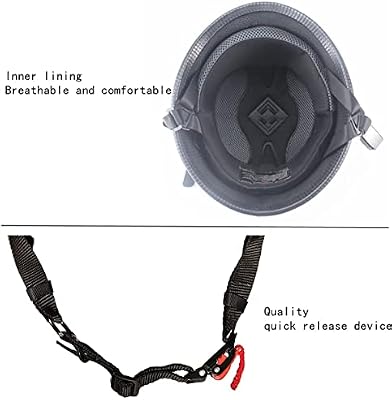
The buckle is where the cheap shows. One owner bought a replacement before a trip to Sturgis and reports that the clip broke off while adjusting it on the first ride. It's the only sub-four-star text with any substance in it, and it lands on the exact part of a helmet you cannot ride without.
Here's the part that turns a nuisance into a real risk: the warranty row in the spec table reads as a slash. There's no stated coverage at all. A helmet with a buckle that has failed once in a small record, and no stated warranty behind it, is a helmet you should check over the day it arrives, not the day of a ride.
The trade-off the buyers name themselves
The most useful sentence in the whole record comes from an owner who likes the helmet and still doubts the category. They say they are not sure how safe it is, and then put the difference between a half shell and a full face more bluntly than any marketing copy would dare.
I am not going to quote it, but I am not going to soften it either, because the underlying numbers are public. Helmets cut the risk of head injury by about 69 percent and the risk of death by about 42 percent in the research Wikipedia cites, and the type ranking riders and manufacturers generally accept puts full face first, with open-face and half styles leaving the face and jaw uncovered.
A German style helmet also has a shallower shell than a 3/4 open face, so it sits higher on the head and covers less of it. (Wikipedia, Motorcycle helmet)
Every half shell asks the same question and every buyer answers it differently. What I like about this record is that the owners answer it with their eyes open.
The full-face convert knows what they gave up. The doubtful owner said the doubt out loud in a five-star review. If you buy this helmet, do it knowing that the DOT label is a self-certification and the coverage stops at the ears.
Buy it for the look, plan for the strap
So who does the WLT-307 actually suit? A rider on a cruiser or scooter who wants the retro silhouette, rides mostly below highway speed, and has measured their head against the chart. At this price it's one of the cheapest ways into that look, and the airflow and weight are real advantages people confirm again and again.
Plan around two things. First, check the buckle and the strap adjustment on day one, because there is no stated warranty behind them and one owner has had a clip fail on a first ride.
Second, expect the lift. If your riding includes long stretches at full highway speed, a 3/4 helmet with a proper chin strap across the jaw will hold its position better, and our comparison table has plenty worth a look. I'd point a high-mileage commuter there first.
If the German look is the whole point, this is a sensible buy with honest limitations. If you were hoping the low price came with no strings, the strings are on the review page, and they're worth reading before you click buy.
Common Questions about the SanQing
Does the SanQing half helmet run small?
The listing itself says so, but the record does not back a strong warning. Only one of the eleven owners reports a sizing problem, and they ordered the wrong size to begin with. Measure your head and follow the chart, which puts a medium at 55 to 56 cm and a 2XL at 59 to 60 cm.
Is it really DOT approved?
The listing claims FMVSS 218 compliance, which is what DOT means, and DOT is a self-certification system. The same bullet also names FMVSS-218 and DOT separately and adds an ECE-2205 claim that no photo or owner has backed up. Treat the DOT statement as the claim to rely on, with the understanding that self-certified is not the same as lab tested.
Will it lift at highway speed?
Three owners describe lift or loose straps at speed, one specifically at 75 mph. All three kept the helmet, and none reports it coming off. If your rides stay in town, the reports will probably not affect you.
At sustained highway pace, keep the strap snug and expect to feel the wind working on the short shell.
What if the buckle breaks?
You're on your own as far as the listing states. The warranty row reads as a slash, and one owner has already had a clip fail during adjustment. Test the strap mechanism the day the helmet arrives, not on the roadside.