Downtube batteries are a fitment-first purchase, and 52V downtube batteries are the hard version of that problem.
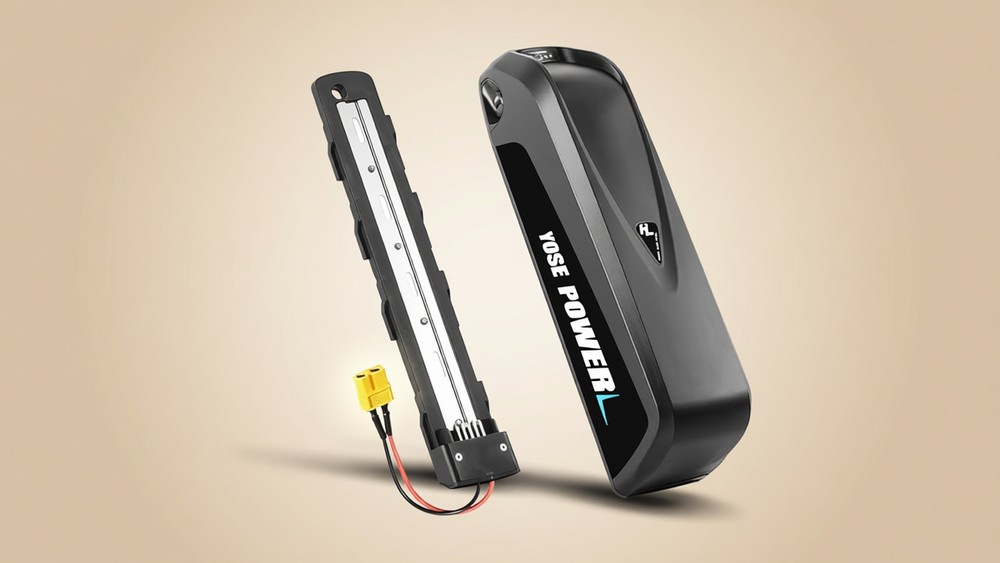
Most replacement packs at this size run 36V or 48V, so a rider whose frame expects a 52V pack has a short list to shop from. Yose Power's 52V 13Ah downtube battery was one of the few entries on that list, with a 5-pin discharge port, a key lock, and 676 watt-hours at 161.
On our comparison table that price made it the cheapest per watt-hour rung the whole Yose family listed, close to the middle of the 324-pack market. It was also the rare listing whose 1000W motor claim holds up against its own connector class, with current to spare at the top of the band.
The listing is gone as of November 2026. Amazon returns Page Not Found, and the pack never accumulated a single review, so there is no owner record and no reliability signal to pass along. Nobody got to grade it.
What survives is worth restating from the recorded data, because the 52V conversion questions this pack raised apply to every pack like it. Charger voltage, controller cutoff limits, and the fitment measurements the old article never printed all decide whether a replacement 52V downtube pack works at all.
The verdict the record supports is narrow but real. If your frame's downtube slot takes this pack's shape, voltage, and 5-pin base, this was a well-priced 52V option with an honest motor band and a proper anti-theft lock. If your slot dimensions don't match, none of the rest matters, and those dimensions were never printed anywhere in the record. That is the first thing any replacement purchase has to fix.
The pack that left without a record
The February 2026 article already steered buyers toward the spec table because there was no review base to consult. It stayed that way.
Our data row holds no rating and no review count from the day the pack listed to the day the page died, and the Page Not Found we recorded on November 2 closed the question permanently. No buyer ever graded this pack in public.
That absence changes how you should read any remaining praise for it. Seller copy and brand reputation are all that exist here, and neither is a substitute for an owner record. The honest statement is the one the old article made and this review keeps: buy a pack like this on its printed specifications and your return window, not on a reputation it never had the chance to earn.
What the recorded spec sheet holds
Start with the arithmetic: 52 volts times 13 amp-hours is 676 watt-hours. The listing priced that at 161, which works out to about 24 cents per watt-hour. On our battery comparison table that lands close to the middle of everything we track, and it was the cheapest per-unit rung the Yose family ever listed in our data.
Most of the brand's other packs run 33 to 58 cents, so the 52V downtube slot was where Yose priced to move.
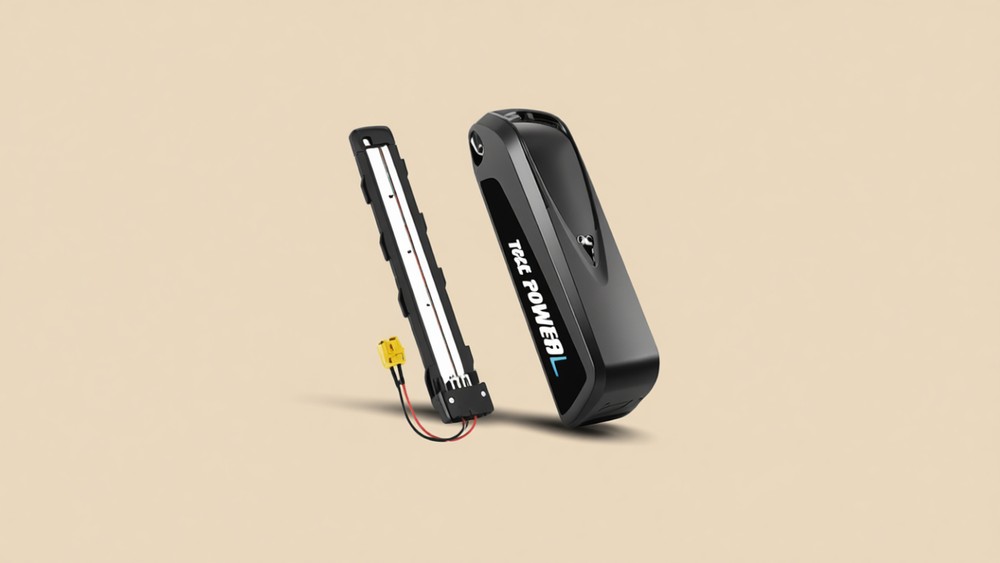
The hardware list from the recorded listing and images: a traditional downtube case, a 5-pin discharge port, a key-operated safe lock, and an LED charge indicator. The motor band covered 100W to 1000W in both 48V and 52V configurations.
The safe lock and the LED gauge
The safe lock solves a problem riders actually have. A downtube pack sits on the outside of the frame, so an unlocked one can be slid off its rail in seconds by anyone with a hand. With the key engaged, a thief has to take the whole bike or walk away empty-handed.
For anyone who locks up at a station or a store, that is the difference between carrying a battery into work and leaving it on the bike.
The LED gauge is simpler: a four-state read on remaining charge without a display or an app. It won't tell you watt-hours remaining, but it catches the empty-pack surprise before a ride starts.
The one claim that holds its own arithmetic
Listings in this market routinely advertise motor bands their own hardware cannot feed, so it's worth slowing down on the one that did. The title band ran 100W to 1000W.
At 52V, a 1000W motor draws about 19.2 amps at full draw. The 5-pin baseplate class tops out at 25 to 30A per the connector guide, which is 1300W to 1560W at this voltage. The band's top end sits inside the mount class with current to spare, and a 500W motor at about 9.6 amps never comes close to the ceiling.
That makes this pack the inverse of the pattern we keep catching in reviews, where a 1500W claim rides on a board and base that top out near 1200W. Here the claim and the connector agree, and a buyer didn't have to discount the title to make it honest.
52V versus 48V, and the check that actually matters
A 52V pack carries 14 cell groups in series against the 13 groups in a 48V pack.
Full charge is 58.8 volts against 54.6, per the em3ev 52V buyer guide. That extra charged voltage is what keeps a motor feeling stiff on long climbs, because there's more headroom before voltage sag shows up under load. At equal watt-hours it buys performance, not range.
Two compatibility checks decide whether a 52V pack works on a given bike, and the second one is the one people skip.
The first is the charger. A 48V charger terminates at 54.6V and will never finish charging a 14S pack. Any 52V pack needs a charger that terminates at 58.8V, and no charger spec was ever recorded for this listing, which is a gap a buyer had to close with the seller.
The second is the low-voltage cutoff. Most 48V controllers carry capacitors rated at 63V, so the 58.8V peak of a charged 52V pack doesn't hurt them.
The risk sits at the other end: a controller set to cut off near 39V, which is normal for a 13S pack, sits below the safe floor of a 14S pack, about 42V. Ride past that floor and you're over-discharging cells the controller was never set up to protect. Check the controller's cutoff, not just its peak tolerance, before mixing voltages.
What this means for range
Scaled from the same category anchor we use across our reviews, 676Wh is 0.70 of the pack that supports 30 to 40 throttle-only miles and 50 to 65 with light pedal assist. That puts this pack at roughly 21 to 28 miles on throttle alone and about 35 to 46 with light pedal assist.
The old article printed 22 to 35 miles in one place and 20 to 35 in another, bands that sit between the riding regimes and match neither. Both are corrected here.
The fitment gate nobody recorded
Here's the gap that outlives everything else. The old article told readers to measure their frame slot before buying, and then printed no dimensions itself. No length, no rail width, no mounting-plate drawing, no charge-port type.
For a live listing that was an incomplete review. For a dead one it's the whole problem, because the buyer who wants this exact shape now has nothing to match against except the listing photos.
So the purchase procedure for any 52V downtube replacement, this brand or another, is a four-line checklist. Measure the old pack's length and the slot's internal width.
Match the mounting rail and the 5-pin base against the pack you removed, because 4-pin and 5-pin baseplates don't interchange. Confirm your controller's low-voltage cutoff suits a 14S pack. Then buy the 58.8V charger if the box doesn't include one.
Frequently asked questions
Can you still buy this exact pack?
No. The Amazon page returns Page Not Found as of November 2026, and no successor listing has taken the slot. The tagged search is where a similar pack would surface, with the four-line checklist above as the filter.
Will a 52V pack work on my 48V bike?
Sometimes, and the deciding check is your controller's low-voltage cutoff, not its peak voltage tolerance. The 58.8V charged peak sits under the 63V rating most 48V controllers carry, but a cutoff set near 39V for a 13S pack can over-discharge a 14S pack past its 42V safe floor. Confirm the cutoff before you buy, and never count on a 48V charger to fill a 52V pack.
What charger does it need?
One that terminates at 58.8V, because 14 cells in series times 4.2 volts per cell sets the ceiling. A standard 48V charger stops at 54.6V and leaves the pack permanently undercharged. No charger spec was ever recorded for this listing, so for any similar pack, verify the charger in the box before assuming.
Is the safe lock worth wanting?
Yes, if you lock your bike in public. The lock stops the pack sliding off its rail without the key, which is the five-second theft a downtube battery invites. It is an anti-theft device, not a waterproof seal, and the lock barrel is one of the points water can reach in rain.
Yose Power's packs we've reviewed on the internal-battery side carry the same fitment-first lesson, including the 48V 11.6Ah DCH006 rung.