Range anxiety has a heavier cure than most: the Yose Power 48V 20.8Ah carries 998Wh on a rear rack, close to the practical limit for air travel rules and far past the 10Ah to 14Ah norm. Eight buyers average 4.5 stars, and their loudest complaint is the price.
Specs and Value
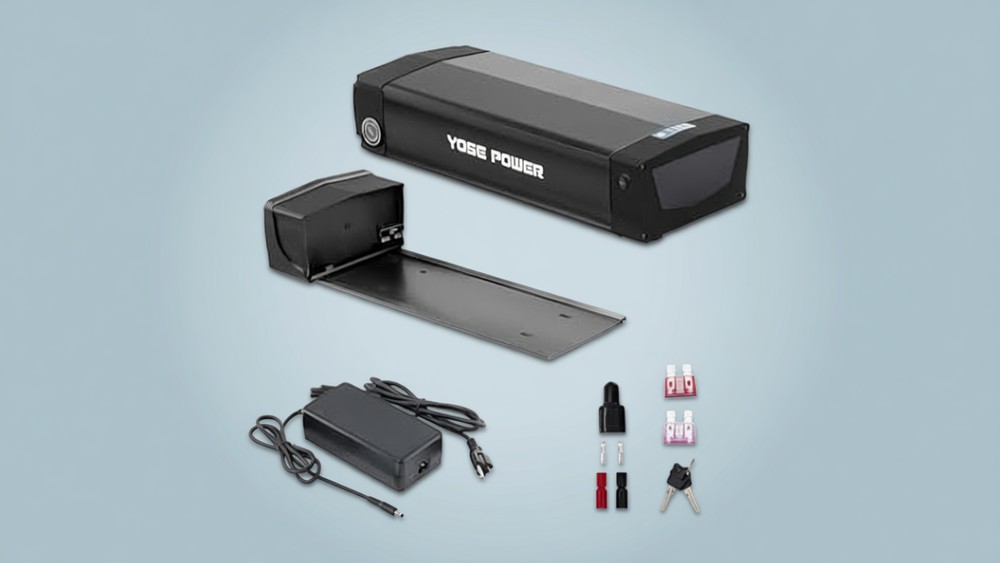
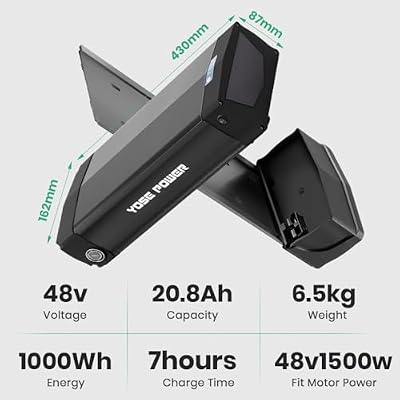
The Specs say this battery is a 48V and 20.8Ah configuration and therefore it has a total capacity of 998Wh. A kilowatt-hour in one pack means long rides between charges, and the capacity sits near the ceiling that airline rules allow for spare lithium batteries. The trade is agility for distance: the pack is heavy, and climbing feels it. If your frame is aluminum and lightly built, that mass also works the rack mounts every time you hit a pothole.
The value case is the Ah number. Standard packs top out around 10Ah to 14Ah, and the extra capacity delays the voltage sag that smaller packs hit under load. You pay a premium for it. In addition to the internal chemistry that gives you that additional capacity, you are paying for the additional housing that holds that material. Short-trip riders are paying a premium for capacity they will never drain.
Rear-Rack Mounting
As you would expect, this battery is mounted to the rear rack. That changes how your bike performs while you are riding. This pack mounts on the rear rack instead of the downtube, which changes how the bike carries its weight. Rack mounting also keeps the downtube free for a water bottle or bag, which some commuters value as much as the range. For example, the position of the mass creates instability when cornering, your bike may become twitchy. Additionally, when accelerating, the front end may lift slightly since the center of gravity is located at such a long distance behind the rear axle. Cargo bikes handle the layout well. Standard frames need a balance check.
To attach securely, you will need a heavy duty rear rack capable of supporting both the weight of the battery and vibration caused by riding. Your bike will require a direct attachment to the frame via a bolted connection. If your current rack is weak or skinny, this battery will inevitably wear it out. The listing implies compatibility with various racks, however please double-check your rack's bolt pattern prior to purchasing. As soon as it is attached to a compatible rack, it becomes an integral part of your bike's everyday behavior. Once mounted, this pack becomes part of how the bike rides.
Real-World Range and Power
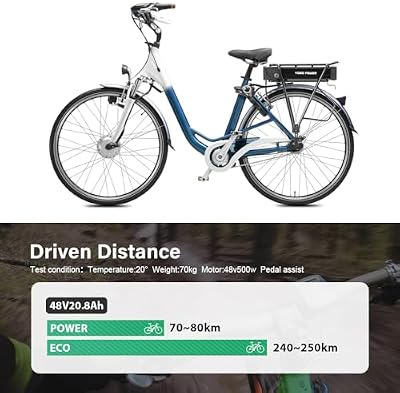
The real-world performance based upon the 998wh rating is clearly the biggest draw of this battery. The consistent 48V base voltage maintains a smooth flow of electricity to your motor throughout the ride. The 20.8Ah capacity holds speed deeper into each ride than smaller packs manage. However, regardless of your speed, the added weight of a large battery is going to consume more energy to move. If you're constantly running wide open on steep inclines, that large capacity will burn-off faster than you'd probably realize.
The power output is determined solely by the 48V design, which provides enough torque for most riders to climb inclines without grinding to a halt. The large case also gives the cells more surface area for heat dissipation, which helps on long sustained climbs. On the flip side, the increased weight of the battery causes the motor to work harder every time you accelerate/decelerate. You get all the power needed to continue riding, but at the expense of the effort needed to keep that momentum moving.
Charging and Rack Hardware
Charging a 998Wh pack is an overnight job, so plan on a routine rather than top-ups. Use the supplied charger, charge indoors at room temperature, and keep the pack out of freezing sheds. On the hardware side, a reinforced rack with a matching bolt pattern is not optional. A skinny rack under a 20.8Ah pack will flex, crack, or both, and the failure usually happens mid-ride.
What Amazon Reviewers Are Saying
Eight reviews average 4.5 stars, and the performance feedback is uniformly positive: delivered range matches the promise, with no operational complaints after install.
The overwhelming criticism from these reviewers was related to pricing. While they loved what this battery did for their rides, they felt that its price was way too high compared to similar products offered elsewhere. Eight reviews cannot say how the pack endures a year of daily use. The 4.5 average says it delivers, and the price is what keeps the review count small.
Who Should Buy This
Buy it if you commute long distances, ride backroads far from chargers, or want range worries gone entirely. At 998Wh, two full workdays of commuting can pass between charges. This battery is also best suited for users who utilize a rear-rack setup for bag space/accessory storage. Skip it on a tight budget, for short trips, or if you prize a light agile bike. And do not mount it on a weak rack: the weight and vibration will find every flaw in the hardware.
Compare it against the rest in our ebike battery comparison table, or dig through the GoMotorbikes blog.
Check the latest price on Amazon.
Frequently Asked Questions
Will This Battery Work with My 48V Motor?
If your motor and controller run on 48V, the battery is electrically compatible across the 250W to 1500W range. The catch is matching the 40A discharge to your controller's limits. Check your controller's max amp rating before you buy so the BMS isn't tripping on you mid-ride.
How Long Does a Full Charge Take?
The included 54.6V 3A charger takes around 7 hours to go from empty to full. It's not fast, but for overnight charging it's perfectly workable. If you want quicker top-ups you'd be looking at a higher amperage charger.
Is the Rear Rack Mount Easy to Install?
Generally yes, especially if your bike already has a rack. The battery sits on a holder base and locks with the included keys. The exact mounting depends on your rack design, so double check the measurements against your setup before ordering.
How Much Range Can I Actually Expect?
That depends a lot on your motor power, your weight, terrain, and how much you pedal. On a typical 750W setup, users report very long rides thanks to the 998Wh capacity. It's safe to say this is a battery built for big range, not a quick hop around town.
What Does the 40A BMS Actually Protect Against?
The BMS is designed to prevent damage caused by excessive charge levels, excessive discharge levels, excessive current flow through the cells themselves, and short circuit conditions. It prevents overcharging, over-discharging, exceeding maximum allowable sustained current, and short-circuits, with a 40A sustained discharge limit and a trip threshold around 70A for surges.
Is the Extra Cost Worth It Over Cheaper Batteries?
That's the real question, and it comes down to what you value. You're paying more per watt hour here than for some budget packs, but you're getting a known brand, a proper 40A BMS, QC testing, and the full accessory bundle. For a high-power build where you don't want to gamble on a mystery pack, a lot of riders find it worth it. You can check the current price and details on Amazon to see if it fits your budget.
The rear rack battery segment has a few strong options, and the the unit.8Ah is one of the bigger capacity plays in it. If you want to see how it stacks up against downtube and frame options from other brands, our blog has more battery breakdowns worth a read before you pull the trigger.