A replacement battery that names your exact bike should be the easy choice, and that is the promise this listing makes to Heybike Horizon and Ranger S owners.
I like named fitment in principle. Measuring a battery bay and hoping the mounting holes line up is the worst part of buying a pack online, so a listing that says Heybike on the title and again on the range card removes real work.
The case is shaped for the bike, the mount is part of the deal, and the 18-month warranty applies to the kit as well as the cells.
Then I started reading the numbers, and the easy choice got complicated. The listing prints four different cycle-life figures. Its range card claims an eco-mode distance that works out to less energy per mile than pedal assist costs.
The title says the charger is not included while a bullet promises a 7-hour full charge from a charger the box will not contain. And the entire customer record is one rating, one star, and not a written word.
The Yose Power 48V 14Ah Heybike pack sells for 389.99 with the charger left out, which works out to about 58 cents per watt-hour against our battery table, where the middle of the field sits near 26 cents. That is the premium you pay for the named case, and this review walks through whether the rest of the listing supports it.
One Rating, One Star, and Nothing Behind It
Start with the record, because it is the thinnest I have decoded in this campaign.
One global rating, one star, a histogram that reads 100% in the one-star row, and no review text anywhere on the listing page. The reviews page itself needs an Amazon sign-in to load, so for a signed-out visitor the product page is the whole story, and the story is a number without a sentence behind it.
I check ratings before specs for a reason. A single one-star rating tells you someone was unhappy enough to come back and say so, but it cannot tell you whether the pack arrived damaged, whether it did not fit, or whether the buyer expected a charger and did not read the title. Any of those is possible, and none of them is supported.
Treating that rating as a verdict on the cells would be guessing, and I do not want to guess with 389.99.
What the thin record does change is the risk math. A pack with a few hundred ratings gives you a distribution to read against the listing's claims. This one gives you nothing, so the listing's own numbers carry all the weight, and the rest of this article is about what those numbers say.
It also means the one-month prepaid return window matters more here than it would on a crowded listing, because a return is the only test drive on offer.
The Wattage the Fitment Story Never Prints
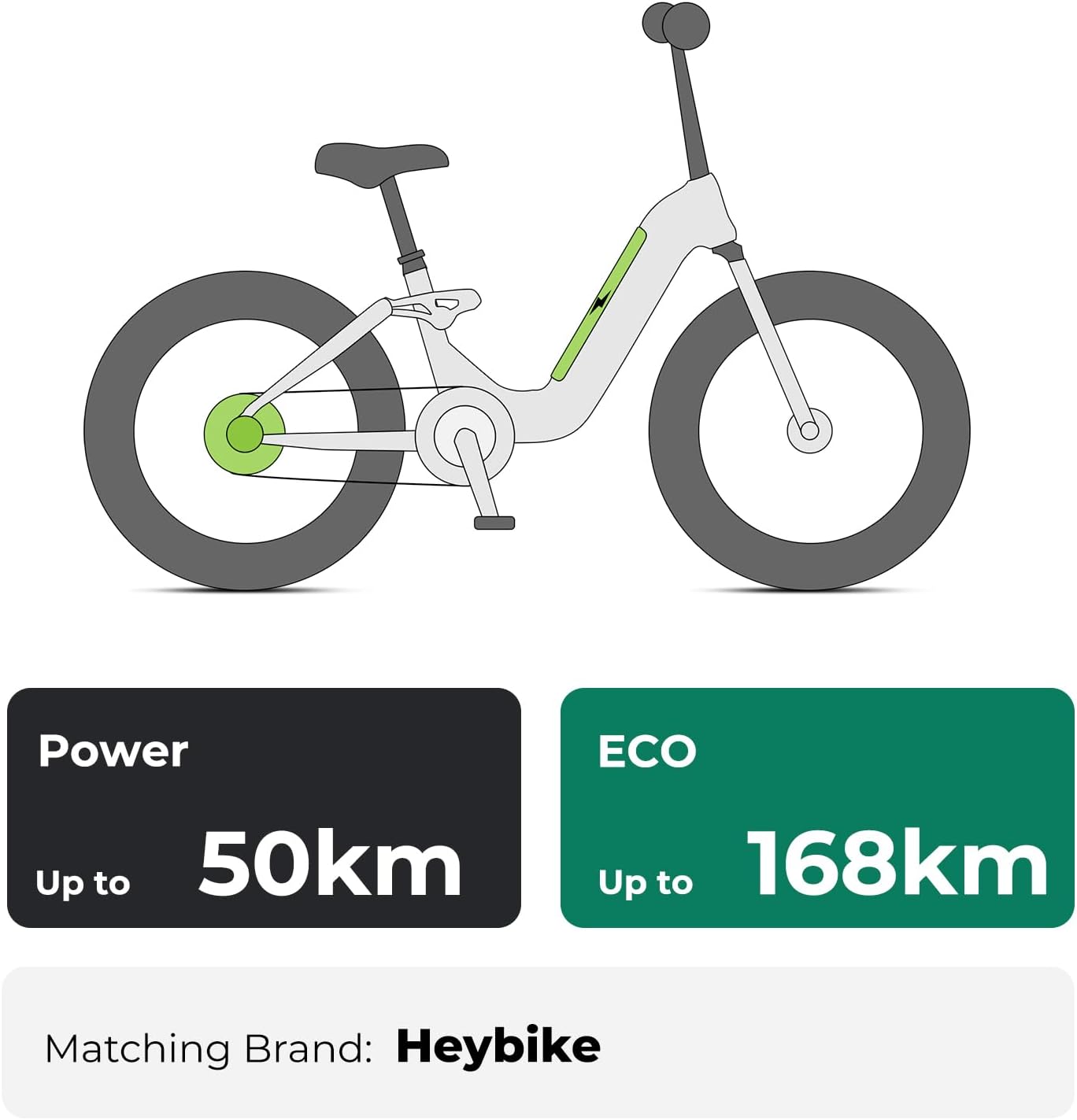
The fitment claim is the whole pitch, so I went looking for the motor it is supposed to drive. The title names the Heybike Horizon and the Ranger S. The distance card repeats Matching Brand: Heybike.
Nowhere on the listing, the bullets, the tech table, or the parameter card does a motor wattage appear. The 15.6Ah sibling pack from the same brand at least prints a maximum motor size on its card. This one asks you to take the fit on faith and the power on nothing.
What the parameter card does print is current, and the two current numbers are worth reading side by side.
Standard current is 10A, which at 48V is 480W of continuous power at the rating the manufacturer expects you to live at. Max continuous is 25A, or 1200W, with a 60A protection point and a 25A BMS above that. The card also gives the fuse ratings, 10A on the charge side and 25A on discharge.
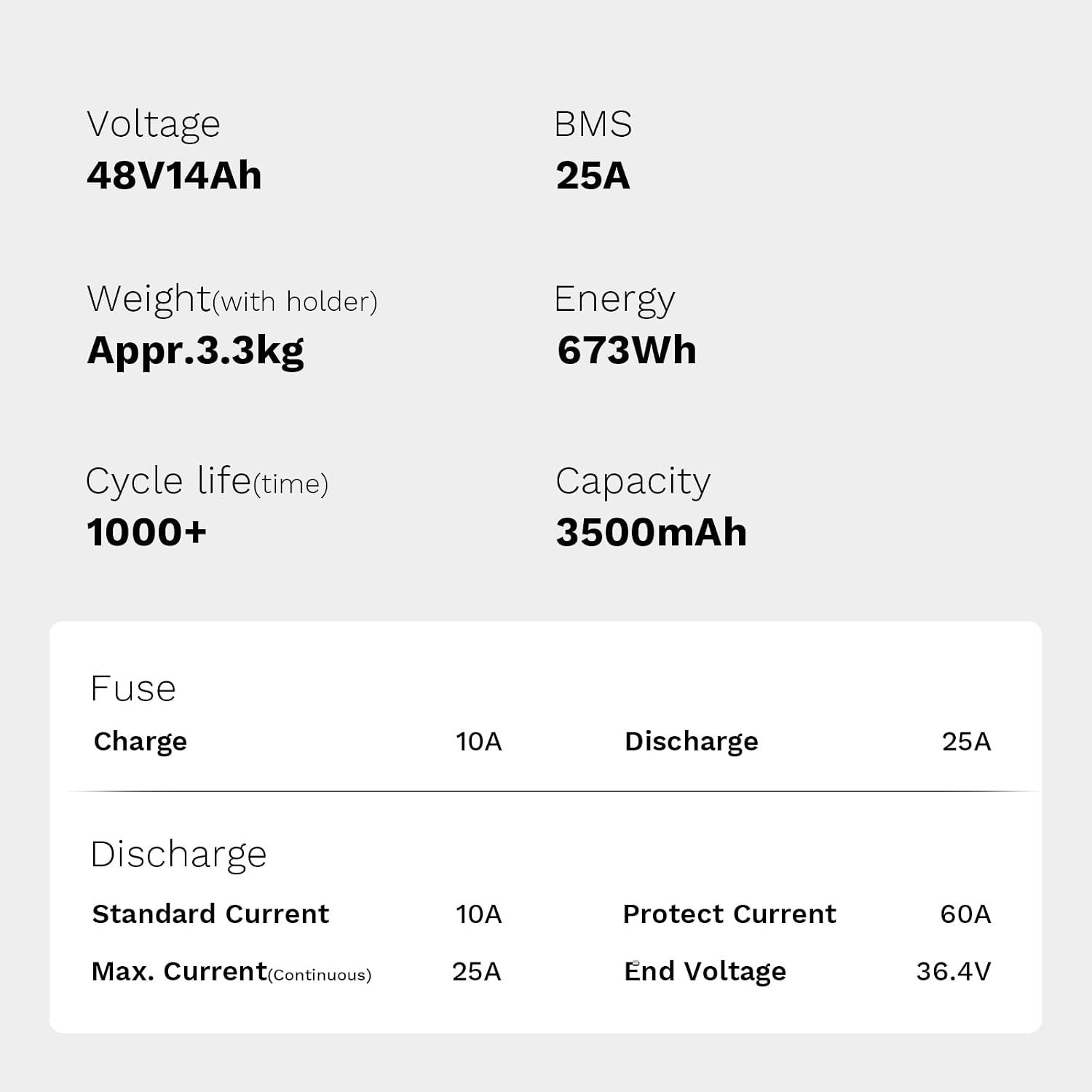
Here is my reading of those numbers. The 25A ceiling gives you room above the standard draw during a hard climb or a full-throttle start, which is good news for a heavy bike.
But the standard rating is the number a pack is built to live at, and 480W continuous is well within reach of a mid-drive on a long hill.
A rider who spends whole rides above 10A is running the pack past its standard rating all the time, and cycle-life claims are not measured that way. Without a printed motor limit, the buyer has to know their own bike's draw, and most people buying a replacement pack cannot quote it.
The Numbers the Listing Cannot Keep Straight
Cycle life is where this listing stops agreeing with itself. The fourth bullet says 70% capacity after 700 cycles.
The marketing text further down the page says 78% remaining after 1000 cycles, and adds that the engineering test battery has run for more than 5 years. The tech table in the same block prints 1000 to 1200 times. The parameter card in the gallery says 1000+, full stop.
That is four numbers on one page, and they are not reconcilable on their face. The generous interpretation is that they measure different conventions, because the industry custom is to quote cycle life at 80% remaining capacity, and honest counts land somewhere in a 400 to 1,200 cycle band.
A 70% figure at 700 cycles and a 78% figure at 1000 cycles can both be true for the same cells, since demanding less remaining capacity at a higher count is not a contradiction in the chemistry. Wikipedia's lithium-ion overview makes that convention explicit, and it is the lens I use on every vendor cycle claim.
But four prints on one page still tell you something, which is that nobody edited the listing. The tech table was written by one template, the card by another, and the bullets by a third, and no one checked them against each other. That is not a cell-quality verdict, and I want to be careful not to turn it into one.
It is a quality-control verdict on the listing, and it tells you the one number you would most want to trust, the cycle count, is the number this seller has been least consistent about.
The distance card keeps the pattern going. It prints two numbers and no test conditions.
Power mode is up to 50km, which is 31 miles. Eco mode is up to 168km, which is 104 miles.
Against the pack's 672 watt-hours, the eco figure works out to about 6.4 watt-hours per mile, and that is below what pedal assist costs on any bike we have measured. The sibling pack's card printed its test conditions, a 350W motor under pedal assist, and its eco claim still failed the same arithmetic. This card does not even print the conditions.
The power-mode number is the honest one. Thirty-one miles on 672Wh is about 21.6 watt-hours for every mile, which sits inside the throttle-heavy band, and range on an e-bike depends on assist level, terrain, rider weight and wind anyway.
So plan on the bands, not the card. Ordinary pedal assist runs 15 to 20 watt-hours a mile, so 672Wh gives you roughly 34 to 45 miles.
Ride it throttle-heavy and consumption climbs to 25 to 35 watt-hours a mile, and the same pack is about 19 to 27 miles. If you were counting on 104 miles between charges, the card got that number the same way most inflated range claims do, by printing a figure no test condition produces.
The Charger Question and the 54.6V Rule
The charger contradiction is the same one the sibling listing shipped with, and this one has not fixed it. The title ends with the words without Charger.
The first bullet repeats it. Then the fourth bullet promises the smart charger fills the pack in 7 hours and admits, in the same sentence, that the charger is not included. Both statements are in one listing, one click apart.
The arithmetic side of this is simple. A 14Ah pack at a typical 2A charger needs 7.0 hours before the taper even starts, so the 7-hour promise is really a description of a 2A charger you have to go and buy. The card tells you which one.
End voltage is printed at 36.4V, which decodes to 13 cell strings at 2.8V per cell, so a full charge is 13 times 4.2V, or 54.6V. The charger you add must be a 54.6V unit built for a 13S pack. The card's 3,500mAh cell capacity and the 14Ah rating also work out to four cells per string, which is a normal count for a pack this size.
I would add one habit here. Match the new charger's connector to the pack's charge socket before you order it, because the card shows a separate charge socket and discharge socket, and aftermarket chargers ship with whatever connector the seller guessed at. The charge-side fuse is rated 10A, so any charger in the 2A to 5A range is inside the pack's own limits.
What the Premium Over the Sibling Buys
Now the money. At 389.99 for 672 watt-hours, this pack costs about 58 cents per watt-hour. The middle of our table sits near 26 cents.
The same brand's 15.6Ah sibling, which we covered in a recent review, sells at 269.99 for 748.8 watt-hours, about 36 cents, and carries 77 more watt-hours for 120 less.
Yose's Aventon-specific 14Ah sits at 289, about 43 cents for the same capacity as this one. On the two Yose listings we have decoded, the 10A standard current, the 18-month kit-and-battery warranty and the one-month prepaid return window all match. The differences here are the case shape, the named bike, and roughly 15 to 22 cents per watt-hour against the brand's own packs.
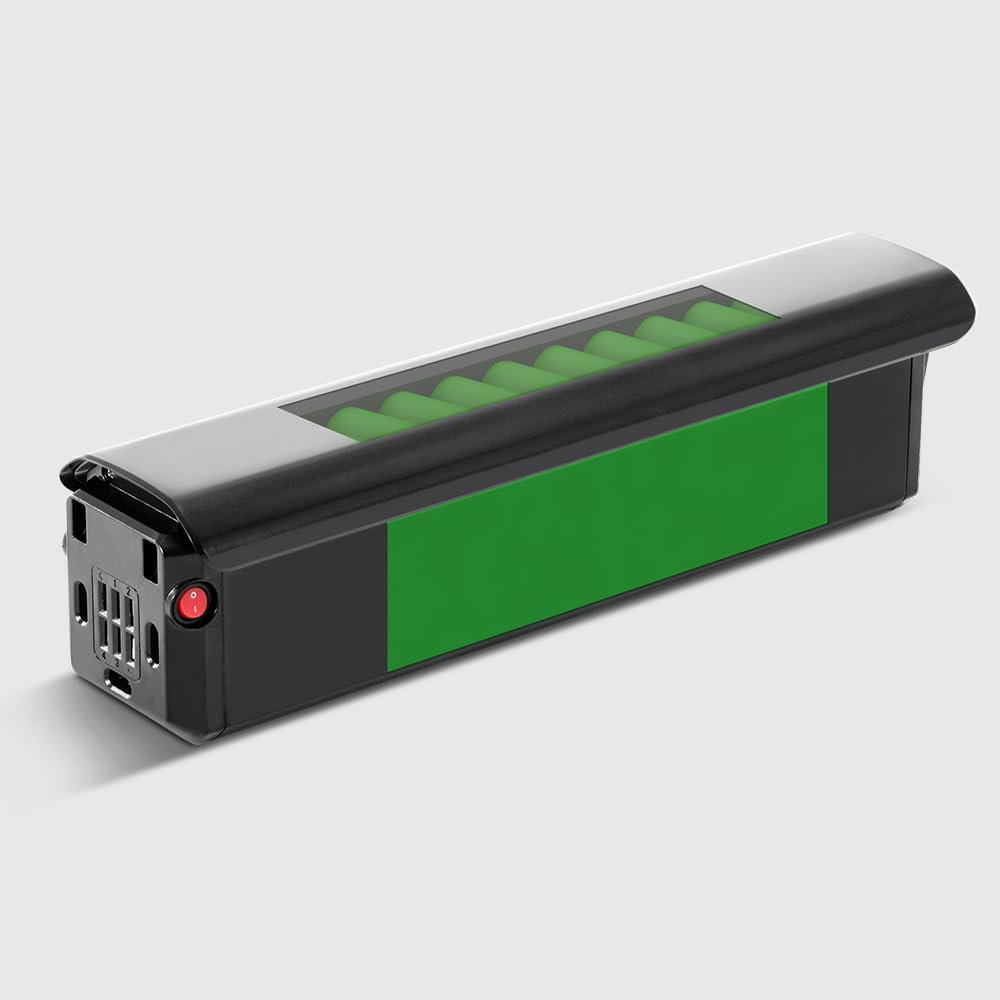
That premium buys the Heybike-shaped case and its mount, and I understand why someone pays it. A bolt-on fit against a bay measurement and an adapter search is worth something, and pack weight is 3.3kg with the holder by both the card and the spec sheet, which closes at about 0.20 kWh per kilogram and sits mid-band, so you are not paying extra weight for the privilege.
My hesitation is the sales rank. This listing sits around 3,876th in its category against the sibling's 681st, which says the market agrees the price is steep for 14Ah.
If your Horizon or Ranger S needs exactly this case, the premium is the toll. If your bay can take a silver fish case, the 15.6Ah sibling is more battery for less money, and the Aventon-fit 14Ah is the same capacity for 100 less. Measure first, then pay the toll only if you have to.
Frequently Asked Questions
Will it fit my Heybike Ranger S or Horizon?
The printed case size is 77 by 91 by 368mm, and the listing's first bullet tells buyers with install questions to contact the seller. Measure your bay against those three numbers before you order, because the fitment claim is the whole pitch and the listing never proves it with a printed motor or model cross-reference.
Does it include a charger?
No. The title says without Charger, the first bullet repeats it, and the fourth bullet admits the charger is not included after promising a 7-hour charge. You need a 54.6V charger for a 13S pack, and 2A gets you the printed 7-hour floor before the taper.
How far will it actually go?
Plan on 34 to 45 miles with ordinary pedal assist and 19 to 27 miles riding throttle-heavy. The card's eco claim of 168km works out to about 6.4 watt-hours a mile, which no test condition on a real bike produces, and its power-mode figure of 50km is the only distance number on the card that survives the arithmetic.
Why does it cost so much per watt-hour?
You are paying for the Heybike-specific case, the mount and the named fitment, not for capacity. The same brand sells 77 more watt-hours for 120 less in its 15.6Ah silver fish pack, and the same capacity for 100 less in its Aventon-specific 14Ah. Named fitment is a real convenience, but on this listing it is priced at more than double the market's middle.
Is one one-star rating a dealbreaker?
It is a signal with no words attached, so it is not a verdict either way. Someone was unhappy, and the record cannot say why. What it really changes is your downside plan: buy inside the one-month prepaid return window, keep the packaging, and test the pack against the printed specs early, because a return is the only remedy a record this thin offers.