Replacement hunting for an older silver fish bike is mostly a sizing problem, and Yose Power builds more sizes of it than almost anyone. The Yose Power 36V 17.4Ah silver fish ebike battery is the big one in the 36V line, sold as a replacement for ECOTRIC's folding, Starfish, Dolphin and Peacedove frames and for XH370-10J and ZL1010-F mounts.
It is also a listing that cannot keep its own story straight. The title sells 17.4 amp-hours.
The spec table's capacity row prints 13. The family card in the image gallery prints a third figure. Before you spend anything here, you need to know which pack actually shows up, and the listing gives you the tools to find out if you read all of it.
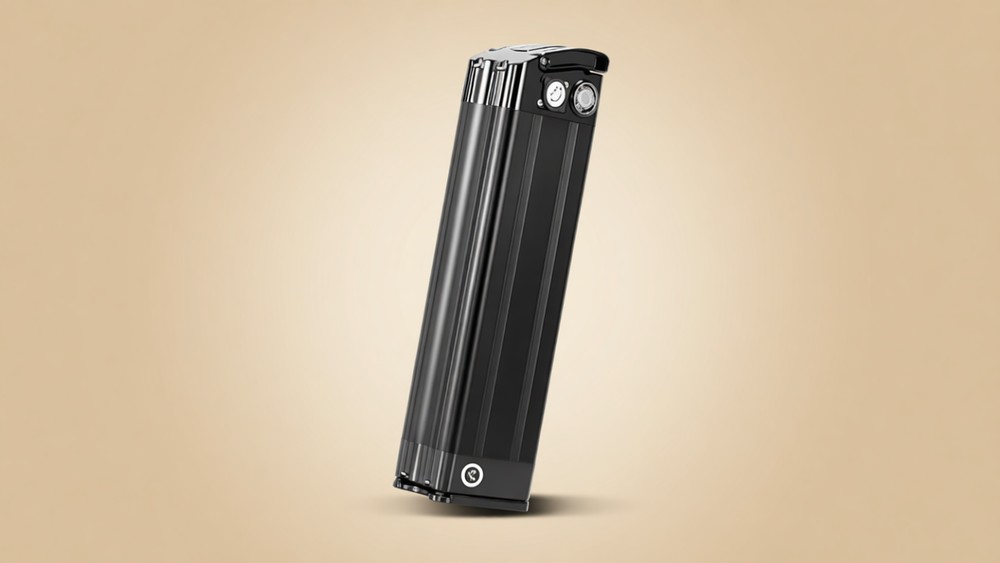
One listing, two capacity stories
The title, the model number and the variant selector all say 17.4Ah, which at 36 volts works out to 626.4 watt-hours. The spec table's capacity row says 13 amp-hours, which is 468 watt-hours, and the distance between those two figures is more than a quarter of the pack. It is the difference between a long-range commuter battery and an ordinary one.
The printed weight breaks the tie partway. Both weight rows, 3.5 kilograms and 7.7 pounds, agree with each other. Standard lithium-ion cells hold roughly 0.16 to 0.30 kilowatt-hours per kilogram, so a real 626Wh pack in 3.5 kilograms total reads about 0.18 at pack level, comfortably mid-band, with room left for the case, the board and the wiring.
The same 3.5 kilograms holding only 468 watt-hours would force the cells under the bottom of that density band, which is a reading I cannot make physical sense of.
So the weight rows support the 17.4Ah title. The spec row disagrees with them, and with the title. A 13 amp-hour figure printed on a 17.4Ah listing is most likely a copy-paste leftover from the smaller variant in the same family, because Yose Power sells this case at 10.4, 13, 15 and 17.4 amp-hours.
But most likely is not verified, and the charger arithmetic does not settle it either. The bullet promises a full charge in 7 hours, and the family card says 6.
Seventeen-point-four amp-hours fills in about 8.7 hours on a 2A charger and in 7 on a 2.5A one. Thirteen amp-hours fills in about 6.5 hours at 2A. Both claims fit either reading once you pick a charger amperage, so the printed times settle nothing.
The charger's label settles it. A 2A charger on a 17.4Ah pack means an 8.7-hour floor, and if the box ships a 2A unit the 7-hour bullet is wrong.
Check the label before the return window closes, then meter a full charge if you own a meter. That test is worth an hour of your evening on any listing this loose.
The current specs live in the images, not the text
Nowhere in the listing's text does Yose Power state how much current this pack can deliver, and the 100-900W motor claim floats without it. The discharge socket card in the image gallery carries the numbers: 10A standard, 30A maximum continuous, 60A protect current, and a 28V end voltage.
That end voltage is the quiet confirmation the capacity question needed. Twenty-eight volts is ten cells at 2.8 volts, a 10S cutoff, which is exactly what a 36V pack runs. The card is describing this pack, not a sibling.
Run the power math on the continuous figure. Thirty amps at 36 volts is a 1,080-watt ceiling, so the title's 900W motor sits inside it at about 25 amps with room to spare. The 10A standard figure is a sustained-draw rating, not the maximum, and reading it as the ceiling would wrongly rule out every 500W motor.
The old version of this article made that exact mistake, and the socket card corrects it.
The same cards answer two smaller questions. The USB charge socket outputs 5V at 1A, which explains the listing's strangest spec row, the one that lists "Compatible Phone Models: 5V1A".
And the in-box card lists five items, battery pack, discharge plug, charger, key and manual, where the Included Components row names only the pack. Expect the charger and the key. If the box shows up with just the battery, that is a missing-parts claim on day one, not a surprise to absorb later.
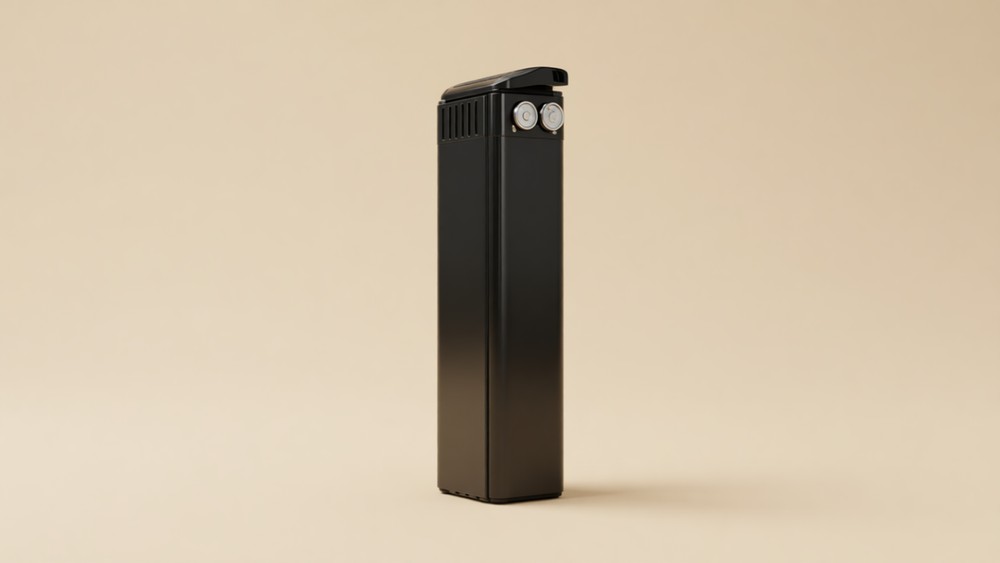
The record is two texts, both about fitment
Two written texts sit under the 3.4-star average, and both carry Amazon's purchase badge. Both are about choosing the right pack, not about how any pack performs.
One owner has reported a clean result after hunting through the style list, and their warning is the useful part: there are many styles, and they kept searching until they found the right one.
The other buyer ordered on a voice assistant's recommendation for a Caroma scooter, found the pack did not fit, and returned it. That complaint aims at the recommendation, not at the battery, and the buyer says so directly.
So the record's only failure is a fitment failure, which matches everything else on this listing.
Four of the six ratings carry no text at all, and nobody has reported capacity, range or durability in either direction. The 33 percent one-star share is two ratings deep. Read this as a pack with no performance track record, not as a pack with a mixed one.
Measure before you order, because the fitment surface is narrower than the compatibility list makes it look. The case is 388 by 110 by 75 millimeters, and the dimensions row converts to the same numbers, so at least the listing agrees with itself there. Compare those three numbers against your old pack or your frame's mount bay before the order, not after.
What the family card gets wrong
The gallery's family card is the weakest evidence on the page, and it deserves its own warning. It labels the pack "Seat Tube" where the title says Silver Fish, prints 4.5 kilograms where both spec rows print 3.5, prints 644 watt-hours where the title math gives 626.4, and promises a 6-hour charge where the bullet says 7. Its test-condition line even names a 48V 700W motor on a 36V card.
None of those figures can all be true at once. The card reads like it was drawn for a different variant in the family and never updated. I would not use it for anything except the two things other evidence confirms: the in-box list and the USB socket.
The card's range table has the same problem. Its power-mode row claims 55 to 65 kilometres on pedal assist, about 34 to 40 miles, which sits right where 626 watt-hours should land at a gentle 16 to 18 watt-hours per mile.
The ECO row prints 200 to 210 kilometres, and no arithmetic reaches that number. Six hundred watt-hours across 200 kilometres needs about 3 watt-hours per kilometre, and no full ebike rides at a figure that low. One row is plausible and the other is a printing error, and the plausible one is the only range figure on the listing worth carrying forward.
What it costs, and what that buys
The live price read 225.61 when we checked, and our comparison table's stored row still prints 249.99, so the specs box there reads slightly high until the next data pass. At the live figure and the title's 626 watt-hours, this works out to about 36 cents per watt-hour.
That places it among the most expensive packs in our ebike battery comparison table, where the exact position renders in the specs box. If the 13Ah row is the truth, the real figure is closer to 48 cents, which would make it one of the worst values we track.
Compare the recent 48V rebuilds: the Sinigerel pack we covered lands around 15.6 cents per watt-hour, the LFPNERYE LiFePO4 pack around 17, and even the Lockbus USB pack, which we called expensive, sits near 22.
None of those are 36V silver fish packs, and that is the honest defense of this price. The 36V replacement market is small, the mount is discontinued on most new bikes, and Yose Power is one of the few makers still stocking it. You are paying for existence, not efficiency.
The warranty row says 12 months, and the returns bullet asks buyers to report quality issues within 1 month. Those two windows do not match, and the practical read is that your real protection is Amazon's return window, not the warranty row. The listing also carries a Best Sellers Rank near the bottom of the Powersports Batteries category, which fits a niche replacement part.
Frequently Asked Questions
Which capacity should I plan around?
Plan around 626 watt-hours, because the weight rows only make physical sense at that reading, but verify before the return window closes. The charger's label tells you the amperage, and a full-charge meter test tells you the truth. If the pack meters near 13 amp-hours, you have a case for a return based on the listing's own contradiction, and you should make it.
Will it fit my bike?
It fits bikes that take an XH370-10J or ZL1010-F silver fish mount and a 388 by 110 by 75 millimeter case, which is the ECOTRIC folding, Starfish, Dolphin and Peacedove family plus matching aftermarket frames. Ignore the family card's Seat Tube label and measure the case against your old pack. The Caroma buyer in the record skipped that step and paid for it.
How far will it actually go?
Use your own consumption figure, because assist level, terrain and rider weight drive range far more than the pack does. At 16 watt-hours per mile of gentle pedal assist, 626 watt-hours is near 39 miles.
At 20 watt-hours per mile of mixed riding, about 31. Full throttle at 30 leaves roughly 21 miles. The listing's own pedal-assist card figure of 55 to 65 kilometres matches the gentle end of that band.
Is the price fair?
For the watt-hours, no. For a discontinued mount, maybe. This is among the most expensive packs per watt-hour in our comparison table, and the LFPNERYE LiFePO4 pack we covered alongside it delivers roughly twice the energy for slightly less money if your frame can take a different case.
Buy this one because it fits a bike you already own and love, not because the math favors it.
Who should skip it?
Skip it if your bike takes any newer mount, because the per-watt-hour premium only makes sense when the alternative is no pack at all.
Skip it if you need a documented capacity figure before ordering, because the listing argues with itself and the record is two texts deep. And skip the smaller variants in this family only if your range math says you need the full 626 watt-hours, because the case is the same size either way.
Our latest ebike reviews cover more of the replacement-pack market, including the Sinigerel 48V 20Ah pack for riders whose frame takes a modern rectangular case instead.