You can walk into a full-face helmet purchase two ways. One is the brand route, where a proven shell costs several hundred and the sizing chart has a decade of owner feedback behind it.
The other is the budget aisle, where the price looks almost like a typo and the only guidance you get is a chart on the listing page. This helmet lives at the far end of the budget aisle, and its buyer record is really a record about what happens when that chart is wrong.
The chart here is not merely snug. Owner after owner ordered their normal size, or a size above it, and still could not wear the thing. One buyer followed the measurements exactly and ended up buying a 3XL from a different seller.
Another wore a Large in every other helmet they own and could not force their head into this one at all.
I have gone through the whole written record, counted the sizing reports, and followed what happened after the misses, because that is where the real cost of this helmet hides. The return process turns out to matter as much as the fit.
The VEVOR full face motorcycle helmet earns its four-star average with looks and build quality that over-deliver at the price, and it loses ground on a sizing chart that misses by more than a size, a return fee that can approach half the helmet's cost, and one owner's unproven claim that the DOT certification is fake. You can see where it sits on price in the full-face helmet comparison table, which tracks 257 helmets.
The chart is measured wrong, not merely snug
Budget helmets usually get described as running small, which implies you can compensate by ordering one size up. This listing's problem goes further, because the chart and the helmet disagree about what the sizes even are.
Count the record and the pattern is hard to miss. Ten of the twenty-one written texts carry a sizing complaint. A buyer with a 24-inch head ordered an XXL to fit over hearing aids, and forcing it on tore the hearing aids out.
An XL owner calls the XL closer to a medium. A Large wearer, the size they buy in every other helmet, could not get their head in and started the return. The September buyer who ordered XXL and found it crushing went looking at the return process, which I come back to below, because that is the text other buyers have voted on most.
Two reports give the chart a measured direction. The most detailed fit account ordered a Large for their wife and an XXL for themself, both straight off the listing's measurements.
The XXL would barely go on, sat too tight to admit a pair of glasses, and the same helmet reads a touch too big on the wife, so one shell spans two heads at the top of the range. That buyer's fix was a 3XL from another seller, a size this listing does not offer at all.
A second buyer with a 24-inch measurement hit the same wall from the hearing-aid direction.
Against that, two texts report a good fit, one on a Large and one on a Medium. So the fit is not universal failure. It's a chart you cannot trust, which is a different problem, because you can't order your way out of a chart that lies about where the sizes start.
The listing makes this worse by promising an eyeglass-friendly fit in its own bullet copy. The one owner who tried glasses inside the XXL could not get them on. If you wear glasses or hearing aids, this is the helmet in our full-face group where that promise is contradicted in writing.
The return math nobody prices in
Here is the text other buyers have voted on most in the recent record. A buyer ordered the XXL, could barely force it on, and looked at returning it. They expected a Prime order to carry a free return.
The return fee quoted came to nearly half the helmet's price, enough that returning stopped making sense. They kept a helmet they cannot wear, went back to an older Shoei, and wrote that they will not buy another helmet on Amazon because of it.
That account is the reason this review spends a whole section on returns instead of treating them as a footnote.
When a helmet costs about 37 at check, a return fee near 50 percent of the purchase price turns the cheapest helmet in the running into an expensive mistake. The listing's own spec table carries a Warranty Description row that reads NO, so the manufacturer stands behind nothing beyond whatever the marketplace's return policy computes for your account.
The one warranty-adjacent experience in the record is the fee above, and it is not encouraging.
The practical read is arithmetic, not advice. If your head measurement sits anywhere near a size boundary, or you wear glasses or hearing aids, the safe move is to assume this helmet may not fit and price the return before you order. If the return cost on your account would sting, the budget saved here can evaporate.
The comparison table's price column shows what a true-to-size alternative costs, and the VEVOR full face dual visor helmet from the same brand carries its own sizing complaints in a record we have reviewed separately, so switching brands matters more than switching models.

What the record actually praises
The praise side of the record is consistent about specific things, and the first is the quick-release buckle. Two owners call it out by name, and one describes the mechanism precisely, tightening like a zip tie and releasing clean. For a helmet at this price, a closure people compliment unprompted is worth noting.
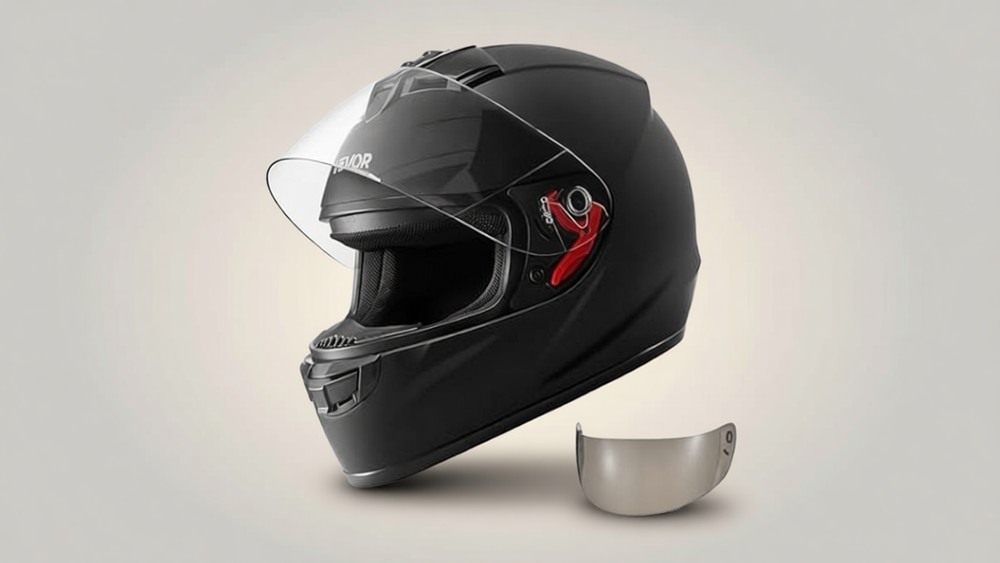
The visor story checks out too. The box ships a pre-installed clear shield plus a spare tinted one, and the listing promises a tool-free swap. The owner who has done the swap reports the clear visor detached easily and the tinted one went on without a fight, and calls the visor durable.
Nobody in the record reports the visor mechanism failing, though the sharpest critic, whose text I get to below, calls it cheap.
The third confirmed feature is the speaker-pocket claim. The listing says the helmet has cut-outs for a Bluetooth headset, and one owner has confirmed a headset fits into the pockets without modification. That matters more than it looks, because it means you can start with this shell and add comms later rather than paying for an integrated system up front.
The rest of the praise is about value perception. One owner keeps it specifically as a backup for travel and calls it not bad for what it is. The record's longest value text says the buyer is no helmet expert but doubts you can get a better-looking helmet for the money, and praises the build quality.
At 3.31 pounds on the spec sheet it is not a lightweight by full-face standards, though nobody in the record complains about the weight either way.
The crash accounts, and what they cannot tell you
Two five-star texts describe crashes, and both are family stories rather than motorcycle accidents. The newer account, from October 2026 and the only unbadged text in the record, comes from a 13-year-old riding an electric skateboard whose wheels caught a curb above 30 mph. They went over the bars, hit their head, and report the helmet undamaged with no headache after, in their words it saved my life.
The older account is a grandmother whose grandson fell off a scooter, where the helmet is the reason the family feels better.
I report these plainly because they carry weight and they deserve context. Neither crash involves a motorcycle.
The skateboard crash happened at skateboard speeds on a helmet whose DOT label exists for motorcycle use. Both accounts say the helmet did its job in the crashes described, and neither tells you anything about how the shell behaves at motorcycle speeds against pavement, because nobody in the record has reported that.
The certification question has one dissenting voice. One buyer asserts the DOT certification is fake, pointing at the cheap feel of the visor mechanism and a plastic smell inside the helmet. Here is what DOT actually requires, because it explains why both things can be true at once.
Under United States rule FMVSS 218, DOT certification is self-certification, the manufacturer's own attestation that the helmet passes, and no agency tests helmets before they ship.
So one buyer can smell chemicals and distrust the sticker while the paperwork stays technically intact, and nothing in this record, no independent test and no second opinion, can settle the dispute either way. What the record does contain is one buyer's distrust, and the fact that the manufacturer's own warranty row promises nothing.
Who this helmet actually fits
The decision this helmet forces is narrower than the listing suggests. It fits a buyer whose head measurement lands comfortably inside one of this chart's sizes, who does not wear glasses under the shell, and who wants one of the cheapest presentable full-face helmets in the group as a backup or a low-mileage lid.
For that buyer, the record says the looks, the quick release, the visor swap and the speaker pockets over-deliver, and the crash accounts say the shell has held up in the low-speed falls it has seen.
It fits nobody who is between sizes, nobody who needs glasses under the shell, and nobody who cannot absorb a bad return fee, because those are the three ways the record shows this purchase going wrong.
Measure your head, compare it against a chart you trust less than usual, and price the return before you click. The helmet table sorts the 257 helmets we track by price if the budget comparison is the point, and our dual-visor VEVOR review covers the sibling with its own chart disputes.
Frequently asked questions
Is the DOT certification real on this helmet?
The listing claims DOT compliance and the spec table lists it, which under self-certification rules means the manufacturer attests it. One owner disputes it and no independent test exists either way. Treat the sticker as the maker's word, not a tested rating.
What happens if it does not fit?
The one return whose cost appears in the record ran to nearly half the helmet's price on a Prime account, and the buyer kept the helmet instead. Check the return fee shown at checkout for your account before ordering, because the spec table's warranty row reads NO.
Can I wear glasses with this helmet?
The listing promises an eyeglass-friendly fit, and the one owner who tried reports glasses wouldn't go on inside the XXL. Another buyer forced the helmet over hearing aids and it tore them out. If you wear either under a helmet, this record argues against it.
Does the tinted visor really swap without tools?
The box includes a spare tinted visor, and the one owner who has done the swap reports the clear shield detached easily and the tinted one installed without a fight. Nobody in the record reports the opposite.