The search for a cheap full-face helmet usually ends in one of two places. Either you accept that the budget tier cuts real corners, or you keep scrolling until the prices climb past a hundred dollars and wonder what you were protecting in the first place.
A full face matters more than most gear you'll buy, because it's the only helmet style that carries a chin bar, and the record on head injury is not subtle. Helmets cut the risk of head injury by about 69 percent and the risk of death by about 42 percent, the figures Wikipedia's motorcycle helmet article summarizes from the underlying safety research, and a lid that doesn't fit or doesn't get worn protects nobody.
VEVOR's full-face entry sits right at the point where those two choices meet. It costs about forty dollars, it carries a DOT mark, and the listing promises the feature budget helmets almost never include, a clear visor and a dark tinted one. That promise is exactly where this helmet gets complicated, because the owners can't agree on what actually arrives in the box.
This walkthrough covers what the dual-visor claim means now, what fifteen recent reports from buyers say, what the helmet is like above 45 mph, and where the cheap build shows up first.
I've pulled the sizing record apart direction by direction, because the chart and the owners tell different stories. The comparison table on this site tracks 257 helmets by price if you want to see where this one sits before reading on.
The honest headline first. This is one of the ten cheapest full-face helmets we track out of 126, and it behaves like it.
The VEVOR full face dual visor helmet earns its 4.3 stars from 509 ratings with looks and value, and it loses ground on a sizing chart that one owner says pointed them badly wrong, wind noise that arrives right where a street rider lives, and a padding problem that shows up in month three.
If you ride short trips in helmet-law states or you need a pass-the-MSF-course lid, the value is real. If you expect the visor promise to arrive exactly as pictured, read the box section below before you order.
What the dual visor actually is now
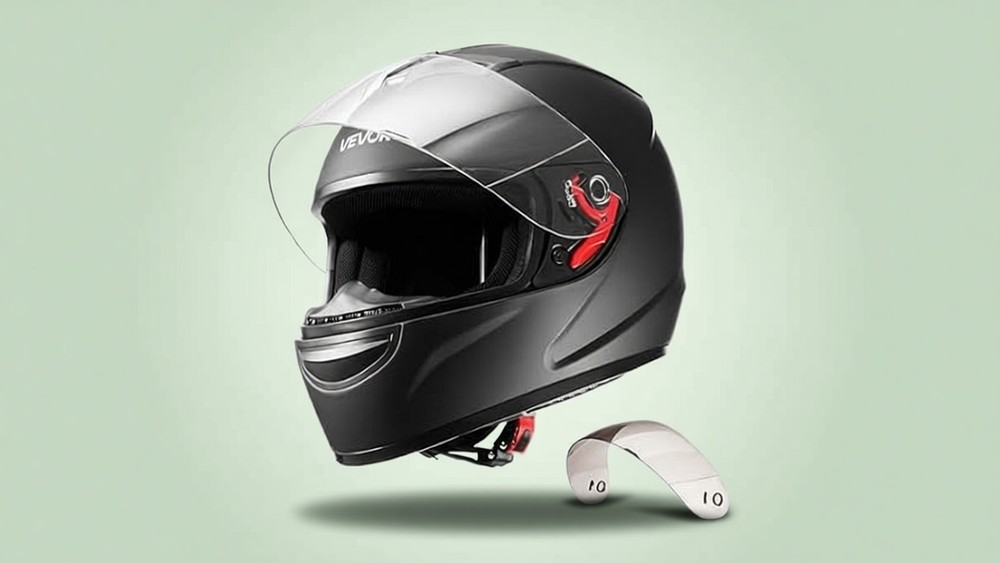
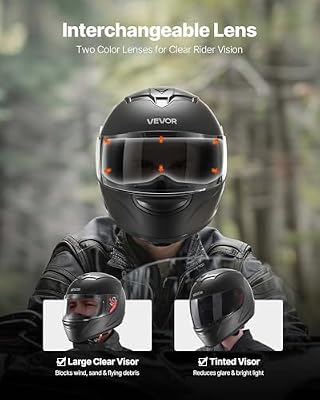
The name oversells what ships. Current listing copy promises a clear visor and a dark-tinted visor for quick switching, and the title adds the words interchangeable lens. The plain reading is two external shields that you swap by hand, and nothing on the current page describes an inner drop-down sun visor.
The owner record splits on the promise, and the split matters more than any spec. A February 2026 buyer who used the helmet to pass an MSF course reports the box came with an extra visor and a cloth storage bag.
One August 2026 text in Spanish says the listing advertises a dual visor and only one visor came in the box, and the dark one has to be bought separately. Another October text in Spanish is shorter, saying the helmet is not the one in the photo.
So the feature that separates this listing from every other forty-dollar full face is the one feature with an arrival lottery attached. Nothing in the listing's tiny spec table settles it, because the table stops at five rows and has no included-components line.
If the second visor is the reason you're here, message the seller and ask which configuration ships before you order. If you would buy it as a single-shield helmet anyway, the risk shrinks to nothing, and the sibling VEVOR full face helmet we reviewed earlier lists a clear visor only in its own title, if you would rather skip the lottery.
The size chart is the first decision
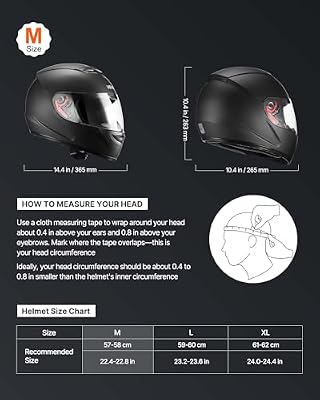
Sizing is where this helmet's record gets messy, and the mess has a direction. Most owners report it runs small. The MSF buyer ordered one size larger than the manufacturer's chart recommends and called the fit perfect, snug with no wiggle when shaking or nodding.
A September buyer who took a Medium says they should have gone one size over. Another September text is five words long and says it all, smaller than expected. One October buyer got a true-to-size fit and another simply reports the fit is perfect, so the rule isn't absolute. I count four runs-small reports against two accurate ones, and that direction is the whole sizing story.
The worst sizing story in the record is also the clearest warning about the chart itself. A July buyer with a head measuring between 22.5 and 22.75 inches says the chart called that a Medium, the Medium arrived feeling like a vice, and the seller ignored the exchange requests while replying with AI-generated messages.
A refund eventually came through, with permission to keep or discard the wrong helmet, but the buyer had to borrow a helmet from a scooter shop to ride home. Measure your head one inch above the eyebrows, and if you sit between sizes, buy the larger one and plan on a thicker cheek pad if it loosens up.
Wind, glasses, and small annoyances
The vent story is where the price shows. Bullet copy promises multiple front and top vents that reduce wind noise and drag, and the spec table lists the special feature as windproof.
A June 2026 rider on a Ninja 500 reports lots of wind noise in the ears above 45 mph and solved it with earplugs. That speed matters, because a helmet that whispers around town can still fail the rider who bought it for 55 mph commuting. Earplugs are a cheap fix and a sensible one at this price, but budget for them mentally before buying.
Eyeglass wearers have a harder problem, and no bullet mentions it. An August 2026 buyer reports there's no space in the padding to fit prescription glasses once the helmet is on, and kept the helmet only because a son who doesn't wear glasses could use it. If you ride in glasses, this may be a dealbreaker that no return window needs to teach you about.
The visor draws split reviews too, one owner says it sometimes doesn't fully close at the bottom, another says it opens and closes perfectly, and one finds the strap tricky to fasten with the helmet on. None of these are fatal on a forty-dollar helmet. Together they sketch the corner-cutting to expect.
What this class of helmet is for
Here is the part I respect most in the record, two owners who state the price class plainly. The MSF buyer calls it surprisingly good for the price but not a long-term helmet or something to trust your life to, a good temporary solution.
The October text puts it even shorter, saying it's a forty-dollar helmet and you can't expect much, bought for riding in helmet-law states. Nobody in this record claims it replaced a premium lid. The owners who are happy bought it for short trips, training courses, and legal compliance, and they say so.
That honesty lines up with what the money buys. The shell is ABS with EPS foam inside, which is the standard construction at this price, an impact-absorbing inner layer under a hard outer one. The DOT mark on the title is worth understanding too.
DOT FMVSS 218 is certified by the manufacturer rather than tested by an agency before sale, so the sticker is a legal claim, not a test report. On our full comparison table this helmet sits among the ten cheapest full-face models we track, which is the strongest fact about it and the one no listing page will tell you.
The month-three problem
One report in the record describes what happens after the honeymoon, and it deserves its own section. A September text says the padding is very thin and painful on the forehead after a month of wear, and that the top liner slides out of place into the gap by the face shield.
The return window had closed, so the lesson arrived free of charge. This listing's spec table carries no warranty row at all, which means the return window is the only protection you get. Check the fit and the padding hard in the first week, wear it around the house, and don't let the box sit in a closet while you decide.
Frequently asked questions
Does the VEVOR dual visor helmet come with both visors?
The record says it depends. One 2026 buyer reports an extra visor and a storage bag in the box, another reports a single visor with the dark one sold separately. Ask the seller before ordering if the second visor is the point.
Does it run small or large?
Most owners say small. The most detailed fit report ordered one size larger than the chart suggested and got a perfect snug fit. One buyer has found it true to size, so measure first and size up if you are between sizes.
Can I wear glasses with it?
One owner reports there is no room for prescription glasses inside the padding. If you ride in glasses, treat that report as the deciding fact.
Is a DOT sticker enough protection?
DOT means the manufacturer self-certifies to FMVSS 218, and no agency tests the helmet before sale. It's the legal floor in the United States, and the record here supports it for short-trip and training use rather than as a replacement for a premium lid.