A 52V 30Ah pack is the kind of battery you buy when range math has started to limit where you ride. On paper the Vatoso 52V 30Ah is exactly that: 1560 watt-hours, a 50A BMS, an XT60 lead and a mounting base, all in a sealed case rated IP65. At 359.99 it also undercuts our own data row, which still carries the older 399.99 price.
We rebuilt this review from the live listing in October 2026, and the page argues with itself in three places before you ride a mile.
The title and the bullets disagree about the BMS rating, the weight row cannot coexist with the capacity rating, and the one-buyer record has actually shrunk since our first article went up. None of that makes it a bad pack, but every one of them is a reason to verify this pack when it arrives rather than trust it.
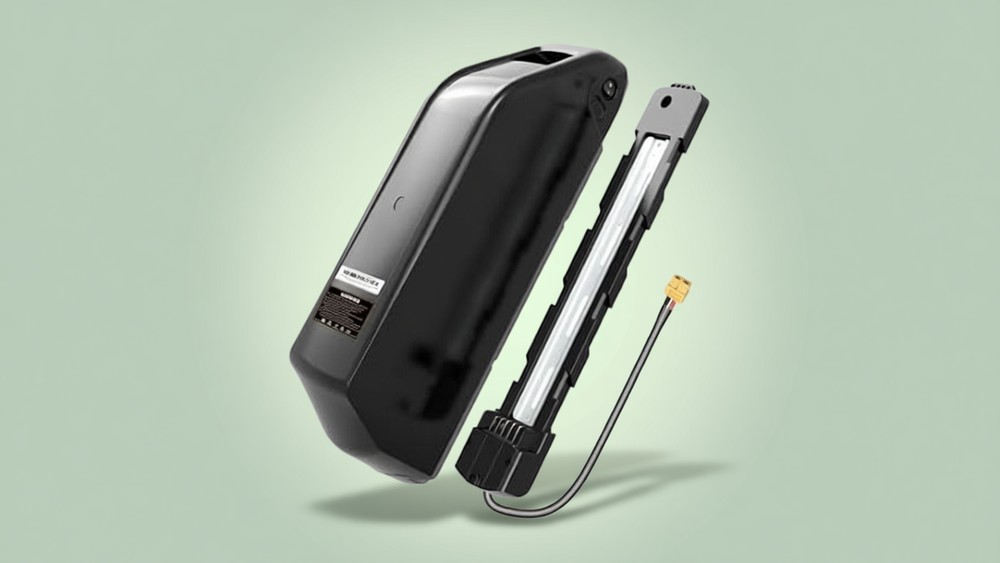
A BMS the listing argues about
The title says built-in 50A BMS. The second bullet says 30A, and drops a letter doing it, losing the B at the start of built-in. Two amp ratings on one page are not a rounding difference, because the BMS sets how much current the pack will give a motor before it cuts in.
At 50A on 52 volts you've got a 2600 watt ceiling, so a 1500W motor drawing about 29 amps at full load sits comfortably inside. At 30A the ceiling is 1560 watts, and that same motor sits right at the edge, where a long hill climb or a cold pack could trip the protection and cut power under you.
The title and bullets also disagree about the motor bracket, with the title saying 100W-1500W and the first bullet saying 100-1400W. That gap is smaller, but it comes from the same place: nobody has reconciled the listing's copy. If your build lives near the top of the bracket, ask the seller which BMS is actually in the box before you order, and size your motor to the smaller number until the answer arrives.
The one line every version of the listing agrees on is the bullet's own advice, verify your device voltage first.
The weight row and the capacity rating cannot both hold
The spec table prints a battery weight of 11.2 pounds, about 5.1 kilograms. Standard lithium-ion chemistry tops out near 0.3 kilowatt-hours per kilogram of cells, so the claimed 1.56 kilowatt-hours of bare cells needs about 5.2 kilograms before the case, the BMS, the wiring and the connector (Wikipedia, Lithium-ion battery). The printed weight leaves no room for any of them.
That doesn't prove the capacity is short, and we haven't weighed or metered this pack. It proves one of the two printed figures is optimistic, and it tells you what to do about it: weigh the pack when it arrives, and if you can, run a discharge test and multiply the measured amp-hours by 52.
Listings in this tier are copied and edited rather than measured, so the check is cheap insurance. If the pack comes in well under the printed weight, the capacity figure is the one that gave.
The record shrank under our own article
When we first published this review in August, it said three buyers had rated the pack five stars.
Today the page shows one global rating. We can't tell you which explanation is right, that two ratings were removed or merged, or that the older figure never matched the page, and we held both open rather than pick one. Our own data row carries no rating at all, which fits either story.
The one written review has been up since late August, and one buyer has reported running a 1000W hub motor on it, about 25 miles round trip with charging every two or three days, and a clean install using the included XT60 connector and base.
The shape of the text is worth reading around, because it recites the title's own claims nearly word for word and closes with would buy again, and it carries no purchase badge. It establishes that somebody mounted this pack on a 1000W setup and rode it without a recorded cutoff. It can't tell you how the cells behave in month six, and nothing else on the page tries to.
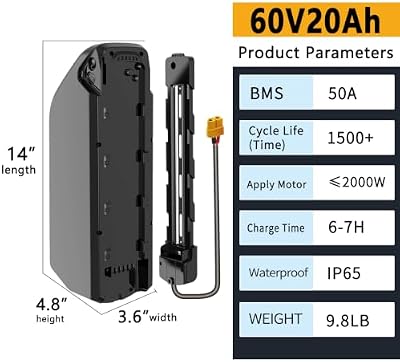
Range and value, worked from the printed numbers
E-bikes usually manage 25 to 75 miles per charge depending on the power level you ride at (Wikipedia, E-bike), and that spread describes ordinary commuter packs a fraction of this one's size, so the honest planning method is not a mileage promise.
Take whatever range your current battery delivers on your routes and multiply by the ratio between its energy and this pack's 1560Wh. A rider getting 20 miles from a worn pack holding half this one's energy should see about 40 on a full charge, and the throttle-heavy figure sits well below that because throttle riding burns watt-hours much faster than pedal assist.
On value the pack is easier to call. At 359.99 for a claimed 1560Wh you pay about 23 cents per watt-hour, which puts it in the cheaper third of the 301 packs we track, and the live price has actually dropped below our row's older figure. If the capacity is real, the price per watt-hour is among the better ones on the table, and that is exactly why the weight check above matters.
Vatoso also sells a 52V 20Ah sibling we have reviewed, so the family gives you a smaller shell at the same voltage if 1560Wh is more pack than your frame wants. Compare them against the rest in our ebike battery comparison table before you commit.
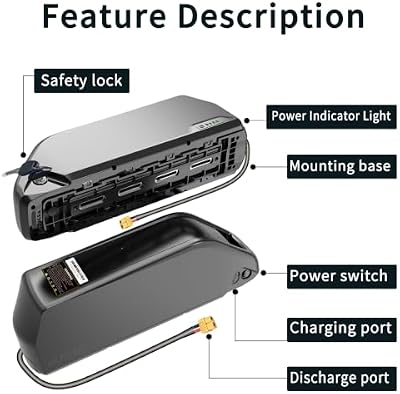
One month of warranty and a charger the page can't place
The warranty row reads one month from the manufacturer, which is the shortest coverage on any pack we have rebuilt. Three months already read as about as short as coverage gets across this whole tier, and this is shorter still, so the practical protection is Amazon's return window. Use it hard in the first weeks: charge, mount, ride, and meter the capacity if you can.
The box contents also disagree with themselves. The Included Components row says battery, while the fast-charging bullet says 54.6V charging equipment is included. And that 54.6V figure opens a bigger question.
A 54.6V charger is 13S math, 13 cells times 4.2V, which is the charge voltage of a 48V-class pack. A true 52V pack is usually 14S and charges at 58.8V. Either this pack is a 13S unit wearing a 52V label, or the charger line is template copy that belongs to a different product.
The listing's own fifth bullet calls it the perfect replacement for most 48V systems, which leans toward the first reading, but nothing on the page settles it. Check the voltage printed on the charger when it arrives, because that number tells you the cell count, and it decides whether the pack can sit at the voltage your 52V controller expects.
The case is rated IP65, which decodes as dust protected rather than dust-tight, plus protection against water jets from a nozzle, not submersion (Wikipedia, IP code). Fine for rain on a motorcycle or an open-frame build. Not a reason to park it in a puddle.
Frequently asked questions
Will this work on my 48V bike?
The listing markets it as a replacement for most 48V systems, but treat that as a claim to check rather than a fact. A full 14S 52V pack sits near 58.8V, which some 48V controllers accept and some do not. Check your controller's maximum input voltage, and if the charger that arrives prints 54.6V, the pack is a 13S unit and the question changes.
How long does it take to charge?
The listing gives no amperage for its charger, so no honest charge floor can be computed from the page. If the included charger turns out to be a 2A unit, 30 amp-hours implies at least 15 hours from empty, and anything faster needs a charger with more amps behind it.
What range should I plan around?
Don't plan around a mileage figure from this page, because the listing never states one. Use the ratio method above: your current real-world range times the watt-hour ratio between your old pack and this one, minus a haircut for throttle riding.
Is the BMS 50A or 30A?
The title says 50A and a bullet says 30A, and the page never reconciles them. Ask the seller before ordering if your motor draws more than about 25 amps at full load, because the answer decides whether a 1500W build rides inside the limit or sits at the cutoff.
How long will the cells last?
Lithium-ion packs typically manage 400 to 1,200 cycles before capacity falls to about 80 percent of new (Wikipedia, Lithium-ion battery). The listing claims no cycle count at all, and no review speaks to aging, so treat the upper end of that band as unproven here.