The 52V label is the reason to look at this pack twice, and the charger is the reason to hesitate.
A 52V pack and a 48V-class charger do not finish at the same voltage, and the listing manages to describe both in the same product. The weight of the pack raises a second question about the capacity claim. Neither issue is disqualifying on its own, but both change what you should confirm before paying, and one buyer's text touches on the first of them directly.
This review works through the voltage mismatch, the density arithmetic on the capacity claim, what the four buyer texts support, and where the value lands once you take those into account.
The Vatoso 52V 20Ah ebike battery prices a big number attractively, and the listing backs the current side of the story with a 50A BMS and an IP65 case. It does not back the voltage story: the title, the included charger and the compatibility bullet describe three different packs. The weight raises the same doubt about the capacity, and the buyer record splits between verified skeptics and unverified fans.
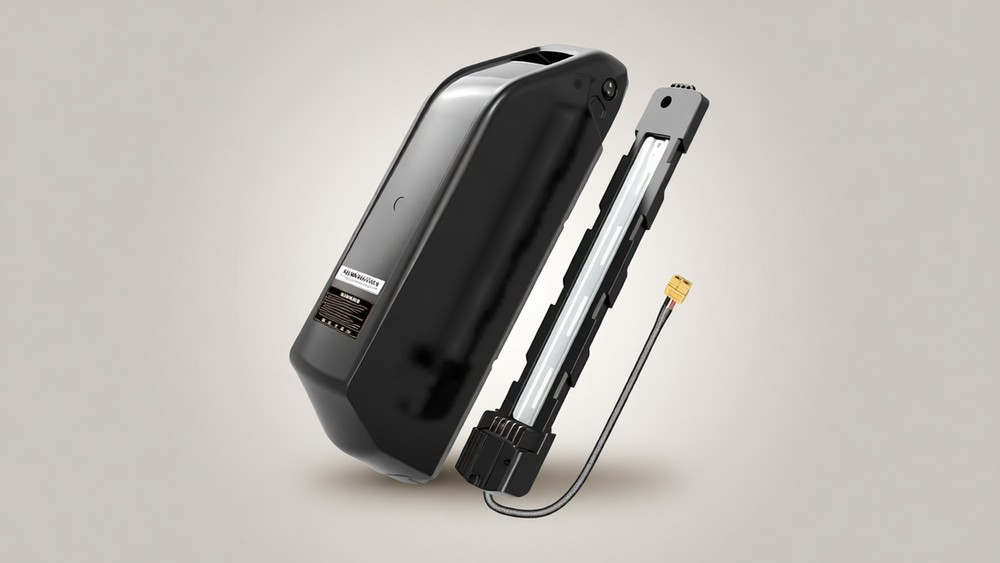
A 52 Volt Label With a 48 Volt Charger
The title says this pack is 52 volts, the listing says it ships with a 54.6V charger, and another bullet calls it a replacement for most 48V systems. Those three cannot all describe the same product.
A 13-series pack charges full at 54.6 volts, and that is what the market calls 48V. A true 52V pack is 14-series and needs 58.8 volts.
Put a 54.6V charger on a 14-series pack and it stops at about 3.9 volts per cell, roughly 80 to 85 percent full, and you never see the range the label implies. On the 48V-class pack it charges fully. One buyer has noted the mismatch from the buyer side and wished the pack had come with a 52V charger instead of the 48V one that arrived.
Ask the seller for the series count and the charger voltage before you pay. The answer decides whether the pack fills completely, and it decides how much range each charge actually delivers. Compare it against the rest of the field in our battery comparison table.
The Weight Says the Capacity Claim Is a Stretch
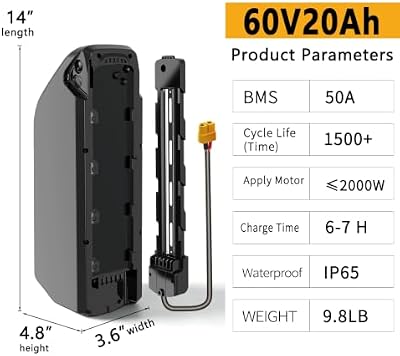
The listing gives 8.8 pounds for a claimed 1040 watt hours. That is about 260 watt hours per kilogram at pack level.
Wikipedia's lithium-ion article puts the cell-level band at 160 to 300 watt hours per kilogram, and a finished pack with a case, a BMS and wiring always lands below its cells. A pack cannot weigh less per stored watt-hour than the cells inside it.
Even read as the 48V-class alternative at 20 amp hours, 960 watt hours, the weight still suggests about 240 watt hours per kilogram, past the plausible band. A genuine 20Ah 52V rack pack is noticeably heavier than 8.8 pounds, because it needs more cells to hold that charge.
So treat the capacity number as unproven, and weigh the pack when it arrives. This is the same failure shape other budget rack packs have shown, and the scale is the cheapest test there is.
Two Skeptical Owners and Two Unverified Fans
The record splits in half, and the halves disagree. The two texts with purchase confirmation are both four-stars with reservations. One owner has found the range shorter and the power weaker than their previous battery.
Another liked the pack, confirmed it runs a 45A controller, praised the four frame mounting points, and wished the charger matched the label.
The two five-star texts carry no purchase confirmation, both carry the same July 25, 2026 date, and both read like listing copy: double-boxed delivery, responsive customer service, well-designed safety features. Give the verified half more weight, because the unverified half describes a buying experience rather than a battery.
Beyond that, the record is empty. No text reports an actual range number, meters the capacity, tests the water resistance the IP65 claim suggests, or mentions the USB port. Four texts cannot establish much, but they can point a careful buyer at the charger question, and they do.
Fifty Amps Behind a One Month Warranty
The electrical claim has some support. Fifty amps at 52V is about 2600W continuous, the buyer record includes a 45A controller running without trouble, and the 50A BMS is the reason a pack this size can feed a big motor. The guarantee does not match.
The spec table warranty is one month, while the bullets claim a cycle life of 800 to 1000 and a 5-year life expectancy. Battery University's BU-808 puts consumer lithium-ion at 300 to 500 cycles charged the standard way, so the cycle claim sits at or past the top of what the research describes without special cells. A one-month window cannot confirm any of it.
The spec table also asks for D-cell batteries on a lithium pack, which is the kind of error an unedited listing collects. It does not tell you the pack is bad. It does tell you nobody checked the page.
What the Watt Hours Cost
At the claimed 1040 watt hours, this pack costs about 25 cents per watt-hour, which sits close to the middle of the 301 packs we track. On the 48V-class reading it is about 27. The live figure renders in the specs box, and the battery comparison table shows where it lands against everything else.
That is a fair price if the capacity is real, and expensive per true watt-hour if the weight is the tell. The honest way to buy this pack is with the seller's voltage answer in writing and a plan to weigh it and test it well inside the return window. Without those two things, cheaper packs with honest labels are a better use of the money.
Frequently Asked Questions
Is it really a 52V pack?
The listing disagrees with itself three ways. The title says 52V, the bullet on charging names standard 54.6V equipment, and another bullet calls the pack a replacement for most 48V systems. A 13-series pack charges full at 54.6 volts and is what the market calls 48V, while a 14-series pack needs 58.8 volts. Ask the seller for the series count before paying, and treat the 52V label as unconfirmed until the answer arrives.
Will it charge fully with the included charger?
That depends on the same answer. On the 48V-class pack, a 54.6V charger finishes the job. On a 14-series pack it stops near 80 to 85 percent, and the pack never reaches the range its label implies. The buyer record contains exactly this complaint: the charger that arrived felt like a 48V one.
How far will it go on a charge?
No text reports an actual range number, and the one concrete buyer report is negative: shorter range and less power than a previous battery. Arithmetic on the claimed 1040 watt hours gives about 42 to 52 miles at twenty to twenty-five watt hours per mile, but the weight says to discount the claim. Weigh the pack on arrival before you plan any long ride around it.
Does the 50A BMS matter?
It is the best-supported claim on the listing. Fifty amps at 52V is about 2600W continuous, well past the 750W federal definition for a consumer ebike in the US, and the buyer record includes a 45A controller running without trouble. Check your local rules before building around that headroom.
What is the warranty?
One month, per the spec table. The bullets claim 800 to 1000 cycles and a 5-year life expectancy, and the consumer baseline in the research is 300 to 500 cycles charged the standard way. A one-month window cannot confirm any of that, so treat the long-life claims as marketing. If it isn't the right fit, the battery comparison table sorts every option we track.