A big shark-form 52V pack is the kind of part you buy once and forget about. It hides in the frame triangle, feeds a hungry motor, and the only day it matters is the day it doesn't work. So the research you do before ordering carries more weight than it would for a smaller pack.
The pack under this URL is one of those, but the listing has moved underneath it. Our data saved this page as a UnitPackPower product. It now reads Brand: DICHOU, and the record behind it is two ratings deep, one of them written.
That is a harder call than the spec sheet suggests, because the numbers are large enough to want checking. A title that claims 60V ships a 58.8V charger, the weight appears as two different figures, and the 2000W rating has no owner report behind it.
Here is what the live listing actually says, what the arithmetic allows you to work out, and which checks to run before you spend on a pack this size.
The verdict first. What sits on this page today is a 52V 25Ah shark-form pack sold under the DICHOU name with model number R049-6, at a checked price of 319 against the 309 our data held. At 319 for 1300Wh it costs about 25 cents per watt-hour, close to the middle of the 301 batteries we track, and the full comparison table shows where that sits against everything else.
The buyer record is 4.5 stars from 2 ratings, and the single written review praises the pack while faulting the charger. None of that is a red flag on its own. It's a thin record on a listing whose brand name has moved, and you're buying the spec sheet as much as the pack.
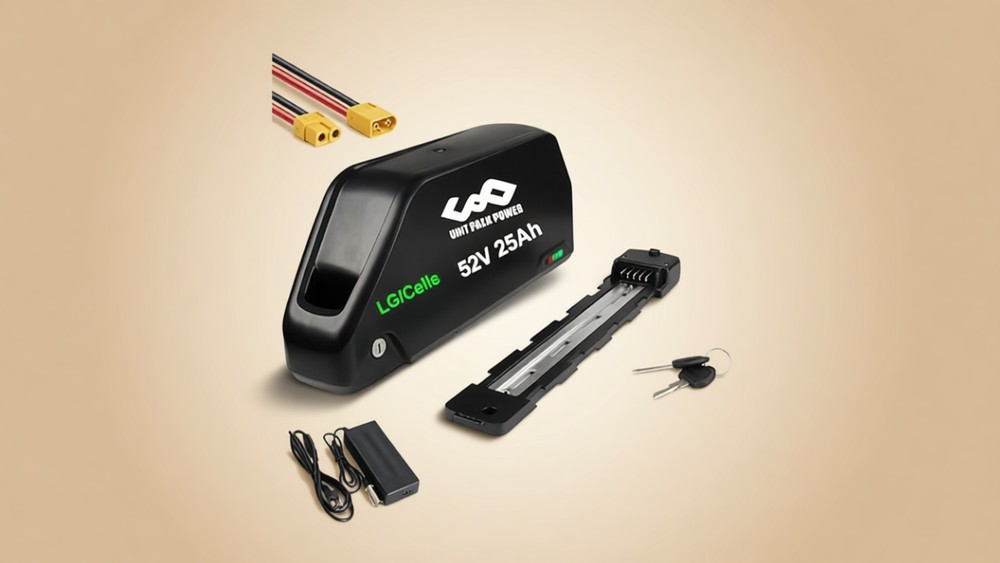
The listing now says DICHOU
Our slug and stored data both describe this ASIN as a UnitPackPower product, and that's what the page sold when we saved it. The live listing carries no UnitPackPower wording. The byline reads Brand: DICHOU, the manufacturer field says Shenzhen Lian Pai Yuan Technology, and the model name is R049-6.
The specs on the page haven't changed with the name. It's still 52V and 25Ah, still a 368x95x150mm shark-form shell, still a 40A BMS with an XT60 discharge port and a 58.8V 3A charger. The checked price sits 10 above our stored figure, 319 against 309, which shifts the cost per watt-hour from about 24 cents to about 25.
What this means in practice is that the brand story you may have read elsewhere no longer applies to this listing. You're buying whatever DICHOU ships under this ASIN today, judged on the specs printed on the page and the two ratings behind it.
The 60V claim meets a 58.8V charger
The live title reads 52V/60V. The charger in the package terminates at 58.8V, and that number is the tell. A 58.8V termination is the standard full-charge voltage of a 52V pack, and every 52V charger on the market ends its charge there.
A pack marketed at a higher nominal voltage would need a charger terminating well above 58.8V. Nothing else on the page backs the 60V figure. No charger option is offered at a higher voltage, and no spec field lists one.
The safe rule costs nothing. Charge the pack only with a charger matched to its voltage, and treat the 60V wording as listing noise until the seller documents a different termination voltage in writing. If you already own a 52V charger, the included one changes nothing for you.
2000W on paper, no owner report yet
The bullet gives the number that matters for a high-power build: Max Constant Discharge Current 40A BMS. At 52V, 40A is 2080W, which makes the 2000W compatibility claim in the title arithmetically consistent. The same bullet lists motors from 250W up through 1000W and 1500W, so the pack is pitched at everything from a commuter hub motor to a full-size conversion.
Read the BMS description closely, though. The title calls it a smart BMS, while the bullet describes a protective plate against over charge, over discharge, over current and short circuit, which is the standard protection set and says nothing about managing peak current. Those aren't the same claim.
And here is the gap that matters most: not one captured owner text reports running any motor on this pack. The 2080W figure is arithmetic, not evidence. If your build genuinely draws near 2000W, you're trusting the spec sheet, because the record gives you nothing else to go on.
What the ratings actually hold
Two ratings, one 5-star and one 4-star, make up the 4.5 average. One written text sits behind them, and that's the whole record.
The one owner text: battery good, charger dead, support slow
One owner has described the pack as well built and, in a later edit, still working great. The same buyer reports the charger arrived defective, blinking a trouble code, and that support took about 20 days from the first email to a tracking number for the replacement. The pack came through, the charger and the wait didn't.
That single text is the most-endorsed thing on the page, and it's a 4-star one. No five-star text exists to compare it against.
What the record doesn't cover is exactly what a buyer this size wants to know. Nobody has reported a range figure, a fit on a named bike, a high-power draw, or enough ownership to say anything about lifespan. You'd be the first to test most of it.

Range and the nine-hour charge
Range first, with the denominator out in the open. At 20 watt-hours per mile, gentle pedal-assist riding on flat ground, 1300Wh carries you roughly 65 miles. At 35 watt-hours per mile, heavy throttle, hills and higher speeds, it carries you roughly 37.
A 2000W build ridden hard lives at the bottom of that band, and a light throttle hand lives near the top.
Charging is a slow affair. The 58.8V 3A charger delivers about 176W, so a full charge from empty takes roughly 9 hours, and that figure is an assumption on our part because the listing gives no charge time at all. Plan an overnight charge and treat it as part of owning a pack this large.
The two weights
The listing argues with itself on weight. The bullet says about 12 pounds. The spec table says 0.1 kg, which is about 0.2 pounds, and no 1300Wh pack on earth weighs that.
Take the 12-pound figure as the honest one and it still fails a smell test: 1300Wh in 5.4 kg gives about 239 watt hours per kilogram, a claimed energy density above the roughly 90-160 band a finished ebike pack reaches. Weigh the box on arrival and meter a full charge before you ride on the capacity.
The listing also promises a long life expectancy without naming cells or a cycle figure. Consumer Li-ion is typically specified at 300 to 500 discharge and charge cycles, per Battery University, and a big claim without a cell name is a marketing number until tested.
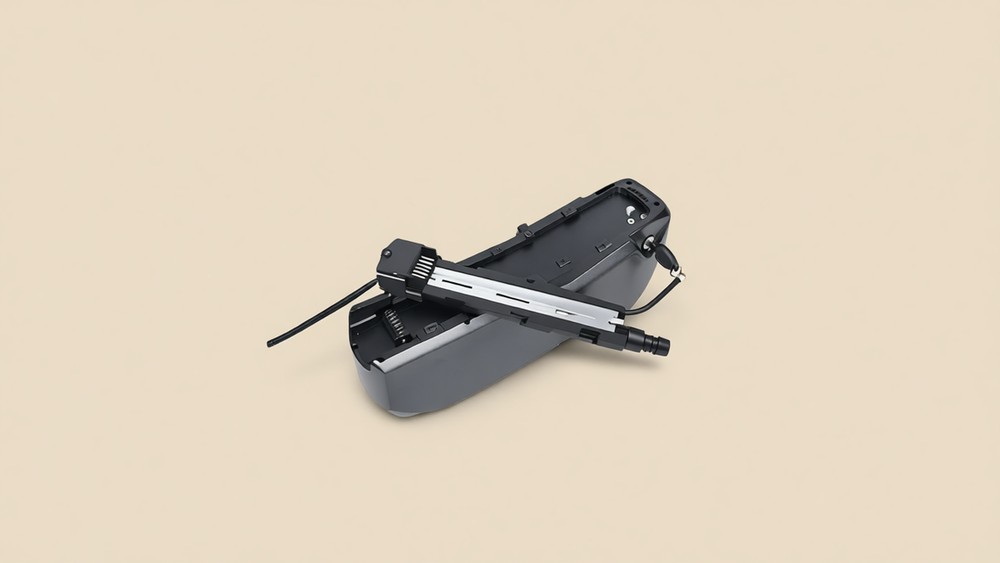
FAQ: the brand name the byline dropped, the 0.1 kg row a pack cannot weigh and the 2080 watts the BMS permits
Is a 58.8V charger the right one for this pack? Yes. A 52V pack charges to 58.8V, and the included 3A charger terminates there. The 60V wording in the title has no supporting spec anywhere on the page. If the seller ever offers a different charger, match it to the pack voltage, not the title.
Will it really run a 2000W motor? On paper, yes. The 40A BMS at 52V allows 2080W continuous, which covers a 2000W motor with a small margin. No captured owner report tests it, so treat the rating as a manufacturer claim rather than a proven one.
Is this still a UnitPackPower battery? The listing no longer says so. The live byline reads Brand: DICHOU and the model is R049-6, while our stored data recorded the same ASIN under the UnitPackPower name at 309. Judge the pack on the specs and ratings printed today, not on the name the page used to carry.
How far will 1300Wh take me? Plan around 65 miles with gentle pedal assist and around 37 miles with heavy throttle, hills and speed, using the 20 to 35 watt-hours per mile band. Your weight, terrain and throttle hand decide where in that band you land.
Why does the weight look wrong? Because the listing gives two figures that can't both be true: about 12 pounds in the bullet and 0.1 kg in the spec table. Even at 12 pounds, the claimed energy density sits above what finished packs normally reach. Weigh and meter the pack on arrival before trusting the capacity.
If you're running a smaller 48V build instead of a 2000W conversion, we have a separate look at the UnitPackPower 48V 20Ah pack. And if you want to compare this pack against the rest of the market, the battery comparison table sorts all 301 by price per watt-hour. You can also browse 52V shark-form packs on Amazon to see what else is selling under this form factor.