Replacing a battery on a mid-drive build is a bigger decision than the price tag suggests. The pack decides how far you go, how hard the bike climbs, and whether the controller ever sees more current than it can handle. Get it wrong and you're out a few hundred dollars and a season of riding.
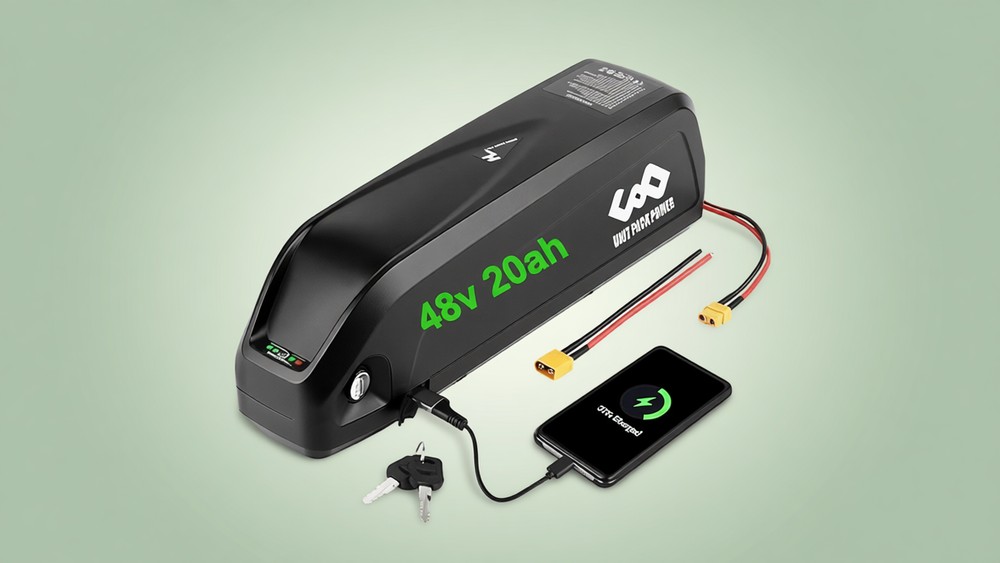
Unit Pack Power's 48V 20Ah pack keeps coming up in that search. It's a 960Wh external pack with a key lock and an XT60 connector, at a price that lands in the middle of the 301 packs we track on price per watt-hour.
The catch sits in the fine print: the title names one LG cell, the bullet a few lines down names another, and you can't see inside a sealed pack to settle the argument.
I went through the listing, its spec details, and every written review on the page. This piece walks through what the numbers say, what twelve purchase-confirmed buyers have actually reported, and the installation work nobody warns you about.
Unit Pack Power's 48V 20Ah pack is a 960Wh external battery, and on price per watt-hour it sits close to the middle of the 301 packs we track.
The case for it is simple: 960 watt-hours, a 40A discharge limit that covers the 1500W motor in the title, and a review record where all twelve written reviews are tied to actual orders. The case against is just as simple. The title promises LG4800 cells and the first bullet promises LG5000 cells, and no teardown settles which one is inside.
One pack, two cell stories
Cell names are the closest thing to a quality promise a budget listing makes, and this listing makes two of them.
The title ends with 'LG4800 Cell Ebike Battery'. The parameter bullet at the top of the page advertises 'LG5000mAh cells'. Those name different capacities for the same part you can't see.
Both numbers fit the same family of cells. The 21700 cylindrical format was announced by Samsung SDI and LG Chem in 2015 for use in electric bikes, and per-cell capacities across the format span 2,000 to 6,500mAh, so a 4,800 or 5,000mAh LG cell is a real thing. Which one is inside this pack is not checkable from the outside.
Nobody has published a teardown, the seller offers no datasheet, and the one owner who has compared generations writes only that this one 'advertises a better cell'.
I treat the cell claim as unverifiable, and the page's own typos don't build confidence. The title spells electric 'electirc' and lithium 'lithiu-m'. A seller that doesn't proof its title is not a seller whose cell sourcing I would take on faith.
What a cell name is worth
A named cell brand narrows what can be inside to a product with a published spec sheet. An unverified name narrows nothing, and a listing that disagrees with itself narrows less than that.
The numbers that hold up
The claims that survive arithmetic are the ones worth weighing. 48V times 20Ah is 960Wh, and the listing doesn't round that up anywhere. The stated maximum constant discharge is 40A, and 40 amps times 48 volts is about 1,920 watts, so the 1500W motor in the title sits under the pack's own limit with room to spare.
The 50W floor in the bullet is loose enough to cover everything from a child's scooter up, and it tells you nothing.
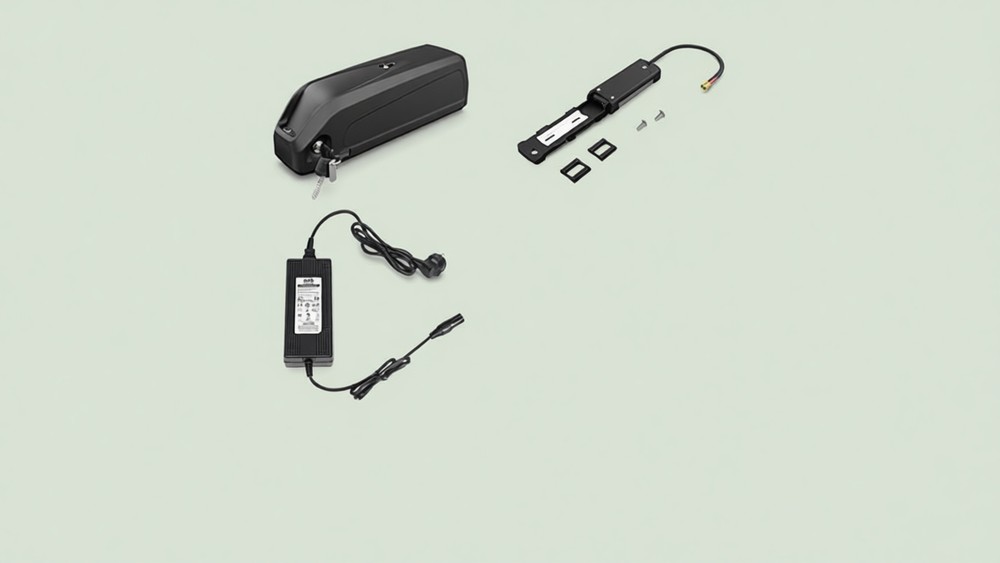
Charging is the slow part. The charger is 54.6V at 2A, roughly 109 watts into a 960Wh pack, and that's about 11 hours from empty.
One owner has already said it plainly: it takes a while to charge, though the battery lasts for hours. If you ride daily, plan to charge overnight.
The rest of the hardware is standard for the format. 365 by 90 by 110 millimeters, an XT60 discharge connector on both sides, a keyed lock on the mount, and an LED level indicator. Weight is the known cost of 960Wh in an external case, and the most detailed review names it as the only downside.
On value, the honest statement is that this pack sits close to the middle of the 301 batteries we track on price per watt-hour. The live comparison table shows the current band, and there are packs under it if the middle doesn't move you.
What twelve buyers reported
Every written review on this listing carries Amazon's purchase confirmation, twelve out of twelve, which is rarer than it should be in this category. The rating sits at 4.2 from 57 ratings, with 73 percent five-star and 12 percent one-star.
The most-helpful text comes from a rider who built their own ebike and reports long battery life, 20-plus miles with charge left, and a tip worth repeating: mount the pack in a velcro bag rather than bare on the frame.
Weight is the only complaint. The warmest detailed review is from someone who bought two packs for two storm-damaged bikes, found them more powerful than the originals, and set the bar honestly: at this price the pack has to last three years to make sense. Half the texts are one line, so the record is warm but thin on specifics.
The one negative is specific and recent. An August 2026 one-star reports a connector pin shorting out, solder melting, and a commute that ended at the roadside. It's the only failure report in the written record, and it involves the connector rather than the cells.
Two of the twelve reviews are in Spanish, one describing an adaptation that fit perfectly, one a one-line thank-you.
Gaps in the record
What nobody has reported: a range figure beyond that 20-plus-mile note, rain exposure, or how the BMS behaves on a long climb. If you buy this pack, you're filling those gaps yourself. Check the current listing before ordering, since availability was down to 17 units when we looked.
Getting it onto a real bike
The Rad Rover report is the most useful fitment data on the page, and it's a story in three parts.
Two earlier packs arrived with keys that wouldn't turn while riding, which the owner solved by getting the upgraded model from the seller. The fit then took bracket modification to match the Rad's receivers and crimping or soldering on the electrical connection, landing with a quarter inch to spare. The seller said it would fit, and it did, but only after real work.
That matches the other reports. One owner notes you may need to modify the power cable depending on your bike, and the Spanish adaptation review says the same thing in one line. The XT60 connector is common but not universal, so check what your controller expects before ordering.
Measure first: 365 by 90 by 110 millimeters against your tray or rack space. Plan for connector work. And if you're mounting it on a frame without protection, the velcro-bag advice above applies.
One warning deserves its own paragraph. An owner who has bought this pack's smaller 13Ah sibling reports that it no longer holds a charge, and that capacity has since left the market.
Battery University's BU-808 puts the consumer lithium-ion specification at 300 to 500 full cycles, which is a few seasons of daily riding. Meter the pack young, while you can still return it.

Buy it for the watts, not the cell story
Here's the decision this pack actually forces. The arithmetic case is good: 960Wh at a mid-band price, a 40A limit that supports a 1500W motor, and an order-confirmed review record with one connector failure in twelve texts. The bet is the cells, because the listing can't keep its own cell story straight and nobody has opened one up.
Buy it if you want inexpensive watt-hours for a mid-drive build, you're comfortable modifying a bracket and crimping a connector, and you'll meter the capacity inside the return window.
Skip it if you want a named cell you can verify or a drop-in fit, because this listing offers neither. The comparison table has packs on both sides of it on price per watt-hour, including cheaper ones if the middle of the band is more than your build needs.
For a broader pick of 48V packs aimed at Bafang builds, Amazon's 48V 20Ah battery listings are worth a scan before you settle.
Frequently Asked Questions
Which LG cell is in this pack? There's no way to know from the listing. The title says LG4800 and the bullet says LG5000, which are two different capacities, and no teardown or datasheet exists that we can point to. Treat the cell claim as marketing until someone publishes a teardown.
What motor sizes can it run? The stated 40A maximum constant discharge times 48 volts is about 1,920W, which covers the 1500W ceiling in the title with room. Stock Bafang BBS02 and BBSHD pulls sit well under that. If you've reprogrammed a BBSHD beyond stock current, check your controller's actual draw against the 40A figure.
How long does it take to charge? About 11 hours from empty on the included 54.6V 2A charger. One owner has confirmed the charge is slow and reports the pack lasts for hours once it's full. Overnight charging covers it.
Will it fit a Rad Rover? With work. One owner has reported two early packs with keys that wouldn't turn while riding, an upgraded replacement from the seller, then bracket modification and crimped or soldered connections, fitting with a quarter inch to spare. Measure before you order.
How long should it last? Consumer lithium-ion is specified at 300 to 500 full cycles, and packs often exceed that figure. The one long-term report we have concerns the smaller 13Ah sibling, which an owner has reported stopped holding charge after a few years. Plan on a few seasons and meter the pack early.