Most replacement batteries make you guess whether the seller thought about weather, mounting depth or the electronics between the cells and your controller. This UAZ 36V 17.5Ah 4-pin pack prints answers to all three, and then hedges two of them in the same breath. The shell holds 630 watt-hours, carries model number HL3617.5, and sits one rung below the 20Ah version of the same family on the variant ladder.
I read the listing, its gallery cards and the family's review pool side by side with the bigger sibling, because Amazon shares one review record across this family's listings. What follows separates the claims that hold up from the ones that need a caveat or a seller question first.
One record, one smaller case
The 4.1-star average and the 15 ratings behind it belong to the whole 4-pin family, not to this shell alone. The identical record, texts included, appears on the 20Ah sibling listing we reviewed alongside this one, and the histogram reads the same 68 percent five-star with 14 percent one-star.
Every text in the pool carries a purchase badge and the dates run from late May to mid-October, so the evidence is recent and real, just not specific to this capacity. Our sibling review carries the full text-by-text rundown, including the fitment failures, and the short version is that buyers who matched their base pins and mounting space have done well.
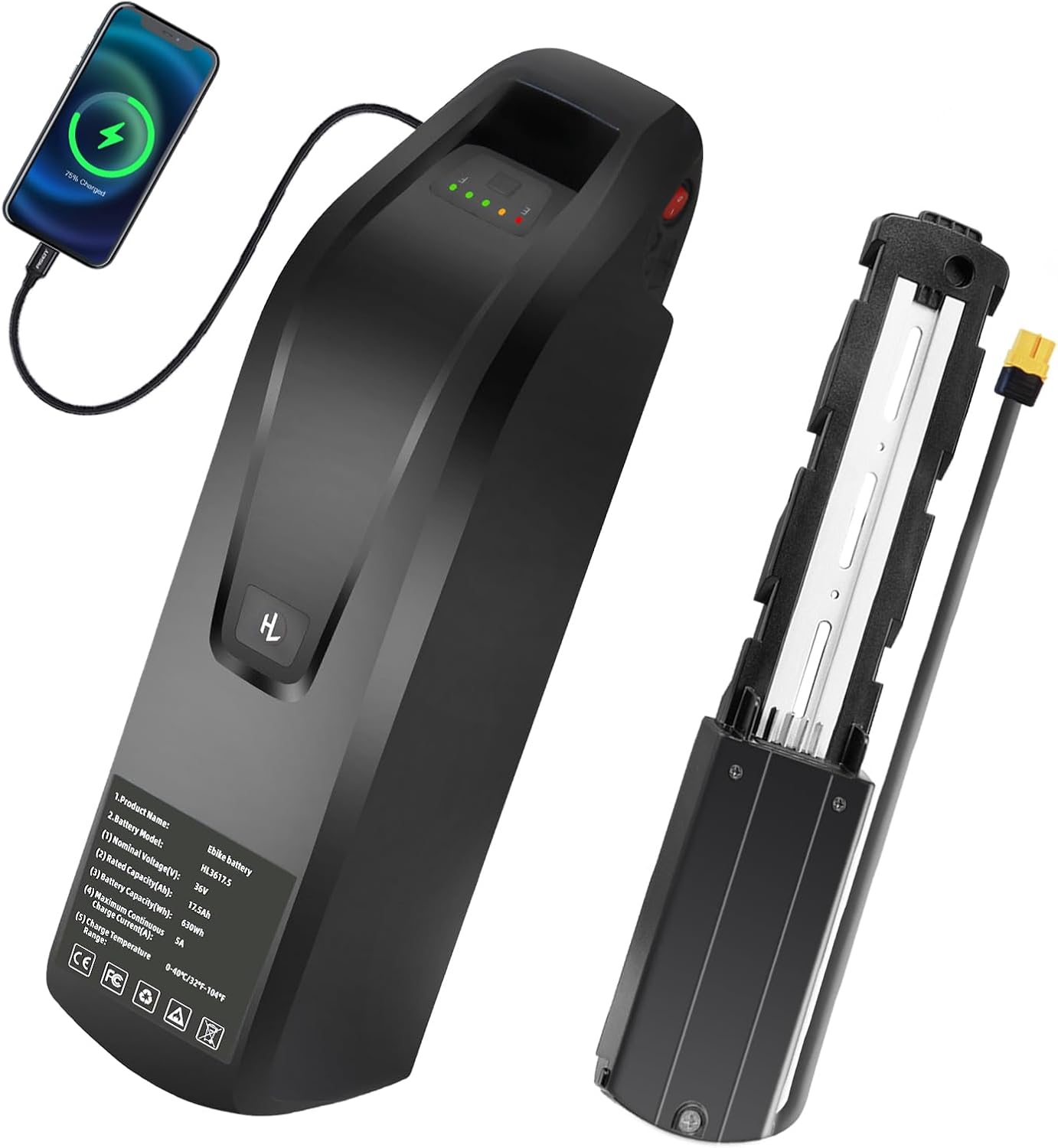
What this listing adds is a tighter case. The battery measures 14.47 by 3.74 by 4.17 inches against the sibling's 4.8-inch depth, and the base plate runs 13.58 by 2.55 by 0.98 inches.
The bullet asks you to confirm your bike's mounting space is larger than the battery before ordering, which is the right instruction and worth following to the millimeter, because half an inch of case depth is the difference between a clean swap and a returned pack.
The model number HL3617.5 appears in both the details table and the model name row, which at least means the paperwork agrees with itself on which pack you ordered.
The family's most modest board
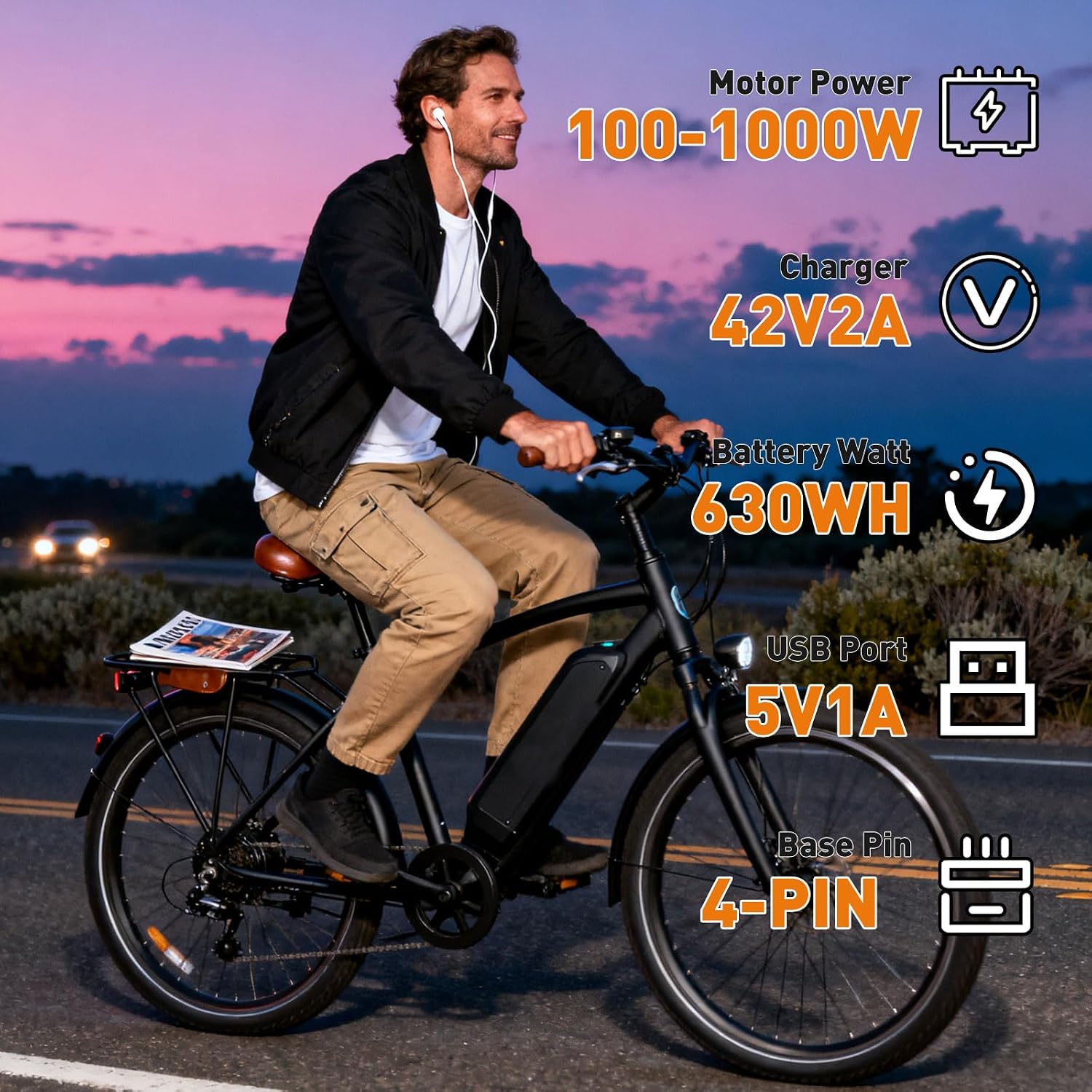
The two bullets that mention the BMS both say 40A, and the title's motor window agrees: 100W to 1000W. That agreement matters more than it sounds, because the 20Ah rung of this same family prints three different power ceilings on one page. Here the math closes cleanly: a 40A board at 36V caps at 1440W, and a 1000W motor draws about 27.8A, comfortably inside the board with headroom for hills and cold-weather sag.
The BMS card lists the same six protections the family prints everywhere: overcharge, over-discharge, over-current, short circuit, over-temperature and overload.
I'd still read the label on the board when the pack arrives, because the ladder holds a 40A figure on this rung against a 50A bullet and a 30A details row one rung up, and no page explains the difference. But this listing's own numbers at least argue with nobody, and a 750W or 500W motor sits deep inside the envelope either way.
IP65 with an asterisk
The waterproof claim is the listing's most quotable line and its most qualified one. The bullet announces IP65 rated protection, tells you to ride confidently in rainy weather, and then ends: please avoid prolonged exposure to heavy rain. Both halves appear in the same paragraph.
The two statements can coexist if you read IP65 narrowly. The rating covers splashes and low-pressure jets from any direction, not soaking and not a pressure washer, so a packed seal that sheds road spray can still be the wrong seal for a bike left out in a storm.
I'd treat the caveat as the seller telling you where the rating ends, and I'd keep the pack out of driveways-deep puddles regardless of what the letters say. The 20Ah sibling's page never claims an IP code at all and says only water-resistant sealing, so this rung is the family's bolder weather claim.
The other electrical claim worth testing is the ultra-low 3 percent self-discharge rate. The bullet never states a period, and Wikipedia's lithium-ion page puts standard self-discharge at 0.35 to 2.5 percent per month depending on state of charge.
A 3 percent monthly figure would sit just above the top of the standard band, and a 3 percent daily figure would be terrible. Meter the pack yourself: charge full, park it a month, recharge and read the difference. That one test answers the question the listing leaves open.
Range, charging, and the true-capacity card
The range claim reads 30 to 45 kilometers, 18.6 to 28 miles, depending on conditions, surface and rider weight. Six hundred thirty watt-hours over that span works out to about 22 to 34 watt-hours per mile, which lands in a very similar band to the bigger sibling's claim. The family is internally consistent on range, and both rungs ask you to plan on the lower half for throttle-heavy riding.
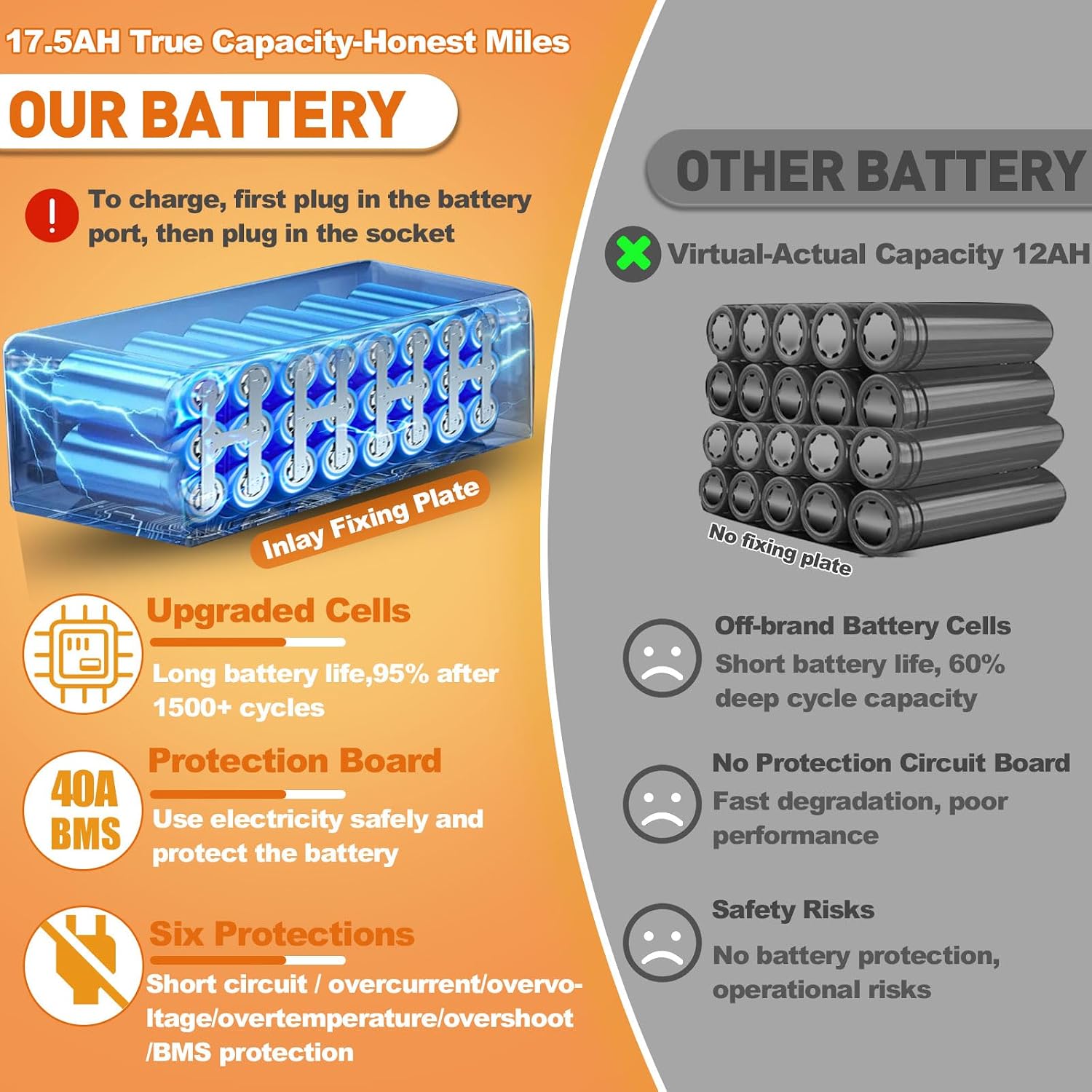
One gallery card markets true capacity and honest miles against a competitor's virtual-actual 12Ah comparison, which is the family admitting the capacity padding that runs through this market. It is still marketing, and the way to verify it is the same meter test: run the pack down and count the watt-hours that come back out.
The card that states this pack's own energy prints 630WH, which is correct math for 36 volts times 17.5 amp-hours.
Charging runs through an XLR port, and like the sibling listing this page never prints a charger's amp rating or an in-box list. At a common 2A charger, 17.5 amp-hours needs at least 8.75 hours from empty, so plan on an overnight charge and read the label on the brick that arrives.
The cycle claim, twice refined
The durability bullet promises 1500-plus deep cycles with at least 85 percent capacity retention. That 85 percent figure gives the claim more shape than most, because the industry counts cycles until capacity falls to 80 percent, so this listing promises to still be above that line at 1500 cycles.
The standard cycle life band for lithium-ion runs 400 to 1,200 cycles, the listing names no cell model, and no test conditions appear anywhere. The claim sits above the top of the standard band with no more evidence behind it than the sibling's version, and I'd plan on the standard band.
The compatibility bullet is worth reading twice because it encodes real advice: your controller must be 36V, and your new capacity should sit within 5 to 10 amp-hours of your original.
The voltage rule is absolute and the capacity rule is a decent guard against overworking an aging controller, even if the real constraint is usually mounting space and pin count. The wide-fitment bullet lists electric mountain bikes, commuters, hybrids, e-trikes and fat tire bikes in generic terms, with no brands named anywhere, so the burden of the fitment check stays on you.
On value, this rung sits close to the middle of the 324 batteries on our price-per-watt-hour table, a little pricier per watt-hour than the 20Ah sibling but cheaper up front, and the specs box beside this review tracks the live comparison. You are paying a small premium per unit of energy for a shallower case and the family's most modest printed board.
Frequently Asked Questions
Is the UAZ 36V 17.5Ah actually waterproof?
It carries an IP65 rating, which covers splashes and low-pressure jets but not submersion, and the same bullet asks you to avoid prolonged heavy rain. Ride in weather, do not park the bike under a downpour with the pack exposed.
How long does the UAZ 36V 17.5Ah take to charge?
Plan on at least 8.75 hours from empty at a common 2A charger. The listing never states its charger's output, so read the label on the charger that ships and plan an overnight.
Why does the 20Ah listing show the same reviews?
Amazon pools reviews across the variants of one parent listing, and this 4-pin family shares one pool of 15 ratings across its rungs. Read the pool as family-level evidence and check the pin count and dimensions for your specific shell.
What does the 3 percent self-discharge claim mean?
The listing does not state a period, which is the problem. Standard lithium-ion self-discharge runs 0.35 to 2.5 percent per month. Charge the pack full, store it a month, and top it up to see where this one actually sits.
Which UAZ 36V 4-pin pack should I order?
Order this 17.5Ah rung if your mounting space is tight on depth or your riding is short-commute, and the 20Ah sibling if your frame accepts 4.8 inches of case depth and you want the lower cost per watt-hour. Both share the same review pool and the same 4-pin base requirement.