Replacing a 36V battery sounds simple until you start matching connectors, case shapes and mount brackets against a bike you cannot test in a store. The Hailong-style 4-pin format covers a huge slice of the budget ebike market, and most of the packs that fill it come from brands you have never heard of, sold by listings that change what they are selling without changing the URL.
That last part is the trap. The pack behind this listing was a 15.6Ah unit not long ago. Now the same page titles it 17.5Ah with a new model number, and the two figures it gives for the pack's own weight do not agree either.
So the real question is not whether this is a good battery. It is how you evaluate a pack when the listing keeps revising itself and the review section holds a single 3-star text that says the charging stopped on ride two.
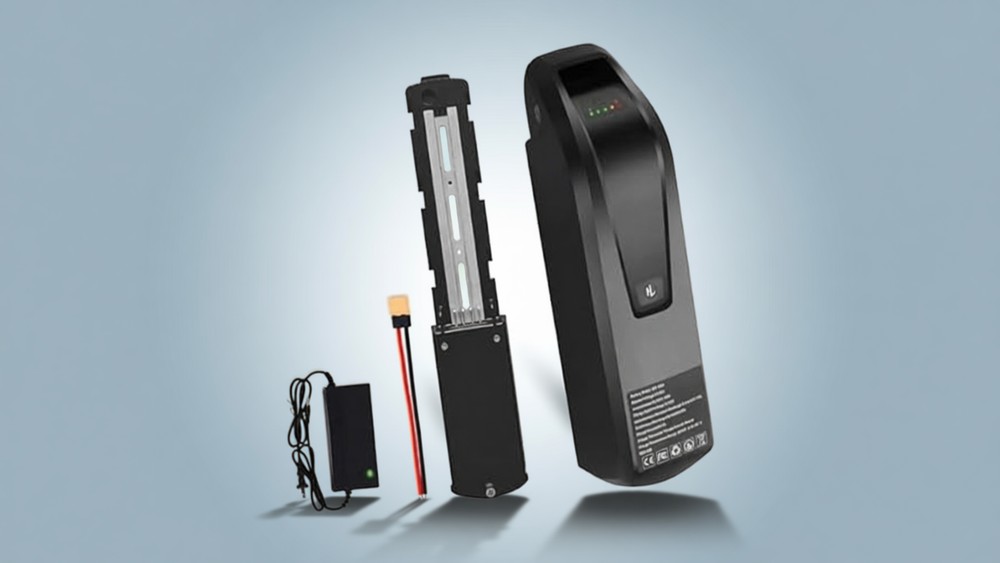
The UAZ 4-pin 36V pack the listing sells today is titled 17.5Ah under model number HL3617.5, which works out to 630Wh, and it carries a 40A BMS, a keyed lock, an LED indicator and a USB charging port at a checked price of 169.99. Our battery comparison table still shows the older 15.6Ah variant the listing used to sell, and the specs box will keep showing that until the next data pass.
On price per watt-hour the live pack sits close to the middle of the 301 batteries we track, about 27 cents per Wh, so call the value what it is: ordinary, not a bargain. No buy box was showing when we checked, which is worth knowing before you plan a purchase around it.
The whole post-market record is one charging failure
One order-confirmed buyer has reported that the pack stopped charging after the second ride. The same text grants that the battery delivered solid performance while it worked, so this is not a story of a pack that arrived dead. The buyer's broader warning is about the process rather than the pack: getting it shipped back and refunded was problematic no matter who you buy from.
That single text is the entire written record. Nobody has reported on range, on the USB port, on the lock and LED hardware, on how the case fits a given frame, or on how the sealing handles rain. The rating stands at 3.0 from a single rating, which is one coin that has landed once.
Read it as a data point, not a verdict, and weigh it against a listing that has already changed its capacity figure once.
The listing gives two weights and two sizes
The bullets say the pack weighs 10.8 pounds and measures 14.47 x 3.74 x 4.17 inches.
The spec table says 8.5 pounds and 8 x 8.5 x 6 inches. Both pairs cannot be true. The bullet numbers match a Hailong-style downtube case, tall and slim, while the spec-table numbers look like a shipping box with padding around it.
The practical upshot is simple. Weigh the pack when it arrives, because the honest figure settles more than curiosity. A 630Wh pack at 8.5 pounds is a different class of hardware than the same capacity at 10.8 pounds, and the weight tells you which one you actually received.
The warranty never settles itself either
The spec table says 1 Year. The support bullet says 3-month replacement coverage plus 12-month technical support. Those are different promises and the listing never reconciles them.
The page also states no charger amperage anywhere, so there is no charge-time math to do, and you should not let a product page invent one for you.
The 1,500-cycle claim against the norm
The listing says the pack withstands 1,500 or more charge cycles. Battery University's BU-808 notes that manufacturers commonly specify consumer lithium-ion at 300 to 500 full discharge and charge cycles before capacity falls to about 70 percent, and that cycle counts climb steeply as discharges get shallower. A 1,500-cycle pack is not impossible, but it is a best-case number for gentle use wearing a spec-sheet font.
Depth of discharge is the lever you control. Charging after rides rather than running the pack flat stretches cycle life.
So does avoiding long stretches parked at full charge or at empty. Treat 1,500 as the ceiling of careful ownership, not the expectation, and the claim stops mattering much either way.
Power, range, and the numbers you can plan around
A 40A BMS at 36V moves about 1,440W continuously on a fresh pack, against the listing's own ceiling of motors up to 1000W. That means the BMS has headroom rather than being the bottleneck. What nothing on the page settles is cell quality, and that is the question that decided the one failure report.
Range math from the 630Wh the live listing claims: at the pedal-assist norm of about 20Wh per mile you get about 31 miles, and a throttle-heavy 35Wh per mile cuts that to about 18 miles. The bullet's 20 to 45 mile band implies 14 to 31.5Wh per mile, so its top end assumes very light use of the pedals. The band is not dishonest, its upper edge is just optimistic.
What to check on arrival
Weigh the pack against the two claimed figures. Watch the charge meter across the first rides, and charge the pack fully and discharge it lightly a few times before you trust it on a commute, because the one failure on record showed up on ride two.
Match the 4-pin connector and the XT60 output against your bike's base and controller before ordering, since adapters are a common source of trouble in this format. For a second opinion on the format itself, our Kornorge 48V Hailong pack review covers the same case style at a higher voltage.

Frequently asked questions
How many amp-hours is this pack really?
The live listing titles 17.5Ah under model HL3617.5, and our table still carries the 15.6Ah variant the listing used to sell. The two figures describe two different states of the same page, not a measurement dispute. Check the model number and the spec-table capacity figure on the listing before you order, since that is what will arrive.
Is it a good deal?
At 169.99 for 630Wh it lands at about 27 cents per Wh, close to the middle of the 301 packs we track. That is an ordinary price for this capacity, and the specs box under the table renders the live position.
How long does it take to charge?
Unknowable from the page. No charger amperage is stated anywhere, so any charge-time figure would be invented.
Can you trust the 1,500-cycle claim?
Treat it as a best case. The common consumer spec is 300 to 500 full cycles, and shallow discharges with frequent partial charging are what push counts toward four figures.
What if it fails early?
One order-confirmed buyer has reported exactly that, a charging failure on ride two, plus a difficult return process. Test the pack inside the return window, keep the packaging, and charge it under supervision the first few times.
