Some bikes outlive their battery brands. Mooka stopped production, and the people who bought those bikes found that a dead pack meant a dead bike with no official fix at any price. The used market fills with otherwise good bikes nobody can charge.
That's the market this UAZ pack sells into, and the review record shows both ends of it. One buyer, who describes themselves as not electrically inclined, moved a dead Mooka onto this battery and got the bike running again, though the mount swap meant taking apart parts of the old dock. Another buyer put it on a Heybike and returned it two sentences later.
Three ratings, two written reviews, and a listing that argues with itself about its own capacity. There isn't much evidence here, so the job is to read it exactly: the port and mount questions the 4-pin plug raises, the claims nobody could've tested yet, and what 378 watt-hours actually buys.
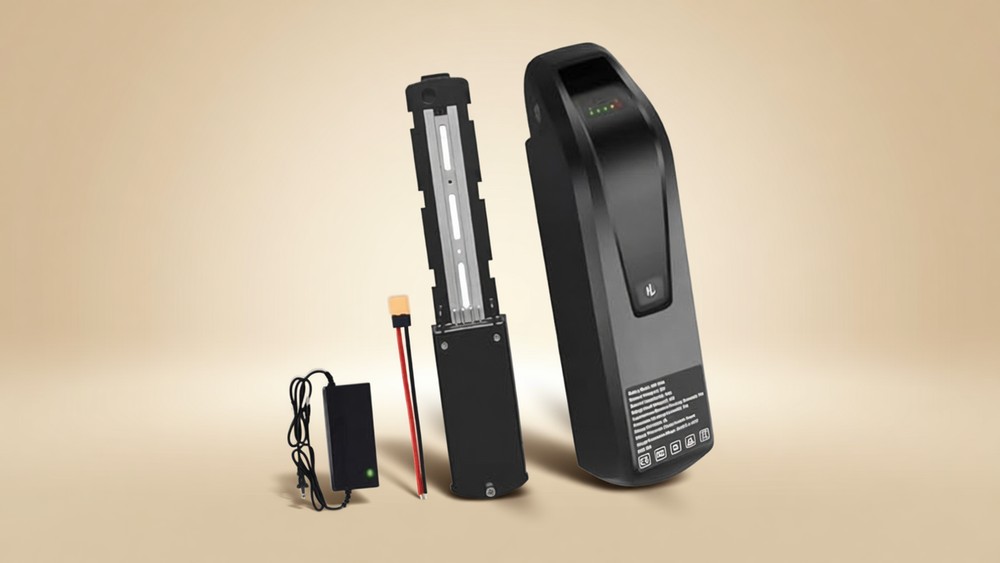
The UAZ 36V 10.5Ah ebike battery is a 378Wh Hailong-style replacement with a 30A BMS, and its thin review record describes exactly one thing it is good at: putting a bike back on the road after the brand that built it stopped supporting it.
The catches are a 4-pin port that decides the fit before anything else and a price per watt-hour in the pricier third of the 301 packs we track. Whether that trade makes sense depends on whether any other battery can still be bought for your bike.
A battery for bikes whose battery maker is gone
Heybike riders get no help from this listing, and the whole market this pack sells into is made of bikes their own brands have walked away from. The record's centerpiece is exactly that kind of rescue: a self-described non-electrical buyer getting a dead Mooka running again on it.
The record is tiny, and the honest move is to say so up front. Three ratings at 3.7, two written reviews, both attached to confirmed orders, and one silent rater. The histogram on the page, 36/32/32 across five, four, and two stars, cannot come from three ratings, which would split 33/33/33, so Amazon is pooling it across the variant family and this exact 4-pin pack has likely never been rated alone.
At 139.99 for 378Wh, the /ebike-batteries/ table puts it in the pricier third of the 301 packs we track per watt-hour. What the price buys is a replacement path for bikes no longer supported by their own brand, plus a 4-pin port match, not cheap watts.

The mount is the project, not the battery
Bringing a Mooka back to life is the documented use here, done by a buyer who describes themselves as not electrically inclined, on a bike whose maker is gone and whose batteries are no longer available anywhere. The new mount didn't match the old one, so the buyer unscrewed the old mount and swapped in the new one.
The old mount held electrical components essential to the bike, so the buyer had to disassemble it and remount those parts elsewhere with some creative hardware. The connection plug itself matched, but a plug match doesn't mean the mount will fit.
After about a month of sporadic use, the pack has held its charge well, and the USB port has charged a phone.
The listing warns to confirm the base pin count and size before you order, because this is the 4-pin variant of a pack UAZ also sells as 5-pin, and we have a separate review of that 5-pin sibling. The port decides the fit before anything else, and a plug match doesn't settle the mount.

One sentence in the listing argues with itself
Bullet 1 declares that this 36V 10.5ah replacement battery "has a capacity of 21AH." The title, the spec table, and every other line on the page say 10.5Ah, and 21 matches nothing, not even two-pack arithmetic on a listing with a unit count of 1.
The motor window contradicts itself too, since the title says 250W to 750W while a bullet says 100W to 750W. Given that the 30A BMS at 36V allows about 1080W, the 750W ceiling holds either way, so the contradiction is real but harmless. Weight drifts as well, listed as 8.26 lbs in the bullet and 8.5 pounds in the spec table.
Then the reverse case, which this listing earns. The IP65 bullet carries its own heavy-rain caveat, consistent with what IP65 actually means, water jets rather than submersion. And the listing's 20-30 km range claim sits inside the 378Wh arithmetic bands, honest and arguably conservative.
The number nobody could test is the 1500-cycle claim with 85 percent retention and no chemistry named anywhere, which exceeds the common norm for these cells on a record whose deepest tenure is about a month.

Two buyers, two very different swaps
The Mooka owner has dismantled the old mount because it held electrical components the bike needed, matched the plug, and finished the job with creative hardware. They have also used the USB port to charge a phone, and the pack has held its charge through a month of sporadic rides.
The Heybike attempt failed in two sentences: the pack didn't work, the buyer returned it, and the text shows nothing about what failed or what was checked first. Heybike appears in no compatibility claim on the listing, which names only generic categories like mountain, commuter, hybrid, trike, and fat tire bikes.
The gap between the two outcomes is the finding. The pack worked where the buyer treated the swap as a project and matched the plug, and the one failure text shows no fit check at all.
The record stays too small to trust in either direction. It says nothing about range, nothing about cycle life, and nothing about water exposure, with one detailed success and one silent failure.
What 378 watt-hours actually buys you
The 378Wh capacity goes through the community energy bands rather than any owner report, because the record holds zero mileage figures. Minimal assist, motor only on hills, at 6-8 Wh/km gives roughly 47 to 63 km, about 29 to 39 miles.
Typical assist around 40kph with pedalling, at 9-12 Wh/km, gives roughly 31 to 42 km, about 19 to 26 miles. Throttle-heavy riding at 14-20 Wh/km drops to roughly 19 to 27 km, about 12 to 17 miles. The seller's 20-30 km claim sits inside the assist-to-throttle band, honest by the arithmetic.
Power checks out too. The 30A BMS allows about 1080W continuous on a fresh pack, above the 750W motor ceiling the listing names.
At about 0.37 per watt-hour, the value is unremarkable, and the /ebike-batteries/ table shows cheaper 36V packs for a reader whose bike brand still exists. This one makes sense for the reader whose brand is gone, whose port is 4-pin, and who is willing to treat the mount swap as the real purchase.
FAQ: the port and frame space a swap must match, the Heybike miss that keeps every other fit unverified and the cycle figure with no chemistry to back it
Will it fit my bike?
Two checks decide it: the 4-pin port has to match your connector, and the frame needs space for 14.47 x 3.74 x 3.5 inches. A matching plug doesn't guarantee a matching mount.
Does it work with a Heybike?
The record has one Heybike failure and return, and the listing promises nothing brand-specific, so treat any specific bike as unverified.
Is it waterproof?
It carries an IP65 rating, which covers water jets rather than submersion, and the listing's own bullet says to avoid prolonged heavy rain.
How long does it take to charge?
A 10.5Ah pack on a 2A-class charger needs about five hours, which is arithmetic rather than a claim, and the listing never names its charger.
Is the 1500-cycle claim believable?
No chemistry is named anywhere on the listing, the common norm for 18650 packs is 300 to 500 full cycles, and the record holds about a month of use, so treat the figure as marketing.