A dual sport helmet has to live two lives, and no single lid does both cleanly.
On the trail the visor keeps sun and roost off your face, and on the highway the full-face shell and chin bar are doing the work that matters in a crash. Budget brands have figured out how to build the shape. What they keep getting wrong is the moving parts inside it.
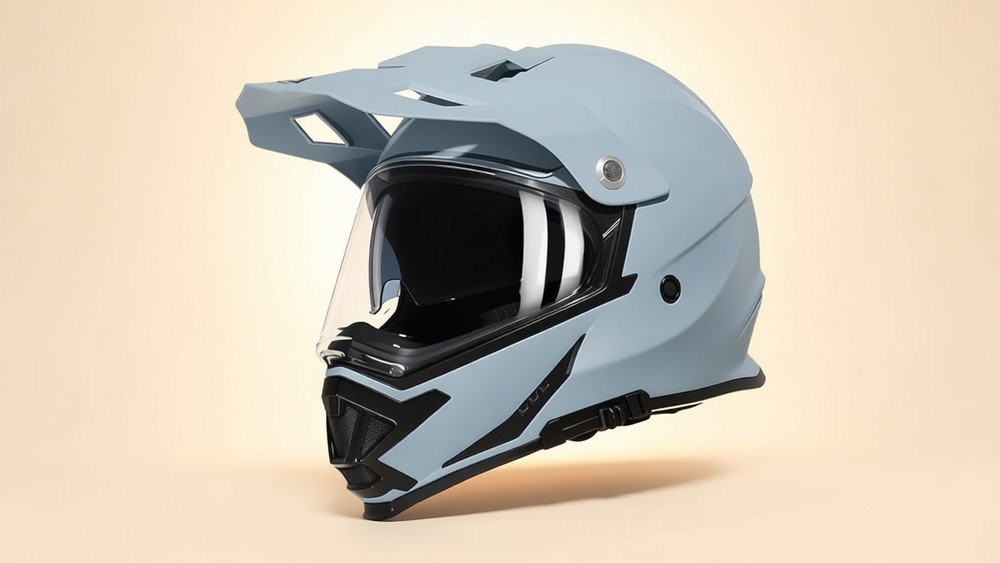
The TRIANGLE AH609 is exactly that pattern. It has the peak, the drop-down sun shield, the clear visor, a DOT sticker, and a price near the middle of the 257 helmets we track. On paper it covers the whole ADV checklist.
The record behind it is strange. Of 504 ratings, ten people wrote anything at all, and all ten are confirmed purchases, which is cleaner than most listings manage.
But the five-star side is mostly single words, and the buyers who wrote sentences describe missing instructions, a stubborn sun shield, and boxes that arrived short. Here's what the record actually supports, and what to test in your first week if you order one.
My read up front. The TRIANGLE AH609 dual sport helmet gets you the full ADV layout at a near-middle price, and the page itself is honest about what ships: the included-components row names the helmet and nothing else.
The parts of the pitch that carry no evidence are the ones the critical texts already argue with, and the two things a buyer most needs, a sizing chart and instructions, are the two things the listing does not provide.
A verified record that runs one word deep
While 504 ratings average a decent 4.2 stars, the written record is thin because half of the five-star texts are a single word. Exelente. Good. Recommend. The most informative material sits almost entirely on the critical side, where two buyers a month apart hit the same wall over missing parts, and a third argues the fit.
The star split puts 66 percent at five stars and 16 percent at four, which reads like a normal budget helmet until you reach the one-star column: 8 percent, high for the category and worth taking seriously on a listing this size.
All ten written texts come from confirmed purchases, so the complaints are not competitor noise. The weakness here is depth, not authenticity, and it cuts one way: nobody who wrote a sentence had much good to say, and nobody who had something good to say wrote a sentence.
Since the record shows units arriving incomplete or without instructions, check for the clear shield and a manual before your return window closes.
The visor system is the whole product, and the record is not kind to it
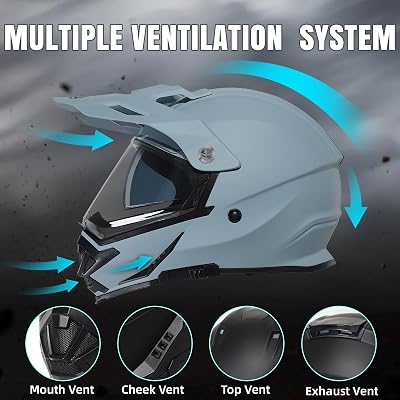
The dual-visor setup is what really sets an ADV helmet apart from a basic full-face, so the listing leans heavily on it: an integrated drop-down sun visor, a clear anti-scratch shield, and a removable peak. One confirmed buyer has found the tinted drop-down shield does not work well, and another says the box came shipped with no clear face shield at all, which is half the dual-visor pitch missing on arrival.
The count matters. Two of the ten texts are about the box arriving short, and the included-components row names only the helmet, so there is no second line item to check the shortfalls against. A third buyer has reported the order arrived incomplete with no detail beyond that.
The instruction gap gets named twice, two months apart, by two different buyers. One says there is no manual and zero information about the helmet online, and the October text repeats it: no instructions for putting the shield on and no manufacturer site to check. On a helmet whose main feature is a two-visor mechanism you have to service yourself, that is not a small omission.
Adding an internal shield is the feature that gets budget lids wrong, because it adds moving parts that must stay aligned while you ride.
So the arrival checklist writes itself. Count the shields against the box contents, work the drop-down through its full travel several times, and check that the peak mounts are tight. Do it on day one, while the return still costs you nothing.
Two buyers, two sizes, and no chart to settle it
The spec table only lists a Medium, which is the selected variant, and the page provides no chart to help you decide if the shell will fit your head.
One confirmed buyer says the helmet fits exactly the size they chose, while another found it runs very small, and both reports are purchase-backed. The record does not resolve which is typical, and it may not need to: brands size differently, and two heads of the same measured circumference can disagree about the same helmet.
What turns this from a nuisance into a safety question is what a helmet does in a crash.
A loose lid does not stay positioned, and the retention system carries the load at impact. Measure the circumference above your eyebrows, treat head shape as a real variable rather than a footnote, and if you fall between sizes on the charts you can find elsewhere, this listing gives you nothing to settle it.
What a DOT sticker does and does not tell you
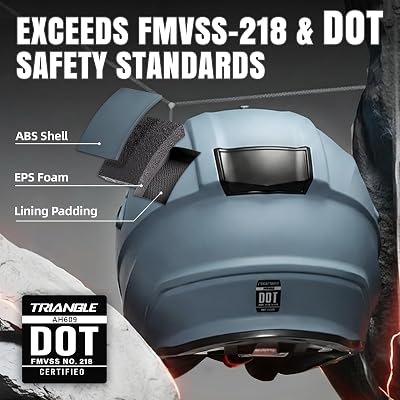
The title leads with DOT approval and the bullets claim superior impact protection and maximum safety. The sticker supports less than the words do. DOT FMVSS 218 is the US street-legal minimum, a pass/fail standard rather than a ranking, and a passing sticker says a sample met the test, not that every unit off the line protects equally well.
The category numbers are the argument for the layout, not for this lid specifically. Helmets cut head-injury risk by about 69 percent and death by about 42 percent, and about 35 percent of crashes hit the chin-bar area, which is the case for a full-face ADV shell over an open face (Wikipedia, Motorcycle helmet).
The manufacturer lists a 1-year warranty in the spec table, and no text in the record mentions a claim against it, so there is nothing to report about how the company honors it. What the record does support is simpler maintenance advice: check the strap and hardware condition as part of a pre-ride inspection, because the retention system is what takes the load.
A mid-price ADV lid to test hard inside the return window
Riders who want the ADV layout with a peak and an internal sun shield at a price near the middle of the 257 helmets we track are the audience here, and the live position renders in the specs box on the motorcycle helmet comparison table. You can also see how the same brand handles a plain full-face street lid in our TRIANGLE TFF15 review, which covers a different helmet with a much bigger record behind it.
This lid should not suit anyone who needs documentation from the maker, because two confirmed buyers have found none anywhere. It should not suit a rider between sizes, because there is no chart on the page to resolve the conflict before you buy.
For everyone else the advice is to test it hard early. Work the drop-down shield, check the clear visor arrived in the box, weigh the fit against a mirror, and return it inside the window if any of the three disappoints. The record says the failures show up immediately, which is the one kind thing an 8 percent one-star column can say.
Common questions about the TRIANGLE AH609 dual sport helmet
Does it come with instructions?
No. Two confirmed buyers, two months apart, report no manual in the box and no manufacturer website with the information, and one of them went looking online specifically for shield-install help.
What is the warranty?
The spec table lists a 1-year warranty. No text in the record mentions a claim against it, so there is no owner data on how it works in practice.
Does it run small?
The record disagrees with itself: one confirmed buyer says it fits exactly the size chosen and another says it runs very small. The page publishes no sizing chart, so measure your head above the eyebrows and buy from a seller with returns you can use.
Is DOT approval a safety rating?
No. DOT FMVSS 218 is the pass/fail US street-legal minimum, and the sticker certifies that a sample passed the test. It is not a performance ranking and it does not support the listing's superior-protection language (Wikipedia).
What arrives in the box?
The included-components row names the helmet and nothing else. Two of the ten written texts report orders arriving short, one with no clear face shield, so count the pieces against the dual-visor pitch on day one.