A full-face helmet is the choice most riders settle on once they have spent a season with anything less. The chin bar covers the part of the head that takes a large share of crash impacts, and once you know that, open faces get harder to justify.
The hard part is not the style, it is the price bracket. Budget full-faces cluster tightly, and the pages look alike: the same DOT claims, the same dual-visor bundles, the same star averages. A rating count in the thousands reads like proof, until you scroll down and find the recent texts are mostly one line long.
This walks through what a large rating base can and cannot settle, what the recent owner texts actually say, and where the price lands against everything else we track.
The TRIANGLE TFF15 is an established listing with 2,580 ratings behind a 4.5 average, and it sits in the cheaper third of the 257 helmets we track on our comparison table, with the same cheap-end position among full-face helmets specifically in our data.
The recent written record runs positive but carries one honest counterweight. Of the ten most recent owner texts, seven are five stars and three are four stars, and one of those three says the price makes the workmanship easy to overlook. That single sentence is the most useful text on the page.
What a big rating count does and does not tell you
The evidence base splits into two very different things. The 2,580-rating average is a long-run signal about consistency, and a 4.5 with 74 percent five stars and only 4 percent one stars says the helmet rarely disappoints badly. The category rank sits at number 26 in motorcycle helmets, which on an Amazon page this old reflects years of steady sales rather than a spike.
The written record is another matter. The ten most recent texts with words on them span one month, and their substance is thinner than the count suggests.
Three are written in Spanish, two of those are one-line replies and one praises the price-to-quality balance. One text returned video-player metadata instead of words, so it contributes a rating and nothing else. One is pure praise for the seller's customer service and says nothing about how the helmet performs on the road.
That leaves four texts carrying real product content, and no helpful-vote counts were visible on any of them, so there is no way to weigh which ones the crowd trusted. A buyer reading the page top to bottom should know that the big number and the detailed words come from different places, and that neither replaces the other.
The one-line problem, and how to read past it
Short replies are not worthless, they are just weak evidence. Three Spanish-language texts calling the helmet good quality is a mild positive signal, nothing more. The four detailed texts below are where an actual buying decision should come from.
The durability evidence points both ways
Two four-star texts, posted in the same week, frame the record's central tension, and both deserve to be read together.
One owner has used the helmet a while and reports that it has survived a few accidental drops onto concrete without any structural issues, calls it very tough, and praises the dual ventilation system. Another owner calls it really comfortable and easy to use, but not top tier quality, and adds that at this price it is easy to overlook the workmanship.
Both can be true of a budget full-face at once. The shell taking concrete drops without damage is a real datapoint about the hard structure, and it is the only durability evidence the record carries.
The workmanship doubt is about everything around that structure: liners, fittings, finish. Neither text claims a crash, so neither is evidence about what happens in one.
The category context is the reason full-face coverage matters at any price. About 35 percent of crashes show major impact in the chin-bar area, which is exactly the coverage a full-face adds over an open face, and estimates reviewed on Wikipedia credit helmets with roughly a 69 percent cut in head-injury risk and a 42 percent cut in death risk for crashed riders (Wikipedia, Motorcycle helmet).
A budget shell that meets the standard is covering that zone, which is the case for taking this style seriously even at the low end.
One explicit sizing report, and a shape row that helps
Exactly one text in the record is explicit about sizing. One owner has found the helmet runs a little tighter than expected, bought a medium, and concluded they should have gotten a large. A second owner ordered a size smaller than their usual fit by mistake and kept it anyway, saying it still feels solid, which leans the same direction but is a different situation rather than a second report.
The spec table adds one useful row: the Shape field reads Oval. Head shape, not just circumference, decides whether a helmet pressures the forehead, and an oval shell suits heads longer front to back.
Between the one explicit report and the shape row, the practical advice is to measure against the maker's chart rather than trusting the listing, and to keep the return window open until the fit is proven on a ride.
Nothing in the record contradicts the tight report, but nothing repeats it either, so it stays a single data point. Treating it as proof that the whole range runs small would be the same mistake as treating three one-line replies as a trend.
The visor kit, the padding, and what the box includes
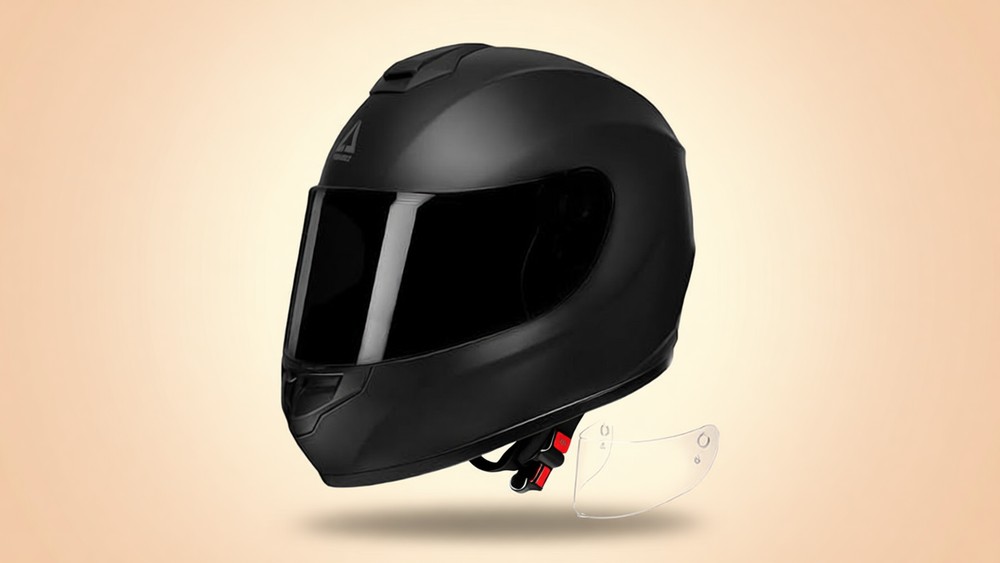
This is the section where the listing and the owner record agree, and after the sections where they pull apart, that is worth saying plainly. The highlight row promises a clear visor and a tinted one plus a storage bag, a washable comfort lining, and a four-vent system. The spec table backs the vent count and lists the closure as a buckle.
One owner confirms the dual-visor kit arrives and describes the tinted shield as a bit rough to get on, while praising the helmet as extremely padded, adjustable, and versatile across summer and winter thanks to the clear visor. The rough seating comment is the only complaint about the visors anywhere in the record, and nobody mentions their optical quality either way.
The washable lining matters more than it sounds for a helmet worn daily, and the four vents get independent support from the durability text, where the same owner who dropped it on concrete calls the dual ventilation system excellent. Between the visor kit, the bag and the lining, the box includes most of what a first-time rider would otherwise buy separately.
A year of warranty cover at this price
At 65.99 when checked, this helmet sits in the cheaper third of everything we track, and the specs box on this page renders the live position because the field moves on every data refresh. The spec table carries a one-year warranty, and it is written on the page, which not every listing at this end of the market can say.
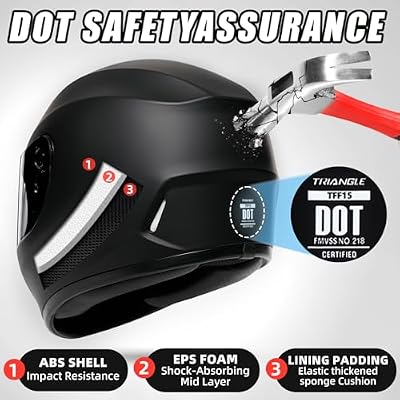
The certification story is straightforward by budget standards. The Specification Met row reads DOT and FMVSS 218, the US minimum for a street-legal motorcycle helmet, and the Certificate Type row reads DOT. As with any listing claim, the practical check is the sticker on the shell when the box arrives, because a page label is not the certification.
The honest framing for a decision: a buyer is trading finish-level quality for a proven sales record, a written warranty, and a dual-visor kit included in the price.
The twin TRIANGLE full-face listing we also track sells the same style, and our comparison table shows both against the full field. A rider who wants more structure in the quality story should read both records before choosing, because this record alone settles consistency, not craftsmanship.
Check the current TRIANGLE TFF15 price on Amazon.
Frequently asked questions
Does the TRIANGLE TFF15 run true to size?
One explicit report says it runs a little tighter than expected, and the owner concluded a large was the right call after buying a medium. The spec table's shape row says oval. Size against the maker's chart and keep the return window open rather than trusting the page.
Does it come with both visors?
Yes. The highlight row promises a clear visor and a tinted one plus a storage bag, and one owner confirms both arrive, adding that the tinted shield is a bit rough to seat at first. The chin strap fastens with the buckle the spec table lists, which is simpler to live with than a double-D ring for riders who take the helmet on and off daily.
Is it durable?
The record carries one account of drops onto concrete without structural damage from an owner who has used it a while, and one four-star text that calls the workmanship easy to overlook at this price. Both are about the same week of texts, and neither mentions a crash.
Is it quiet?
No text in the record mentions wind noise in either direction, even though the listing describes a vent system built for airflow. The four detailed owner texts cover comfort, visors, sizing and durability, and noise is simply absent from all of them.
What warranty applies?
The spec table carries a one-year warranty. Nobody in the owner record has mentioned warranty service either way, so there is no owner evidence about how claims are handled, only the written term on the page.