Two helmets, one conversation, and almost no money spent. That's the promise behind the cheapest corner of the intercom market, where a growing pile of brands sell single Bluetooth units for less than the cost of a tank of fuel and a mount, a mic and a pair of speakers in the box.
What's missing from those listings is evidence. Range figures run to half a kilometer. Battery claims run to days.
The spec tables contradict the bullets that sit above them, and nobody in the review section has measured any of it.
The C9 is one of the rare budget units with a record that can actually answer questions. Ten recent buyers, every one with an order-confirmed purchase, eight happy and two lukewarm, and the lukewarm pair turn out to be the most useful reading in the whole record.
The TOUCH TWO C9 sells as a single unit at a checked price of 27.84 with Bluetooth 5.4, two microphone types for different helmet shapes, a claimed 600-meter two-way intercom range and an IPX6 rating. Per rider, our intercom comparison table puts it in the cheaper third of the 192 intercoms we track, which is genuinely good value and worth saying plainly.
One wrinkle to keep the math honest: one unit comes in the box, and the table's per-rider figure divides by two seats. The true cost for the first rider is the full price, and a riding pair is buying two units at about 55.68 for the set.
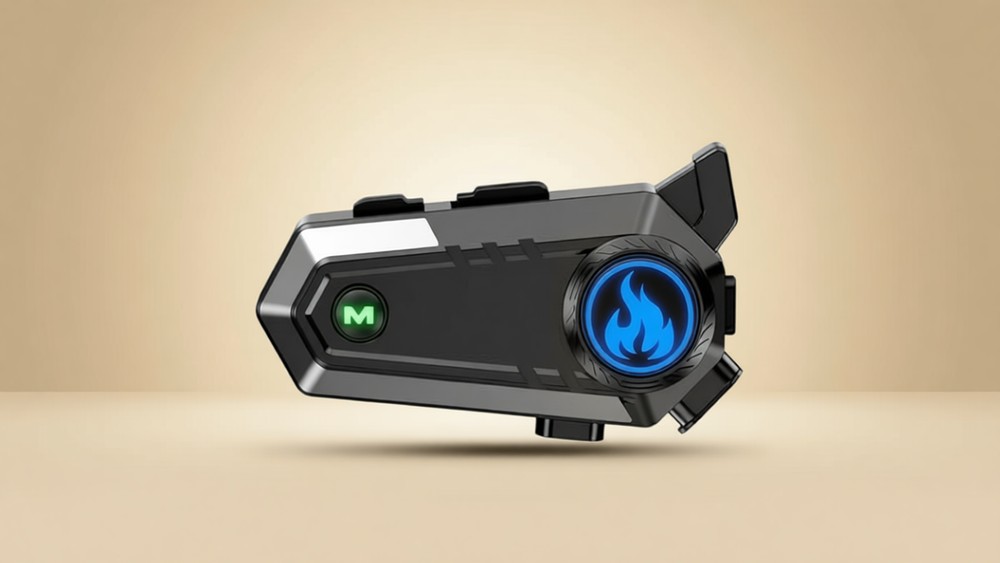
The 600-meter figure and what riders actually report
The listing ties its 600-meter range to two-way intercom between same-model units and warns the C9 will not pair with other brands.
No buyer in the record comes anywhere near that figure. One rider reports a strong, clear signal with a partner they're rarely 50 feet from on a ride. Another, riding at 80 mph, could talk and hear their partner but not perfectly.
The Bluetooth context explains why the gap is normal rather than a scandal. Wikipedia's Bluetooth article gives the standard's most common mode 2.5 milliwatts of transmit power and a typical range of up to about 10 meters, with Class 1 radios reaching about 100 meters, and even the 40 to 400 meter figures attached to Bluetooth 5 are radio maximums in open air.
Range figures above that come from the units' own radios, and they assume nothing solid stands between the helmets.
So plan around the use the record actually supports: a rider and a pillion, or two bikes that stay within a block of each other. One mid-band reviewer puts the design case plainly, calling it really only good for driver and pillion passenger. Rides that spread a group over hills need a different tool, and a mesh unit like the FreedConn FX Pro is the right one.
Speaker size: the listing contradicts itself, the record picks a side
The bullet sells 50mm PEN speakers. The spec table carries both a Speaker Size field of 50mm and an Audio Driver Size field of 40 millimeters. Both can't be true, and the listing never resolves which driver is in the box.
The owner record leans positive on sound either way. One buyer reports call quality was crystal clear on the bike and the music clear and loud. Another praises how easy the install was and how good it sounds.
A third grants the microphone works remarkably well for the price and calls the speakers excellent, with one honest limit worth quoting: "you should not expect a high-quality sound suppressor or high fidelity." That sits oddly against the spec table's Active Noise Cancellation field. The safe reading is that the C9 does the ordinary cleanup work budget units do, and no more.
The mic and connection complaints
The two mid-band texts carry the practical warnings. One buyer reports a bad connection between the earphones and the microphone that interrupts the sound. Another reports the microphone is held on by a very small piece of velcro that can come loose on open-face helmets, and that every power-off needs a button press to reconnect the intercom before it will talk to the other unit again.
Neither complaint shows up in the positive texts, but both are the kind of fault that gets worse with vibration and time, so seat the velcro firmly and test the reconnect behavior on day one.
Battery claims with actual owner corroboration
The bullet claims a 1000mAh battery, 50 hours of music sharing, calls or intercom, 70 hours of music alone, 120 hours of standby and a 1.5 hour charge over USB-C. What makes this section different from most budget listings is that owners have actually backed part of it up.
One buyer installed a C9 after it sat for four months and found it still at 90 percent charge, which is the standby claim holding up where you can test it. Two other texts praise how long the battery lasts.
Nobody has metered the 50-hour talk figure, and nobody should pretend otherwise. What the record supports is a battery that holds its charge in a helmet pocket and does not die mid-week. That covers most real use of a two-seat intercom.
Water, mounting, and the small print
The IPX6 rating means the case shrugs off powerful water jets under IEC 60529, per Wikipedia's IP code article, and the X means dust protection was never rated. Nobody in the record reports riding a storm with one. It shrugs off rain. It does not survive a soaking.
Mounting is a clip-on clamp plus adhesive pads, and the two microphone types cover the common helmet shapes: a boom mic for open and modular lids, a clip mic for tight full-face chin bars.
The spec table also carries noise that deserves a squint, including an audio latency of 1 millisecond, a frequency response listed as a single 100 hertz figure, and a charging time given for a case battery that is not in the box. One buyer's gripe was with shipping rather than the headset: a reorder placed on August 15 had still not shipped by August 25.
What to check on arrival
Confirm both microphone types are in the box, since the listing's whole pitch includes them.
Seat the mic velcro with pressure if you ride an open-face helmet, given the one loosening report. Pair both units before the first ride and power-cycle them once to see how the reconnect button behaves. Put a charger on it and confirm the USB-C port takes your cable ends, because recessed ports have caught out buyers on other budget units.
Frequently asked questions
How far does the C9 really reach?
The listing claims 600 meters between same-model units. The closest owner reports are 50 feet apart and an 80 mph conversation that worked but not perfectly. Plan for rider-and-pillion or short-range use and treat 600 meters as the open-air maximum.
Does it work with other brands?
No. The listing states it connects only to the same model of helmet speakers, so both riders need a C9. If you ride with mixed hardware, look at a unit with a universal pairing mode instead.
Is it waterproof?
IPX6, which means water jets rather than dunking under IEC 60529, and the dust digit is unrated. It shrugs off rain. It does not survive a soaking.
How long does the battery last?
The listing claims 50 hours of mixed use, 70 hours of music and 120 hours of standby from a 1000mAh battery. Owner evidence supports the standby and duration claims: one buyer has found 90 percent charge remaining after four months of sitting, and two others praise the duration. The 50-hour figure has not been metered by anyone.
Is it worth it?
At 27.84 for a single unit it sits in the cheaper third of the 192 intercoms we track per rider. Two riders means two units, about 55.68 for the pair, and the record's own words make the case: "quality as good as the expensive ones, with more money left for bike mods."

