Six-rider mesh for about a hundred dollars used to mean buying the bottom of the range and hoping. FreedConn's FX Pro says the compromises are over: auto-join mesh, cross-brand pairing, AI noise cancellation, an IP67 rating.
Some of those words are doing heavy lifting. The spec table promises a lot, and the twelve people who wrote about the FX Pro bought it, rode with it, and came back verified.
All twelve. What they describe does not always match the box.
The gap sits in one place. Three owners, separately, describe music that ducks under every sound the mic hears, with no way to turn that off. On a headset pitched partly at music sharing, that is not a small thing.
Here is what the texts carry, what the noise-cancellation words cover, and where the group talk actually earns its price.
The FreedConn FX Pro sits in the cheaper third of the 192 intercoms we track on price per rider, and tenth of the 16 six-rider units.
The exact position renders live in our intercom comparison table. The rating reads 4.3 from 70, with a histogram that runs 71 percent five star and a thin 13 percent four star band, so owners split into satisfied and quietly disappointed rather than landing in the middle.
Every one of the 12 written texts carries a confirmed order. That is a cleaner record than most budget listings can show, and it makes the complaints worth taking seriously. The same-brand mesh works very well according to one owner, and battery duration draws praise.
Against that, three owners describe the same audio mixing behavior from different angles, one found intercom pairing so difficult they regretted the purchase, and two more complain about voice prompts they cannot adjust. The spec sheet promises 15 hours of talk, 12 hours of music, a 2.5 hour charge and a 1200 meter range. Nobody in the record has measured the distance.
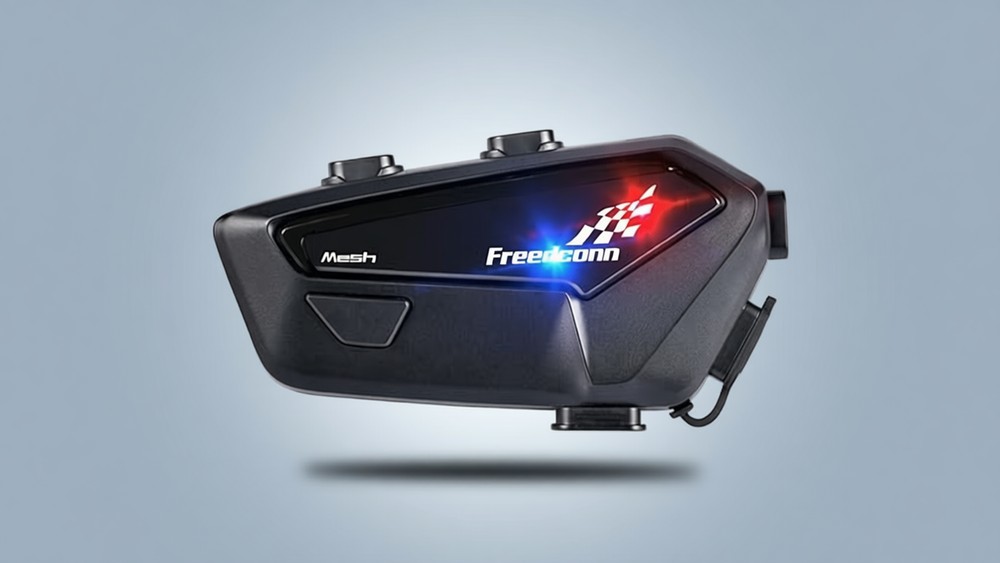
Three owners, one feature, the same complaint
The listing puts audio multitasking and AI noise cancellation at the top of its feature list. Three owners describe what the feature does in practice, and none of the three descriptions is flattering.
One owner has found that any wind or motorcycle noise cuts the music, so the song comes back for a few seconds and drops again, and the feature cannot be adjusted or turned off.
Another has reported the same ducking firing over and over, calling it insanely annoying, with no shutdown anywhere in the settings. A third says the music does not come through very loud at 70 mph. Different rides, different months, same behavior.
The warning about volume is worth copying exactly, because the owner who describes it is not exaggerating. When the FX Pro first connects with another rider, the volume starts at full, and the owner advises turning it down before you join a group or you risk your hearing. That is a strange default for a unit that otherwise worries so much about what reaches your ears.
The remaining texts are short. Two are five-star notes in Spanish, one of which praises the mesh and battery duration while reporting interference only in groups above eight riders. Another asks whether the prompts can be switched to Spanish, which the listing does not answer anywhere.

What the noise-cancellation words on the box actually cover
The spec table lists Active Noise Cancellation, then CVC and AI beneath it. Those are not three names for the same thing.
CVC, in the category generally, works on the microphone side, cleaning up your voice before it goes out. It does nothing to what a listener hears inside their own helmet. Real active noise cancellation for the listener is a different technology, and the listing does not explain which one the FX Pro actually runs.
One owner has stated plainly that the AI noise cancellation is not real. Another owner, on a different ride, concedes that the road-noise cutout works well. Both can be true at once, and the combination suggests the microphone processing is doing its job while the music side ducks volume instead of cancelling anything.
That is consistent with the three ducking complaints above: the headset reacts to detected noise by lowering your music, which is the opposite of what a music listener wants the feature to do.
The IP67 rating has no owner test behind it yet. The IP code scheme reads IP67 as dust-tight and protected against one metre of water for thirty minutes, a laboratory dunk figure rather than a rain guarantee. Nobody in the record reports riding in rain at all, so the rating stands untested by the only people who bought the thing.

Rider-to-rider sound against a 1200m claim
The most detailed text took two rides with two riders connected. Phone to headset, the Bluetooth works fine.
Rider to rider, the sound breaks up, and the owner says it happens even within a few feet of each other. That is the same owner who credits the road-noise cutout, so the complaint is not a grudge, it is a specific observation about one link in the chain.
Against that sits a five-star owner who reports the mesh working very well with same-brand units.
The same text notes interference only once a group grows past eight riders, which is beyond this unit's own six-rider claim and probably describes a group mixing gear from several makers. Mesh links re-broadcast between units, so the group link hops rider to rider, and a large mixed group is exactly where the hops strain.
Nobody in the record reports a distance. The 1200 meter figure is a marketing number that assumes open terrain and line of sight, and Bluetooth's most widely used mode manages about 10 metres on its own, so every intercom range claim rests on relay and conditions no listing can promise.
Where the FX Pro sits on range and price next to everything else we track is in the comparison table.
Buy it for the group talk, not for the music
For a group that rides the same brand and wants cheap mesh, the record supports the purchase. One owner has found the same-protocol mesh works very well, and the same text praises the battery duration. The spec table claims 15 hours of talk and 12 hours of music on a 2.5 hour charge, and at 1.8 ounces the headset disappears into a helmet's weight budget.
For music listeners, the record argues against it. Three owners could not stop the music from ducking under noise, and the feature is the listing's headline.
For anyone needing proven cross-brand pairing, nobody in the record confirms it works, and one owner has found pairing difficult enough to regret the purchase, asking for an app with sensitivity adjustments. Two more owners report voice prompts with a heavy accent that are hard to follow, and one asks for a language the listing does not offer.
The value case is honest at this price: it is in the cheaper third of 192 intercoms per rider, and the comparison table shows what a bit more money buys elsewhere.
Two riders buying together have a separate page: the FX PRO 2-pack review covers the pair math and the four-month record behind the shared rating pool.
Frequently Asked Questions
Does the FX Pro pair with other brands?
The listing claims cross-brand compatibility, and zero owners confirm it. One owner reports intercom pairing was so difficult they regretted the purchase, and that complaint does not specify which brand was on the other end. Treat cross-brand pairing as unproven until someone reports it working.
Is it waterproof?
The spec table says IP67, which under the IP code scheme means dust-tight and protected against one metre of water for thirty minutes. It is a lab dunk rating, not a promise about riding rain. No owner in the record reports water exposure either way.
How long does the battery last?
The listing claims 15 hours of talk, 12 hours of music, a 2.5 hour charge and 7 days of standby. One owner calls the duration very good, and nobody reports a number. There is no long-term battery report in the record.
Why does my music keep dropping out?
Owners describe the audio mixing lowering music volume whenever the microphone detects noise, including wind and engine sound, with no setting to turn the behavior off. One owner says the ducking fires over and over on a single ride. The feature is central to how the headset processes sound, so plan on it being there.
What about the voice commands?
You can record your own commands, which is the listing's headline. Two owners report the default voice prompts are hard to understand, one describing a strong accent in the menu system, and another saying the prompts do not work well. One buyer asks for a Spanish language option the listing does not mention.