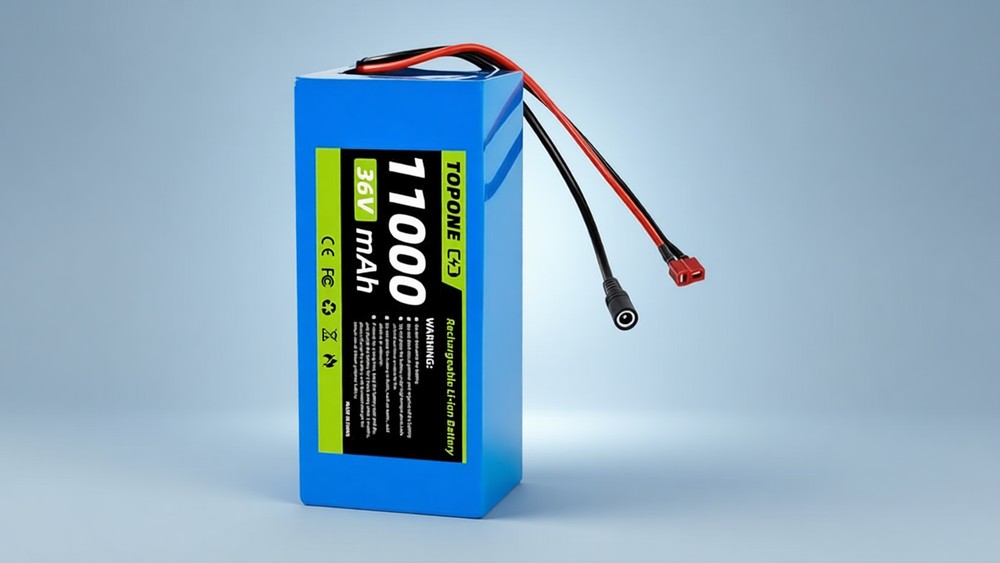
The 2.8-star rating was the loudest thing about this pack, and now the listing is gone entirely because all three Topone ASINs retired together, which finally resolves the question the rating posed. The marketplace agreed with the early buyers. What remains useful is the method: how to read a sub-3-star signal and how to buy in the 36V slot without repeating this mistake.
What a 2.8-star rating on a small base actually means
When you see a sub-three average on a handful of reviews, it's usually the classic signature of capacity shortfall, BMS cutouts under load, or wide QC variance across the batch. Small bases are volatile, but the direction of the signal was confirmed when the whole storefront left the marketplace entirely. We can't say which failure mode hit this specific pack because no owner reports exist, but you can learn the diagnostic signs instead.
A low rating often means the pack doesn't hold the charge it claims, or the internal circuit board cuts out when you try to climb a hill. Either way the result lands on you: a commute that turns into a long walk with a heavy bike. That is why the score deserves a read even before you open a single review. The stars tell you that something went wrong for somebody, and your job is to find out what.
To do that, read the text of the low reviews rather than the average. Sort by newest first, then look for a repeated complaint. Capacity that dies within weeks points at cells that never matched the stated Ah. Power loss on hills points at an undersized BMS. One bad batch shows up as a cluster of recent complaints with older reviews still positive. Each pattern carries a different risk for your build, and the pattern matters more than the number.
The specs were ordinary, and one claim needed a variant check
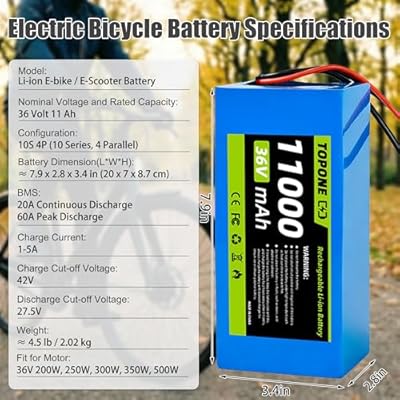
At 396Wh for a recorded one hundred nine dollars, you pay 28 cents per Wh, which is weak value against the 36V tier. This 11Ah size sits in a thin slot because 10Ah packs are cheaper and the range gap is only one or two miles. You're paying a premium for a boost that doesn't change your ride. The box is light enough for a triangle bag, but the math never justified the cost.
The 20-30A BMS split matters because 20A at 36V is 720W continuous while 30A is 1080W, which means the 1000W motor claim only works if the order ships the 30A board. Get the 20A version and the battery may cut out on a hill at full throttle. The 100W floor is a design-intent signal, not a hard cutoff, and it tells you the board was sized for mid-power builds. Check which board your order actually includes before you rely on any of the compatibility claims.
What 396Wh turns into on the road
Start with what you can spend. Set aside about fifteen percent of 396Wh for battery health and you get roughly 337 usable Wh. Now divide. Pedal assist at 15 to 25 Wh per mile gives you 13 to 22 miles. Throttle-heavy riding at 30 to 40 Wh per mile drops that to 8 to 11 miles. Hills, heavy gear, and cold weather all push consumption toward the top of the band, so plan around the low numbers.
The voltage decision comes before any of this math, because 36V versus 48V matters more than the brand name you pick. A 36V pack on a 48V controller underperforms badly, and the charge voltages do not match either. If your system is 36V, the pack above delivered reasonable commuter range for short flat routes. If your system is 48V, nothing on this page applies to you.
Buying a cheap 36V pack without repeating this
If you decide to buy a cheap 36V pack, check whether the cells carry a name brand or a UL standard, because generic cells are the part that fails when you push the bike uphill. Confirm the BMS amperage in writing so the cutout behavior does not surprise you on a climb. Make sure the voltage matches your controller exactly, and get every one of those answers from the seller in writing before you pay.
Then read the recent review text instead of the star average, because a decent overall score can hide a bad batch that arrived last month. The negative reviews name the failure mode, and the failure mode tells you whether the risk applies to your build. Our battery comparison table sorts the 36V tier by price per Wh, and packs with larger review bases are the safer bet at the same price. The 36V 10Ah LiFePO4 option costs more per Wh but cycles far longer, which suits daily riders.
One last habit worth building: check the seller's answer speed before you order. Ask one spec question and time the reply. A seller who answers within a day with exact numbers will also handle a warranty claim properly. A seller who answers with a spec sheet copy-paste or not at all has told you everything you need to know about what happens if the pack arrives weak. Browse current 36V battery listings with that test in mind and most bad purchases eliminate themselves.
Frequently Asked Questions
Is a 2.8 star rating reason to skip a battery?
A sub-three star rating on a small review base is a strong warning that quality control issues or capacity shortfalls likely exist. You should read the text of those low reviews to see if the battery fails under normal load.
Should I get the 20A or 30A BMS?
The 20A board allows 720W of continuous output while the 30A version handles up to 1080W at this 36V level. A 1000W motor specifically requires the 30A board to prevent constant cutouts during climbs.
Is 396Wh enough for a daily commute?
This capacity provides roughly 13 to 22 miles of pedal-assist range, which is fine for short and flat trips around the city. Throttle-heavy riding will drop that distance to 8 to 11 miles.
Why is the 11Ah size considered unusual?
The 11Ah pack sits in a thin slot and offers only 1 to 2 miles extra range over the cheaper 10Ah version. There is no reason to pay a premium for such a small gain in distance.
Can I use a 36V battery with a 48V controller?
No, the battery voltage must match the controller because the charge voltages differ between the two systems. Mixing these parts will cause the bike to underperform or potentially damage the electronics.