Proprietary folding ebikes create a replacement problem we keep coming back to. When the case, the mount, and the discharge port are all shaped around one mold, you buy from whoever copied that mold or you stop riding. ShunTongDa copies the DCH-009 mold used by Engwe, Mate X, Polarna, and a list of other folding bikes, and its pages are the main aftermarket for it.
That aftermarket just reorganized itself. Our review of the 14Ah DCH-009 replacement covered a page that had already drifted once, selling 17.5Ah when we first wrote about it and 14Ah when we rebuilt the article. That listing is now gone from Amazon entirely.
The family's capacities have moved onto separate pages, and the live 17.5Ah rung is the subject here.
This review reads the new page the way the old one taught us to. One model row that names the real pack, a charger promise the box list contradicts, weight rows that fight each other, and a rating count that starts at zero.
The ShunTongDa DCH-009 48V 17.5Ah battery is a 310.00 folding replacement pack with no ratings, no written reviews, and a spec sheet that is coherent in exactly one place: the dimensions. Its price per watt-hour lands among the most expensive of the 324 packs we track, which you accept on this kind of purchase for the fit or not at all.
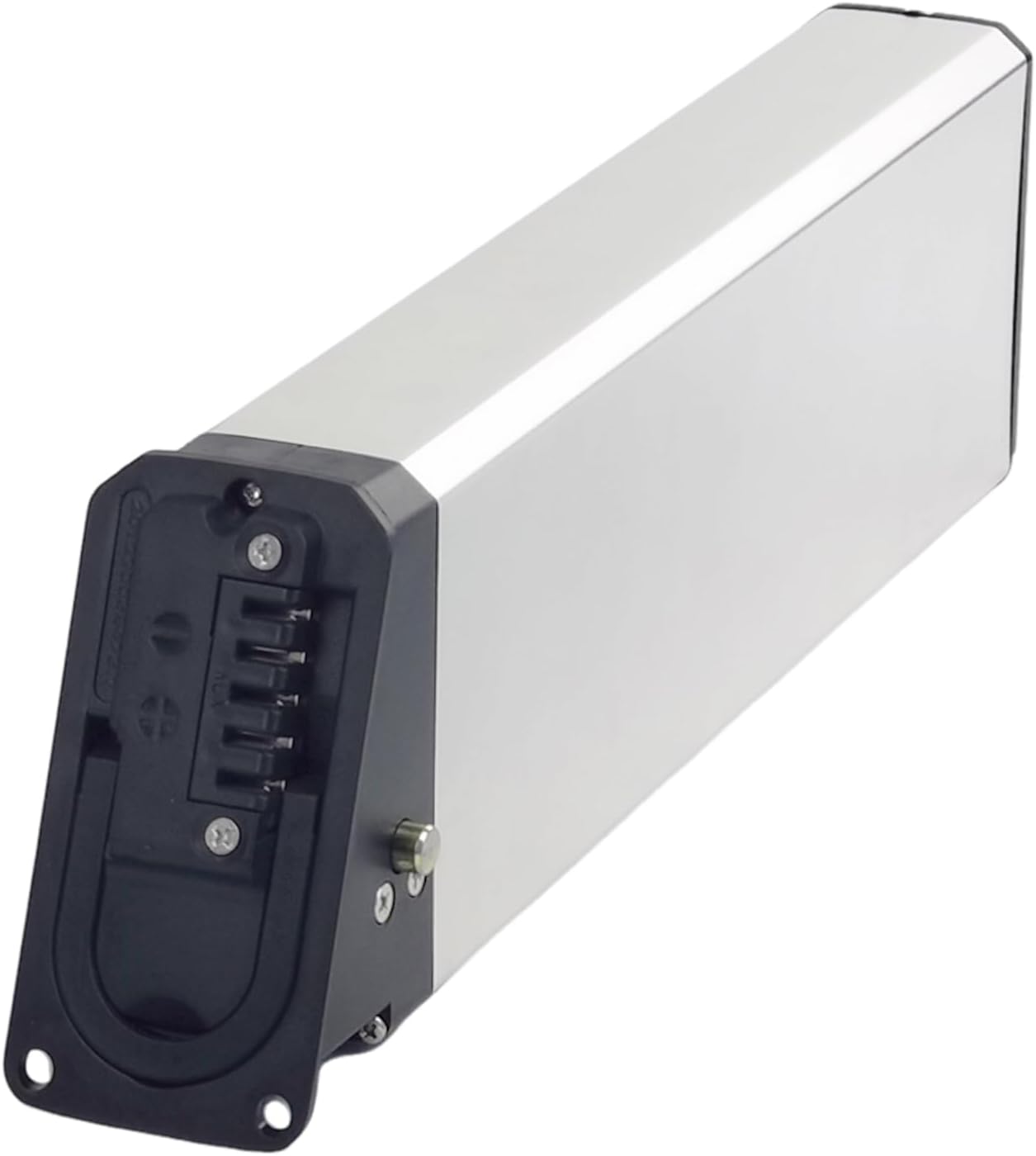
What the page does give you, unusually for this tier, is a printed case size you can actually measure against.
A record that starts at zero
There is no star widget on this page. No histogram, no rating count, and the signed-in review page holds zero texts.
The other DCH-009 pages we have reviewed all carried at least one rating, even when the record was a single star. This one carries nothing, so there is no owner record to read and no arrival story to lean on.
That puts the whole decision on the spec sheet and the seller. The listing has been up long enough to rank in Amazon's scooter-battery category, so it isn't a day old, but nothing on it has been tested by a buyer in public. If you order this pack, your review will be the first data point the page has.
The one comfort is that the family's record lives elsewhere. The 14Ah rung's page carried five purchase-badged owner texts before it died, which says the seller's packs reach real buyers, though it says nothing about this exact rung.
One model name, two voltages
The model name row reads JD-006FZ104. So does the model name row on the live 52V DCH-009 page, which sells the same case at 325.00. A model name that spans two voltages identifies nothing, and a buyer who ordered by it would have a coin-flip chance at the pack they wanted.
The field that does name this pack is the model number row: 48v17.5Ah-420mm. It says the voltage, the capacity, and the case length in one string, and the title carries it in parentheses at the end. That string is the single most useful piece of text on the page, and it is the one to compare against your original pack's stamp or the listing you are replacing.
The title itself hasn't settled down. It reads "48V 17.5Ah 14Ah", straddling both capacities in one line, and it manages a typo on top of that.
Bullet one is pasted across the whole family too, offering "48V/52V 17.5Ah" on a page whose title and voltage row both say 48V. Read the model number, ignore the prose.
The charger the box list drops
Bullet two promises "battery, 3A charger, and 2 keys" in the package. The included-components row reads "Keys, User Manual, ebike battery". The charger exists in the bullet and vanishes from the box list, and on a page with no owner record there is nobody to settle which one is true.
Plan for both cases. If the 3A charger ships, a 17.5Ah pack fills in about 5.8 hours. If a 2A charger ships instead, the same fill takes about 8.75 hours.
The listing prints no charge-time claim anywhere, so there is nothing to check either figure against, and the practical answer is to ask the seller which charger ships before you order and read the label when the box lands.
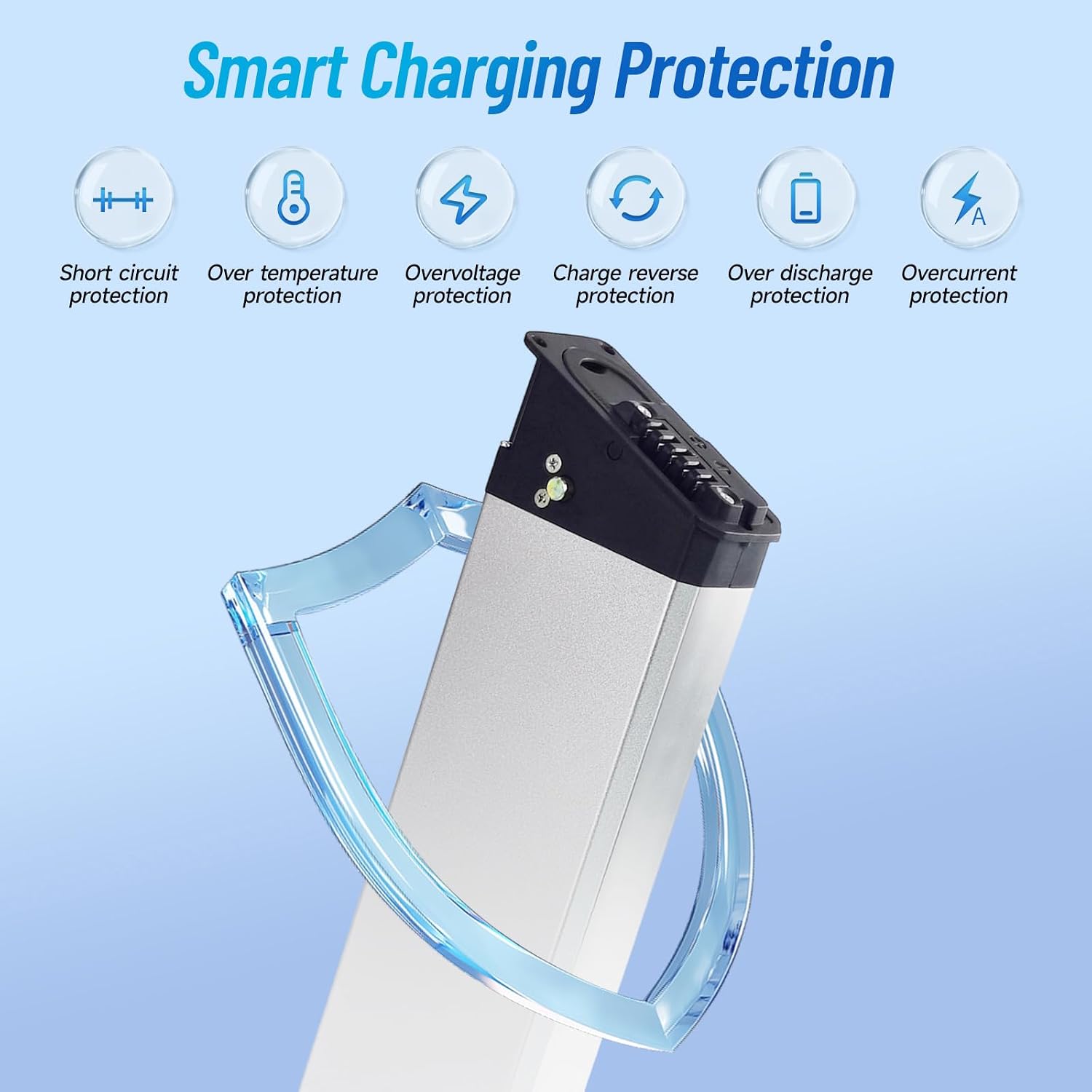
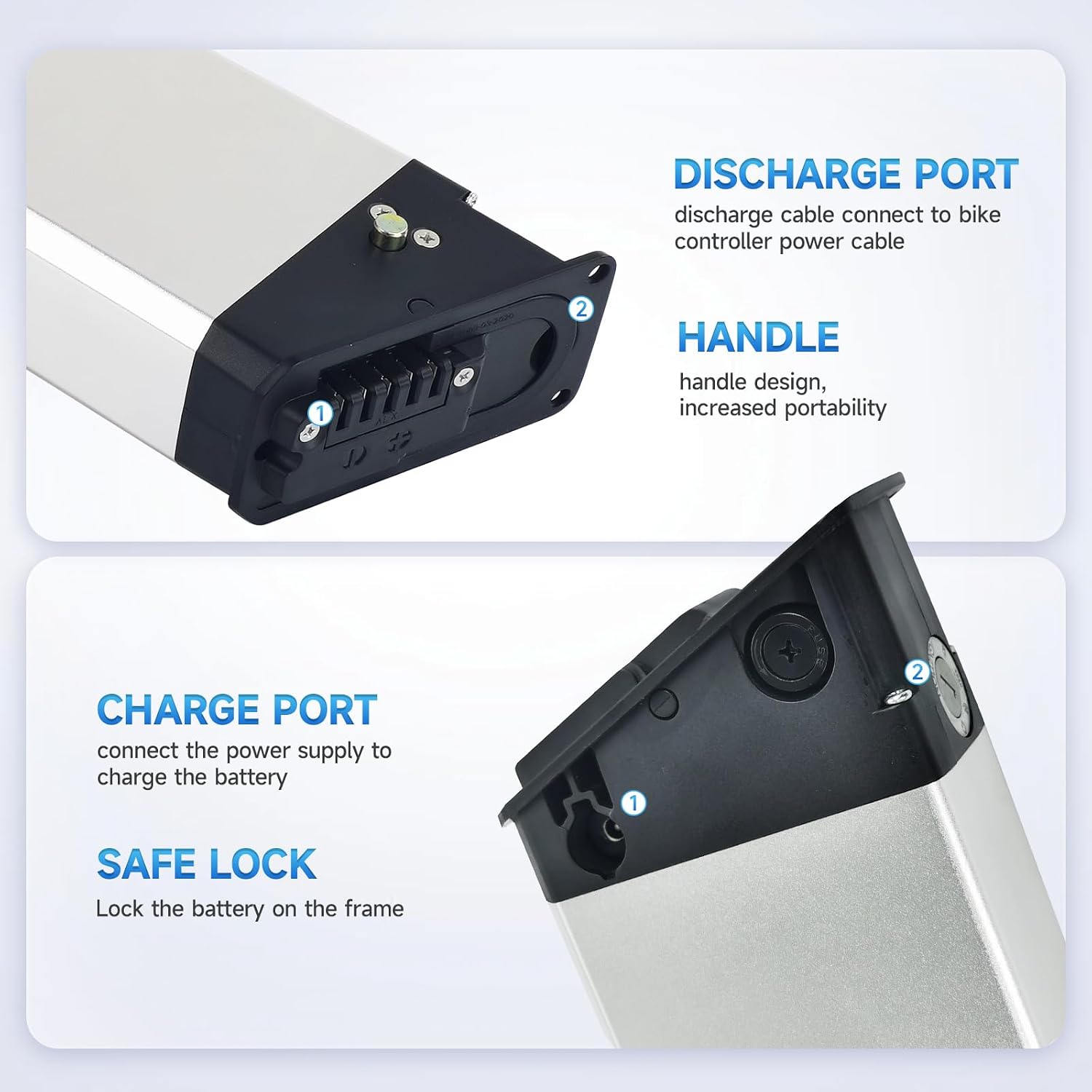
The gallery at least documents the ports. A diagram card shows the discharge port, the charge port, the safe lock, and the handle, and a second card lists six protection modes: short circuit, over temperature, overvoltage, charge reverse, over discharge, and overcurrent.
A third card claims the case is waterproof, dustproof, and drop resistant, without an IP code anywhere near it, so treat that one as marketing until a downpour says otherwise.
The weight rows disagree
One weight row reads 9.9 pounds. The other reads 3 kilograms, which is 6.6 pounds. Both describe this pack, and both cannot be true.
Two facts break the tie. The 52V DCH-009 page prints the same 9.9 pounds, and its own weight rows agree with each other at 9.9 pounds and 4.49 kilograms. So the 9.9 pound figure carries a cross-listing corroboration and the 3 kilogram row carries none, which makes 9.9 the number to plan around.
That weight closes the arithmetic honestly. 840 watt-hours at 4.49 kilograms works out to about 0.19 kilowatt-hours per kilogram at pack level, and lithium-ion cells run 160 to 300 watt-hours per kilogram before the case and board, per Wikipedia's lithium-ion figures. A pack-level reading inside that band leaves a sensible share of the mass for the case, the BMS, and the wiring.
Even the light 3 kilogram row would land inside the band, but the corroborated reading puts the heavier figure ahead.
What 840 watt-hours buys, and what it costs
The capacity math itself holds. 48 volts times 17.5 amp-hours is 840 watt-hours, which sits above the 500 to 700Wh commuter packs we usually track, so the honest range expectation is the upper half of the usual 25 to 75 mile per-charge band under pedal assist.
The 30A BMS at 48V is a 1,440W continuous ceiling against the listing's 250W to 1000W motor claim, so the power numbers leave room and nothing outruns its own board.
The value math is less kind. 310.00 over 840Wh is about 37 cents per watt-hour, which lands this pack among the most expensive in our comparison table of 324.
Nothing on the page makes that cheaper, and no voltage reading rescues it the way it sometimes does. You're buying the mold, not the value.
The dimensions are where the page earns its keep. The bullet's 420 by 115 by 58 millimeters, the model number's 420mm, and the inch rows at 16.54 by 4.53 by 2.28 all agree, three ways. Measure your original pack, compare, and this listing's one coherent spec does its job.
Common Questions
Will it fit my Engwe, Mate X, or Polarna folding bike?
The case is 420 by 115 by 58 millimeters with a safe-lock mount, and the listing prints that size three times, consistently. Measure your original pack before ordering, because the bullet's compatibility list names bikes across nine brands and can't all be drop-in fits. The dead 14Ah page taught the same lesson: the fitment list overpromises, the tape measure doesn't.
Is it 17.5Ah or 14Ah?
On this page it's 17.5Ah, per the model number row, the title's first capacity, and the 840Wh arithmetic. The 14Ah rung has moved to its own listing. The title still names both capacities, which is exactly why the model number row is the field to trust.
Does a charger come in the box?
The bullet says yes, the box list says no, and no owner has settled it. Ask the seller before ordering, confirm the charger's output, and expect about 5.8 hours from a 3A unit or about 8.75 from a 2A one.
Should you order a pack nobody has rated?
An owner of a dead DCH-009 17.5Ah pack, with a tape measure and a message to the seller already sent. The 52V version of the same case suits 52V bikes instead, and the 14Ah rung's story is worth reading for what the family's records looked like before this page went quiet. Everyone else should stay in the cheaper half of the table.