Most intercom marketing now sells you a network. Six riders, twelve riders, mesh grids that re-form around hills, group packs priced like a second helmet. The pitches assume a club ride, and the prices assume you believe the pitch.
Plenty of riders don't ride in a club. They ride two-up, or with one regular partner, and the thing they actually need is a clear channel between two helmets, a phone that answers, and music that survives an open exhaust. The cheapest way to get that has never been the cheapest product on the shelf, which is the trap.
The Sena SMH5 is the oldest idea in Sena's lineup still on sale, a two-way Bluetooth intercom with a jog dial and one button. Its record on Amazon is short on words and long on history: the most-endorsed review argues the case for buying exactly this much intercom and nothing more, one owner reports an eight-year-old pair still in service, and three failures sit inside the last six months.
This piece walks through what the record actually says, what the maker promises that no owner has measured, and where the price lands per rider once you do the division.
The Sena SMH5 clips onto a helmet with a clamp, runs on a jog dial and one push button, and handles two-way intercom talk, phone calls, music, and GPS audio. There's no mesh and no group mode, which keeps the setup basic for two riders. Sena's own page still sells it exactly that way, and 1,881 raters have given the design 4.4 stars out of 5.
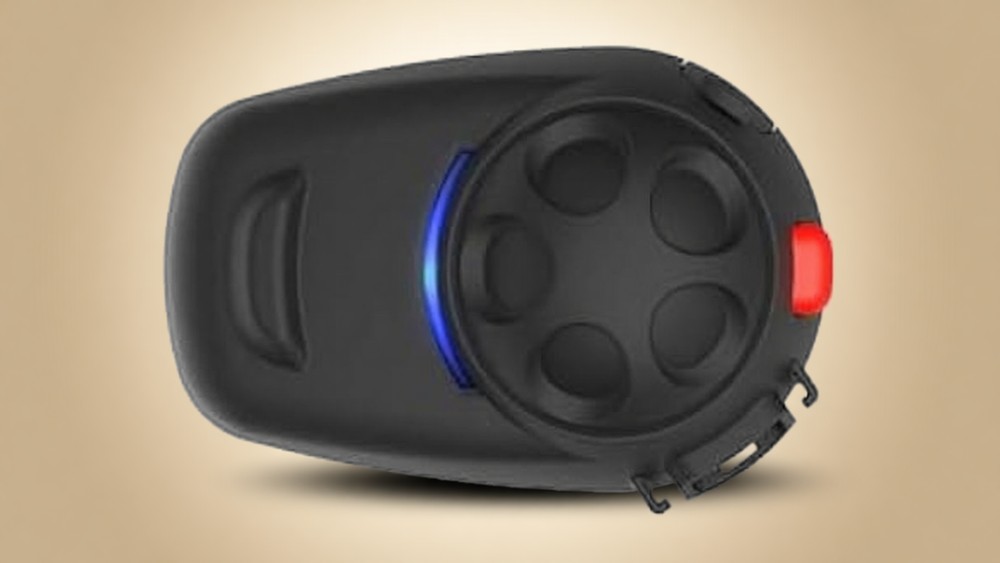
On price per rider it sits in the pricier third of the 192 intercoms we track, which is a below-average value position and not what the word budget usually promises. You can check that position against the rest of the field on the intercom comparison table.
The owner record is small but old. One owner has run a pair for eight years, and three failure reports sit inside the last six months. Both facts come from the same product line, years apart, and neither is what the marketing leads with.
The most-endorsed review on the page argues for buying less
The text at the top of the review section, the only one with three helpful votes, argues that the best value in a helmet intercom is not the most features but the right mix of price, how well it holds up, how easy it lives with, and the core job.
Its author reasons that riders who never join group rides are paying for mesh networks and six-rider conference modes they won't use, and that a two-way intercom with calls and music covers the actual job.
The same owner has evidence behind the claim. Calls stay clear over an open exhaust, the speaker is loud enough that other riders hear it from outside the helmet, and Universal Intercom means riding buddies don't need the same brand. The text also makes the maturity argument: the SMH5 has been around for years, so you're buying something tested and refined rather than bleeding-edge tech with unproven issues.
Our own table disagrees about the price side. Per rider the SMH5 sits in the pricier third of everything we track, so buying less intercom here still does not make it a bargain against the dual-pack budget brands.
The argument in that review is about features, not price, and on features it holds. On price per rider, the comparison table shows where it really lands.

Eight years of service against three recent failures
One owner has used a pair of these in two helmets for eight years and reports them still going strong, with this purchase a third unit kept as a backup in case one of the original two fails. That owner reports about seven hours of battery against the eight-hour talk figure on Sena's page, says the devices stay connected once paired, and notes they haven't tried more than two riders on them.
Three recent reports go the other way. The October 2026 three-star describes a unit that worked until the engine started on a large touring bike and then quit, with the buyer keeping it for a smaller bike. The June 2026 one-star, written in Spanish, reports water getting in during the first rain and the headset dying.
The May 2026 three-star reports repeated phone disconnects and a charge that doesn't last.
Between the eight-year pair and the recent failures there's nothing in the middle. No owner in the record describes a repair, a support ticket, or a partial failure that got managed. The spec table states a two-year manufacturer warranty, and the box carries the clamp unit, a glued surface mounting plate, and both boom and wired microphone options.
Loud enough, thin, and once completely dead
The marketing promises outstanding sound quality, and the record splits three ways on it. Loudness has held up twice. The April 2026 owner reports calls staying clear over an open-header bike at speed, and the December 2022 owner reports hearing music over a loud aftermarket exhaust without yelling to talk, though that owner also says they have never used theirs for intercom at all.
Thinness shows up in the same texts. The December 2022 owner calls the speakers really tinny with no bass at all and says the volume comes down a notch because of it. The four-star text from a group trip to Alaska calls the music quality poor and the sound marginal.
Broken is its own report. The August 2026 two-star says the sound is nothing like advertised, that the speakers half work, and that the microphone doesn't work at all. Advanced Noise Control appears in the listing bullets as wind-noise suppression, and no owner in the record describes testing it in either direction.

Pairing friction and a 400-meter number nobody has measured
Sena's page states Bluetooth 5.1, two-way intercom up to 400 meters (430 yards), and up to eight hours of talk time on a seven-day stand-by charge.
Bluetooth 5.0 class radios reach 40 to 400 meters in the standard's own range table, and the top of that band assumes open air and line of sight. No owner in the record reports an intercom distance of any kind, so the 400 meters stays a lab figure until somebody measures it.
Pairing is where the record pushes back hardest. One owner has found they can't pair the SMH5 with other Sena equipment, which is the same brand, while the cross-brand Universal Intercom promise has zero confirmations among the 14 texts.
The design is a two-way intercom, and the December 2025 four-star describes what happens when you stretch it: four riders on an Alaska trip, poor transmission, marginal sound, difficult pairing after every shutdown, and better results at three paired. Group riding is what mesh products sell, and Sena's own 30K starts that climb at several times this price.
Frequently Asked Questions
Does the SMH5 actually work with other brands?
The listing and Sena's page both claim Universal Intercom works with non-Sena headsets. Nobody in the 14-text record confirms it, and the only cross-pairing report is a failure with other Sena gear. Treat the cross-brand claim as unproven rather than false, and budget for the possibility that your buddy keeps their phone on the handlebar mount instead.
How long does the battery last?
Sena states up to eight hours of talk time and seven days of stand-by. The longest owner report is about seven hours, from the eight-year pair, and a second owner says the charge does not last as long as expected. Nobody states a charge time anywhere, on the listing or in the reviews.
Is it waterproof?
No. The listing makes no water-resistance claim and neither does Sena's page. One owner reports a headset dying after water got in during the first rain. If you ride in wet climates, this is not the headset the record recommends.
Can it do group rides?
It's built for two. One owner has stretched it to four riders on a trip to Alaska and reported poor transmission that improved at three paired. If your regular ride is a group, mesh is the category's actual answer, and it costs more.
Who should skip it?
Riders who need proven cross-brand pairing, a measured range figure, group communication, or speakers with bass. The record answers none of those needs, and on price per rider it sits in the pricier third of the intercoms we track. A rider and a passenger who want talk, calls, and music, and who value an eight-year service record over features, are the people this design has always been for.