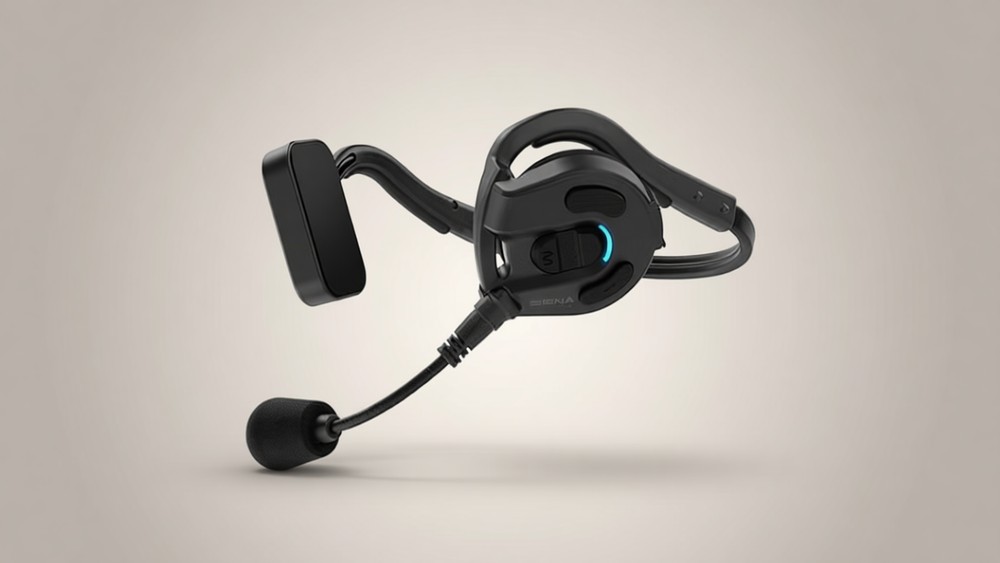
Some riders need to hear the trail, the traffic, or the instructor more than they need stereo sound. A single-ear mesh headset that leaves one ear open serves that reader, and almost nobody else sells the form factor. Sena's EXPAND Mono is the mainstream option, and it hangs behind the head rather than inside a helmet.
The choice is harder than the spec sheet admits, because the Expand name covers two technologies that do not talk to each other.
One purchase-confirmed buyer found that out the expensive way. Amazon's page also omits the two numbers a buyer most wants, talk time and range. This piece covers the compatibility wall, what Sena's own spec page adds, and what the small review record can and cannot tell you.
The EXPAND Mono costs 158, and that buys a niche tool rather than a bargain. The mesh hardware under it is genuine Sena technology, the same Mesh Intercom family the motorcycle line uses, and the review record is too thin to prove or disprove much. What the record does show, clearly, is the one mistake a buyer can make before checkout: assuming the Expand name means one compatible family.
The compatibility wall inside the Expand name
The most substantive complaint on the page is a purchase-confirmed one-star, and it deserves a full read before you order. That buyer bought the Mono Mesh to pair with an existing Expand Bluetooth headset, found the two would not connect, and called Sena technical support for a direct answer: the two are different technologies, and they will not connect. The money was spent on the wrong half of the name.
Sena's own product page draws the same line in politer words. The Mono pairs with Sena's mesh-equipped devices, and its mesh half runs Mesh Intercom 3.0 with a 2.0 fallback, over Bluetooth 5.2 for the phone link.
An older Bluetooth-only Expand speaks neither mesh version, so the two headsets share a brand and almost nothing else. That's a category property of mesh gear in general: mesh networks rebuild themselves as nodes join and leave, but vendors' mesh implementations don't share a standard, and the mesh networking definition notes that interoperability between vendors isn't assured. Sena's mesh line doesn't even reach back across its own older Bluetooth products.
The practical takeaway splits cleanly. If your group rides on Sena mesh already, the Mono joins it, and one owner has bought exactly that way, as a test unit for friends in a Jeep chase vehicle to join a mesh network from a car. If your existing headsets are Bluetooth-only Expand units, this one won't talk to them, and no firmware setting changes that.

What Sena's spec page adds that the listing omits
The Amazon page is oddly silent for a communications device. No talk time, no intercom range, no battery capacity appears anywhere in the bullets or the details table. The one range field it does print, Bluetooth Range: 10 meters, describes the phone link, not rider-to-rider distance, and reading it as the intercom range would undersell the Mono by a factor of forty.
Sena's own spec page fills the gaps. Mesh range is 0.4 km, about a quarter mile, in open terrain. Talk time is 10 hours on mesh intercom, with a 2.5-hour full charge over USB-C and a fast-charge mode that buys about 2 hours of use from 20 minutes on the cable.
The group numbers come in two modes: open mesh with 6 channels and a virtually limitless headcount, or group mesh capped at 24 members. The speaker is a single 37mm driver, the whole thing weighs 3.53 ounces, and a dual antenna switches to a backup when the signal is obstructed.
One details field on Amazon mislabels the audio processing. The table says Active Noise Cancellation, while the same table's microphone fields and Sena's own materials say Advanced Noise Control, which is mic-side noise reduction for your voice, not listener-side cancellation. Anyone shopping this listing for quiet ears should know the label oversells it.
A thin record with a March cluster
The rating average is 4.0 across 14 ratings, with 58 percent five-star and 18 percent one-star and nothing in between.
Only 11 texts carry any substance, and only 3 of those carry purchase confirmation. Six of the eleven cluster in the last week of March 2026, and all six are unverified, which is the exact shape of record that warrants caution: a burst of warm, unconfirmed praise sitting on top of a tiny base.
The two texts with the most substance both cut against the Mono. The compatibility failure above is one. The other is an unverified one-star text about comfort: its writer calls it the most uncomfortable headset they've owned, reports zero instructions on how to wear the thing, and says the only wear photos they could find online show people in hats.
A purchase-confirmed four-star text from April 2026 lands between the camps: durable and waterproof in their experience, with an okay range that doesn't penetrate walls, but uncomfortable enough to matter and easy for group members to power off by accident.
The warm texts mostly describe non-riding use. One purchase-confirmed owner uses the pair for equestrian clinics. Others praise the open-ear design for hiking and office calls.
What nobody provides is the data a buyer most wants: no owner reports the talk time in the field, no owner prints a range figure, nobody mentions rain, and exactly one text describes motorcycle use.

One ear open, and what that costs
The form factor is the whole product, and the owners who like it say so directly. Several describe hearing traffic and surroundings while staying connected, and one calls the open-ear setup the entire reason to buy this style over a normal two-ear headset. For instructors, ride leaders and chase-vehicle drivers, an ear left open isn't a compromise, it's the job description.
The costs are just as clear. There's no stereo music, because there's one 37mm speaker, and nobody buys this for audio quality. Two of the eleven owners have found the band uncomfortable, and the wear instructions are thin enough that one buyer couldn't work out the fit at all.
The band wraps behind the head, and Sena's page says it sits low enough for hats, helmets and glasses, but the two comfort complaints suggest the fit is personal rather than universal. Motorcycle use adds one more question mark: the Amazon title leads with hiking and rock climbing, and the only rider in the record bought it for a chase vehicle, not the saddle.
The price of a niche tool, stated plainly
At 158, the Mono sits in the pricier third of the 192 intercoms on our comparison table, and the live figure renders in the specs box below. That's not a bargain position, and the honest framing is that you're paying for a form factor almost nobody else sells. Riders who want two ears and stereo music have dozens of cheaper options, including Sena's own helmet-mounted line.
The scarcity banner on the page reads "only 1 left in stock," which is worth exactly as much as any countdown timer. If the single-ear design fits your use, the price is the price. If it doesn't, no stock count changes that.
The Expand Mesh sibling covers the same mesh technology in an around-the-neck format for readers comparing within the line.
Frequently Asked Questions
Will it pair with my older Expand Bluetooth headset?
No. Sena technical support told one purchase-confirmed buyer the two are different technologies and will not connect. The Mono speaks Mesh Intercom 3.0 and 2.0 to Sena mesh gear, and Bluetooth 5.2 to phones, but it doesn't bridge back to Bluetooth-only Expand units.
How long does the battery last?
Sena's spec page says 10 hours of talk time on mesh intercom, with a 2.5-hour full charge and a fast-charge mode that returns about 2 hours of use from 20 minutes. No owner in the record reports a field figure, so treat the 10 as the manufacturer's ceiling.
Is it waterproof?
Neither the Amazon listing nor Sena's spec page prints an IP rating, so there's no tested number to quote. One owner calls the pair waterproof and durable in their use, which is encouraging but not a rating. Treat rain as likely fine and submersion as untested.
Can I use it on a motorcycle?
You can, and one owner bought it to run from a chase vehicle for exactly that. It's a behind-the-head band rather than a helmet-mounted unit, so it works under open-face lids and hats where a clamp-on intercom can't. For full-time motorcycle use, a helmet-mounted Sena does the job with better audio and no fit questions.
What's in the box?
The main unit, two speaker pads, two microphone sponges, a USB-C charging cable and a quick-start guide. Amazon's contents list and Sena's package list agree on those items, and the quick-start guide matters more than usual here, because one owner couldn't find wear instructions anywhere.
The EXPAND Mono is a genuine one-of-a-kind form factor wearing a confusing family name, and the record behind it is thin and top-heavy with unconfirmed praise. If one open ear is the point, the current Amazon listing has the price, and the comparison table shows where it lands against everything else we track.