Most intercom reviews start with a full-face helmet. This one can't, because the Sena Expand Mesh doesn't go on a helmet. It hangs off your neck, puts two speakers over your ears, and leaves room for a hard hat, a climbing helmet, or nothing at all.
That makes it one of the only units we track that a kayaker, a site foreman, or a wrangler in an open Jeep can actually wear.
The trouble with shopping for it is that the form factor is the only thing everyone agrees on.
Amazon's listing contradicts itself on noise cancellation and calls the speakers bone conduction, which the manufacturer's own page flatly denies. And the verified owners don't split by activity, they split by distance: people who stayed close together loved it, and two separate owners watched the mesh link fall apart at ranges far inside the claim.
This review walks through what the listing gets wrong about its own hardware, what the 0.4 km mesh figure actually buys you, the one-year battery reports, and the comfort trade nobody can adjust their way out of.
The Sena Expand Mesh costs 175.04 for a single headset, and that puts it deep in the expensive third of the 192 intercoms we track per rider, even before you notice the box holds one unit, not a pair. The rating is 4.2 from 170, and it leans hard to the edges: 74 percent gave five stars while 13 percent gave one, with barely anything in between.
I'd call the shape of that record accurate rather than polarizing. The people who stayed inside the working range got exactly what it promises, and the ones who didn't got silence.
What you're paying for is the shape. The neckband hangs the weight at the back of your neck, the speakers sit over the ears without sealing them, and the low-hanging band leaves room for a hat or a climbing helmet.
Every verified use in the record involves that freedom: scooters with no helmets, a hard hat on a job site, a boat, an open Jeep. If your group wears helmets, plenty of cheaper units do this job, and the neckband buys you nothing.
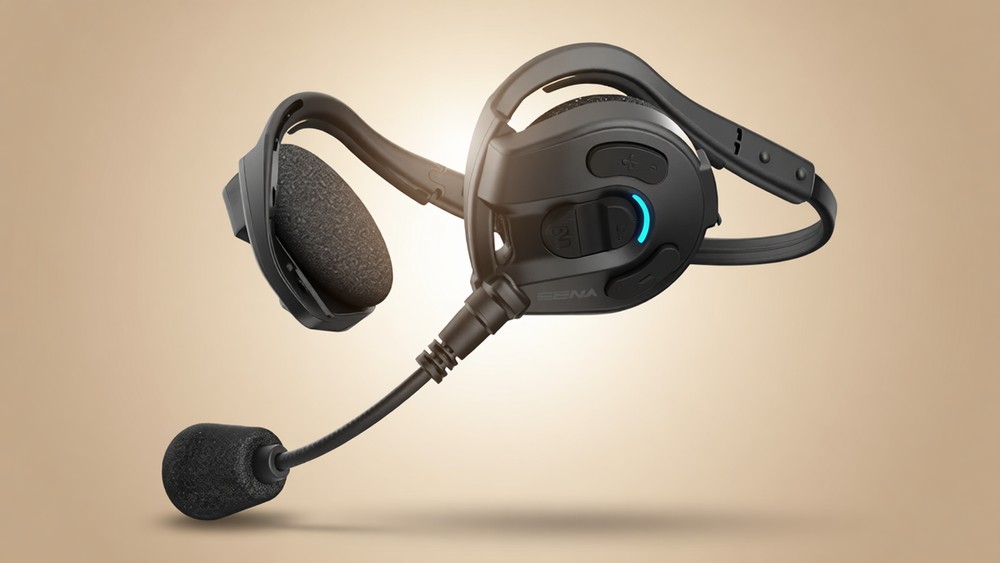
The listing argues with itself on audio, sena.com settles it
Amazon's spec table manages to disagree with itself three times on one headset. The Noise Control field says none, and the same table lists active noise cancellation as a feature. The speaker field says open-ear bone conduction style, while the fields around it say dynamic driver, on-ear, open-back housing, which is a description of ordinary over-ear speakers, not bone conduction.
And Bluetooth Range reads 100 meters, which is the range of the phone pairing, not the intercom link buyers actually care about.
The manufacturer's own page settles all three. The Expand Mesh carries 37 mm HD speaker drivers over the ears, an 85 mm boom microphone, and Advanced Noise Control, with no bone conduction anywhere in the spec. It also confirms the rest of the hardware: Mesh Intercom 3.0, Bluetooth 5.2, talk time up to 10 hours, a 3-hour charge, a lithium polymer battery, 100 grams of weight, and a 2-year warranty.
When a marketplace table and the maker disagree this directly, trust the maker, and treat anything you read in a review against the maker's page first.
What 0.4 km of mesh means on water and in trees
Here's the range claim, decoded from the manufacturer's page. Two headsets talking directly reach up to 0.4 km in open terrain. The 1.6 km figure needs six or more headsets, because the chain of users relays the link along.
Open Mesh mode has 6 channels with virtually unlimited participants, and Group Mesh handles 24 riders, and the platform is built so people can drop out of range without breaking the rest of the group.
Now the record against it. An August 2026 owner ran a pair on a boat with one person at the helm and one at the bow, about 15 feet apart, and reports the audio cut in and out so badly in both open mesh and group mesh that they couldn't understand each other at all.
A March 2025 owner found the mesh dropped a few hundred feet out and again behind a big tree, and adds the detail that matters most: when the link dies, the headset gives no warning, so you can keep talking into silence while nobody hears you. Those are both order-confirmed texts.
Not one owner in the record reports a distance the 0.4 km claim delivered. That's a small sample, but the physics points the same way: 0.4 km is an open-terrain laboratory figure, and anything between two people on a 2.4 GHz link, tree cover, a hull, a building, eats into it.
Plan around a fraction of the claim wherever your terrain has anything in it, and treat the no-warning drop as a real operational risk if you're using this for safety calls.

Two battery-death reports, one year in
Two separate owners describe the same failure, independently. An October 2025 owner reports that across two headsets, both consistently stopped taking a charge at about one year, and calls it a one-year disposable.
An April 2026 owner has a longer history with the brand: their first Expand headsets ran for several years until the batteries died, they recommended it to their community for years, and then the replacement generation couldn't hold a charge long enough to be usable at all.
Neither text mentions a warranty claim, so the 2-year term sits there untested in the record, and how Sena handles a one-year charge failure is the open question a buyer can't answer from the page.
The smaller failure reports round out the risk. A July 2026 owner had one side cut out after the second use. An April 2026 box arrived missing the foam ear guards, the mouth piece and the charging cord, and the mouth piece that did arrive didn't work at all.
None of this is a pattern yet at 170 ratings, but the battery reports are consistent with each other, and they sit at the center of the written one-star texts.
Comfort is a fixed decision, not an adjustment
The March 2025 owner, who wore these through 8-hour days, describes the problem precisely: ears hurt after a few hours, the neck band is not adjustable, the ear speakers are not adjustable, and the microphone has to touch the corner of your mouth or the noise cancellation breaks up speech.
A February 2025 owner who wears the headset under a hard hat agrees on the hard plastic earpieces and found the sound treble-heavy, but reports the battery life has been good and wears the speakers under glasses rather than over. A Spanish-language owner liked the headset but reports the material smells strange and hurts the head.
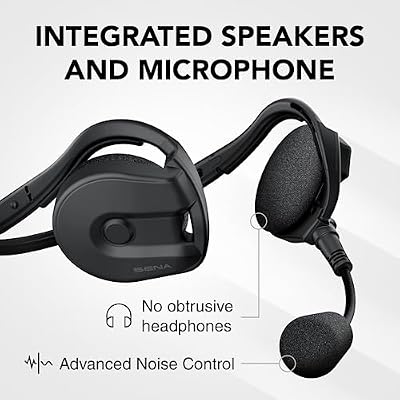
Against that, the pillion and cycling owners report no comfort complaints at all, so short rides and average head shapes get through fine.
The honest summary is that nothing on this headset moves. The band doesn't slide, the speakers don't pivot, and the fit is what it is out of the box. If you wear glasses or a hard hat, the under-glasses placement is the fix one owner settled on, and if your ears are sensitive, expect the 8-hour report to apply to you.
Worth it close-in, a gamble at range
The verified wins all share one shape: loud air, short distance, and a job the phone can't do. The most-endorsed review comes from a scooter pair who ride without helmets at up to 40 mph and hear no background noise unless a head turns off-axis.
A September 2023 owner tried several options for phone calls in a wide-open Wrangler at highway speeds and says this was the only one that delivered clear audio both ways, with mesh linking several headsets in and around the vehicle.
A tree-service owner pairs it to a phone and uses it across the job. A pillion owner reports easy rider-to-passenger talk where older Sena full-face kits fought wind-activated voice control, and a cycling owner praises the clean switch between talking and music.
The verified losses are just as consistent: range that collapsed well inside the claim, and batteries that died at the one-year mark.
So the decision this headset forces is narrow. Buy it for the cockpit, the job site, the vehicle, or any pairing that stays within sight of each other, and almost nothing else in the class wears that way.
Skip it if your group spreads out, if you ride all day, or if you need the battery to reach year three, because the record has something to say about all three.
The value position deserves a plain sentence. Our intercom comparison table prices this among the most expensive per rider of the 192 units we track, and the table's per-rider math assumes a pair sharing one purchase, which this single-pack listing makes impossible. If you ride with a helmet instead, the Sena 3S Plus Boom does the helmet-mounted version of this job for far less. Check the current Expand Mesh price on Amazon.
Frequently asked questions
Does it work without a helmet?
Yes, and that's the entire point of the design. The neckband holds the speakers over your ears and the boom mic at your mouth with no helmet involved, and the manufacturer lists hat, climbing helmet and glasses compatibility. Every verified use case in the record, from scooters to job sites, uses it bare-headed or under a hat.
Can it pair with other brands?
The record holds no cross-brand report either way. The mesh link connects to other Sena mesh devices, and Bluetooth 5.2 handles the phone, with profiles for calls, music and GPS audio. If your group rides mixed brands, don't assume this bridges them, because nobody in the record has confirmed that it does.
How long does the battery last?
The manufacturer says up to 10 hours of talk time on a 3-hour charge. Two owners report a different number: their headsets stopped taking a charge entirely at about one year. Nobody in the record reports a measured runtime figure, so the honest answer is that the spec is untested by owners and the longevity reports are the ones to plan around.
Is it waterproof?
The listing says water resistant and no IP rating is stated anywhere on the page or the manufacturer's spec. Not one owner reports rain, spray or submersion, so there's no evidence in either direction. For a headset marketed to boaters and anglers, that's a gap worth noticing before you rely on it.
What's in the box?
The listing's spec table shows the headset itself, ear pads, a microphone sponge and a USB-C power and data cable, one headset per box. One owner's box was missing the foam ear guards, the mouth piece and the cord, so check the contents on arrival while your return window is open.