Hailong packs are the closest thing ebikes have to a standard battery, and that standard is looser than it looks. The cases share a shape. The base plates, the lock tabs and above all the discharge connectors do not, and a buyer who orders on shape alone finds that out when the pack slides in and nothing switches on.
That mismatch is exactly where this listing lived. The recorded title reads like four products merged into one, the case runs ten inches long, short enough that the slot check below matters, and the connector was left for the buyer to discover. Amazon has since removed the page, so this rebuild works from the recorded listing and from the parts-market documentation that survives it.
What follows decodes the title first, then the connector, then the fit, because those three checks decide whether any of this pack's numbers ever mattered for your bike.
The 48V 12Ah Hailong-style pack recorded here sold for 159, which lands close to the middle of the 324 packs in our battery comparison table at 27.6 cents per watt-hour. That's below-average value for the brand class, and it's stated here plainly so nobody shops this tier expecting a bargain.
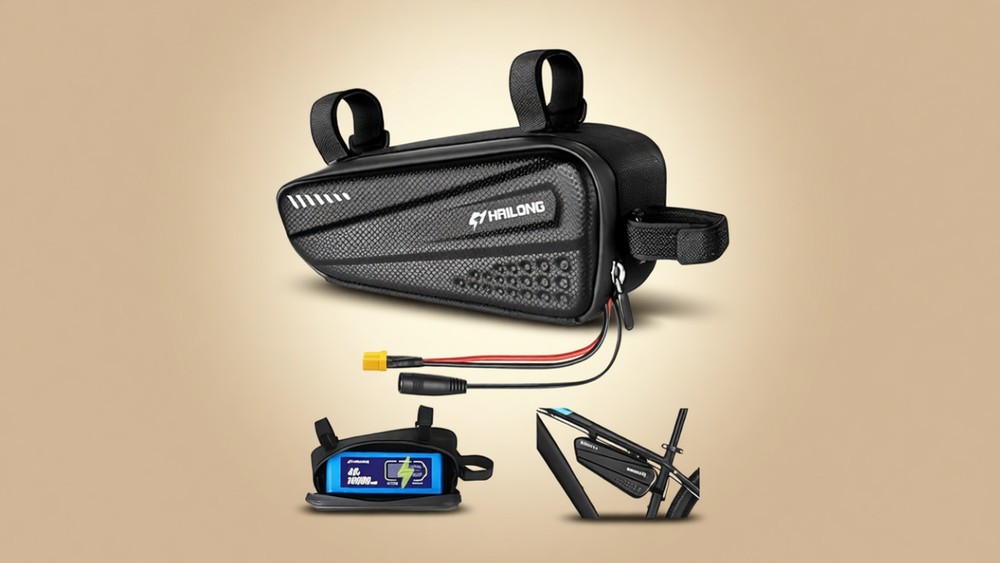
One title, four capacities
The recorded title carried four capacity or voltage claims at once: 48V 10000mAh, 36V 12AH, 36V 8Ah, and a row in our data that standardizes on 48V 12Ah. A 10000mAh figure is 10Ah, which would make the tank 480 watt-hours, not 576. The 36V rungs describe a different voltage class entirely.
This is the capacity-ladder pattern we have documented on other multi-rung listings: one page sold several pack sizes, and the title quoted whichever rung fit the search.
Our records keep the 48V 12Ah reading, so the math on this page assumes 576 watt-hours. A buyer holding the physical pack should read the cell count printed on the case, since 13 in series means a real 48V pack and the Ah figure follows from the parallel count.
The same title also muddied the brand. It carried no Ransyri name and opened with H HAILONG, while our earlier coverage grouped the listing with the Ransyri family. The brand trail on the record is loose.
A buyer searching for a replacement should search both brand spellings, and the larger Ransyri listings we have covered used the same shell family at higher capacities.
Three connectors, three amp ceilings
Hailong 01, 02 and 03 cases share their outer dimensions but ship with three different discharge connectors, and the Greenbikekit parts documentation puts an amp class on each. Four blade contacts handle 20 to 25 amps.
Five golden round contacts handle 25 to 30. Six round contacts handle 30 to 35. The page adds one trap: the Hailong 01 Pro case uses five blade contacts and does not accept the three standard types.
That table does half a replacement buyer's work. This pack's motor band ran from 250W to 750W, and a 750W motor at 48V draws about 16 amps continuously. That sits under even the lowest connector class, so the band and the hardware were consistent. It also means any replacement in the same motor class can keep the same connector, which simplifies the hunt.
Counting pins before ordering beats asking a seller, and our five-pin Hailong case study covers how a mismatched pin count strands an otherwise compatible pack. Match the connector to the bike, not the bike to the connector.
Which ceiling your motor needs
The arithmetic is short. Watts divided by volts equals continuous amps, and the connector class needs headroom above that.
A 500W motor on 48V draws about 10.5 amps, comfortable on any Hailong connector. A 1000W motor draws about 21 amps, which enters the four-blade class at its bottom edge. Riders planning a motor upgrade should plan the connector with it.

Fitting a short case
The recorded dimensions are 10 by 3.54 by 3.94 inches. Ten inches is short for a 48V 12Ah Hailong case, and a short pack in a long slot creates two problems. The lock tab may sit behind the case, so the pack rides unlocked.
The rail contacts may not line up either, which means no power even when the pack feels seated.
The check costs nothing. Measure the old pack or the slot opening, note where the lock tab and the rail contacts sit, and compare before ordering anything. Buyers fitting a Hailong case to a frame that never had one should measure the downtube clearance instead and buy the base plate to match, which the same parts catalog sells separately.
The scale check
One more claim deserves a scale. The old listing printed 4.63 pounds for 576 watt-hours, which works out to 0.27 kWh per kilogram at the pack level.
Standard cells run 0.16 to 0.30 kWh per kilogram per the Wikipedia lithium-ion entry, and that's before a case and BMS board add their weight. A cased pack closing at 0.27 is not a record, it's a red flag, and it repeats the tension we logged on the box-pack listing from the same family. Weigh what arrives.

Range and charging on the record
Scaled from the em3ev range tables, a 576 watt-hour tank gives 18 to 24 miles on throttle alone and 30 to 39 miles in low pedal assist. The waterproof case claim carried no IP rating, so treat it as splash cover rather than a submersion claim, and keep the charge port capped when riding in rain.
Charging at the common 2A Hailong charger takes six hours from empty on 12Ah. The full-charge voltage for a 13S 48V pack is 54.6V, and our 52V charger-mismatch case study documents what happens when a buyer trusts a printed charger label over the cell count. Match the charger to the cells, not the sticker.
Where this leaves a replacement buyer
The pack behind this review is gone from the market, and the honest summary is that its listing made that easy to accept. Four capacities in one title, a brand attribution that shifted between records, a weight the physics does not close, and a below-average price per watt-hour at the middle of our table.
What the recorded spec sheet got right was the core pairing: a 576 watt-hour tank feeding motors up to 750W, with connector hardware consistent with that band.
A replacement buyer who liked the format should carry three numbers forward from this page: the slot length they need, the connector class their motor implies, and the scale weight a genuine cased 12Ah pack should show, close to double what the old listing claimed. Everything else on the old listing was negotiable.
Frequently Asked Questions
Was this actually a RANSYRI battery? The records disagree. The title opened with H HAILONG and carried no Ransyri name, while our earlier coverage grouped it with the Ransyri listings. Search both spellings when hunting a replacement.
Which capacity was real, 10Ah or 12Ah? Unverifiable now that the listing is gone. Our data standardized on 48V 12Ah and 576 watt-hours, and the range figures here follow that reading. A physical pack settles the question through its printed cell count.
Will a 10-inch Hailong case fit my frame slot? Measure first. Short cases sit short of the lock tab and rail contact points in slots cut for longer packs, and the fit check is the difference between a working pack and a returned one.
What does the connector pin count tell me? The amp class. Four blade contacts handle 20 to 25 amps, five golden round contacts 25 to 30, and six round contacts 30 to 35, per the Greenbikekit parts page. A 750W motor draws about 16 amps, so any class covers this pack's motor band.
How long does a 12Ah pack take to charge? Six hours on a 2A charger from empty. Use a 54.6V charger on a 13S 48V pack, and verify the cell count on the case before trusting any charger label.