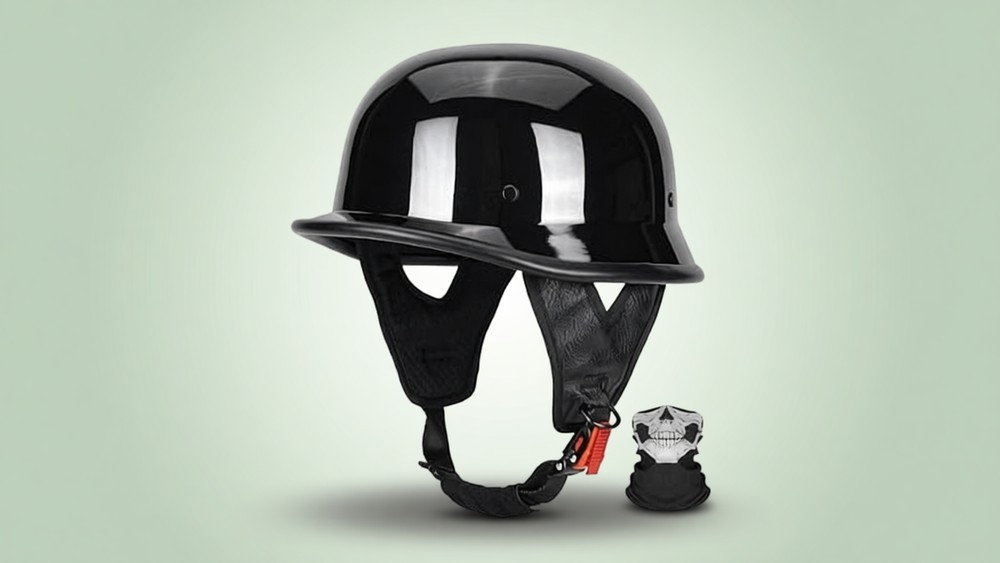
A German half helmet is the one style where the look does most of the selling. You see it on café racers and old cruisers, the shell stops above the ears, and there's usually a cheap version of it within reach. At a checked price of 39.99 the 108Q is about as cheap as that version gets.
Cheap is also where helmet fit gets risky. An expensive lid comes back and gets exchanged, and the money stings less because the seller expects it.
A budget helmet's sizing record lives in a handful of buyer texts, and on this one those texts disagree about something more basic than size. They disagree about shape.
So the question isn't only whether the 108Q would protect you in a crash. It's whether the shell was moulded for your head. What follows covers the sizing record, the DOT claim on the box, where the comfort splits, and what ten purchase-confirmed buyers have and haven't settled.
The QUICKOOL 108Q is a German style half helmet with an ABS shell, a stated weight of 1.96 pounds and a one-year warranty, and on price it sits in the cheapest fifth of the 257 helmets we track. That value is real, and the exact live position renders in the specs box on the helmet comparison table.
The record behind it is divided rather than warm: 4.1 stars from 178 ratings, 66 percent five-star against 16 percent at one or two stars.
All ten written buyer texts are purchase-confirmed, and the most-endorsed one is a critical three-star about fit. The money is not the risk on this one. Fit is, and the listing itself knows it, because it offers a free replacement if the size you ordered turns out wrong.
What the DOT claim on the box is worth
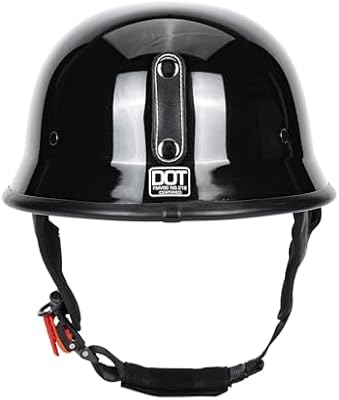
The title and the first bullet claim this helmet is DOT certified and name the standard, FMVSS 218, for impact absorption and penetration resistance. What the page never names is a certifying body, a test lab or a certificate you could look up. That gap is normal at this price and it still matters.
Manufacturers self-certify their helmets against FMVSS 218, and the government's check comes after sale, when NHTSA can buy helmets from sellers, test them and fine the ones whose lids fail.
A DOT mark is the maker's claim, not a measurement anyone performed before the helmet shipped. The arrival check is the stitched label on the back of the shell, because a stitched label is harder to fake than a printed decal.
Not one of the ten buyer texts mentions certification, the label or the standard. The record neither supports the claim nor disputes it, which is different from the dispute you'll find on one competing budget shell, where a buyer has come back and argued the point.
The coverage trade is part of the style, not a defect. A half helmet covers the top of the skull and stops above the ears, so it protects less of the head than a three-quarter or full-face lid certified to the same standard. You accept that when you pick the look.
Sizing runs small and the liner shape runs round
Three of the ten texts push the same direction on size, which is a strong signal for a record this small. One buyer followed the listing's own advice, measured with the scale the listing ships, and still bought a size bigger, landing on an XXL for a 24 inch head that fit perfectly.
A second says to size up from your normal size and adds that it feels like any other German style helmet. A third bought an XL for a head that measures almost 24 inches around, and that is where the record turns.
The most-endorsed text on the page, four helpful votes, describes what happens when the liner shape and the head don't agree.
The foam inside is more round than oval, so the helmet perched on top of the head instead of sitting down on it, and the chin strap dug into the throat whenever the helmet sat level. That owner then shaved the liner and hammered it narrower to make it wearable, which is exactly the modification the Motorcycle Safety Foundation guidance says not to make, because the impact liner is the part that protects you in a crash.
The listing's answer to all of this is in the fifth bullet: if the size is wrong, a free replacement, with the condition that you keep the packaging intact until fit is confirmed. That is a fair policy and it fits the problem.
Head shape context in one line: impact liners are moulded to long oval, intermediate oval or round head shapes, and a round liner on a longer head presses at the forehead and the back of the skull. This liner, on the evidence of one careful owner, runs round.
Where the quality praise and the comfort split sit
The build record is friendlier than the fit record. One buyer has called the quality fine, another said they love the quality, and a third buyer, who replaced a previous helmet they were unhappy with, called this one spectacular and said it really looks sharp. That third text is also the one that describes riding with goggles held by the button strap on the shell, which tells you something about how this helmet gets used.
Two hardware details are worth carrying into the order decision. The strap uses a quick-release buckle on padding, which buyers like. And one owner warns to keep the rubber piece on the strap, or the helmet will blow off your head, which is a warning about the retention system on a helmet whose retention already drew a complaint about throat pressure.
Comfort splits hard. One text says it fits good, is comfortable and doesn't look stupid or too big, and that text drew two helpful votes.
Another single sentence calls it the most uncomfortable helmet the buyer has ever bought. Both are purchase-confirmed and neither gives a size, so the split stays unexplained on the page. What the numbers add is a discontent share that isn't trivial: 16 percent of 178 ratings sit at one or two stars, against 66 percent at five.
The decision is head shape, not price
At the cheapest fifth of the catalog the money is rarely what decides a purchase, and here it decides nothing at all.
The record rewards a rounder head and a size up, and it punishes a long head with a helmet that perches and a strap that digs in. If the fit is wrong, no price makes the helmet worth wearing, because a helmet that sits wrong is both uncomfortable and worse at its one job.
If the style and the shape fit, the 108Q is an easy yes on price, and the buy path is clear.
Order a size larger than the measuring scale suggests, keep the packaging until you have worn the helmet indoors, and use the free replacement if it is wrong. If the head is long oval, or the perch-and-strap gamble isn't worth a return cycle, spend more on a shell with a proven fit record.
What is still unknown, said once and plainly: no buyer has reported how this helmet wears past six months, nobody has reported it in rain or crosswind, and nobody has mentioned the DOT claim either way.
The spec table also argues with itself about what ships in the box. It counts two items against a unit count of one, and its included-components row says Mask while the one buyer who mentions an accessory describes goggles with a button strap. Ask the seller what the box holds before you count on the accessory.
Frequently asked questions
Does the QUICKOOL 108Q really run small?
Three of the ten texts say to size up. One owner measured with the listing's own scale, still ordered bigger, and wears an XXL on a 24 inch head. The listing ships a head-measuring scale and offers a free replacement if the size is wrong, so the cost of guessing badly is a return cycle, not the money.
Is it actually DOT certified?
The listing claims it and names FMVSS 218, but names no certifying body or test lab. Manufacturers self-certify against that standard, so the claim is the maker's own. Check for a stitched DOT label on the back of the shell when it arrives, and note that no buyer text mentions certification either way.
What is the round liner problem?
The most-endorsed review on the page describes a liner that is more round than oval on a 24 inch head. The helmet perched on top and the strap dug into the throat. That owner shaved and hammered the liner into shape, which the Motorcycle Safety Foundation advises against, because the liner is what absorbs the impact in a crash.
Is it comfortable?
The record splits. One purchase-confirmed text says it fits good and comfortable and isn't too big. Another calls it the most uncomfortable helmet the buyer has ever bought.
Neither gives a size, so the split can't be settled from the page, and the round-versus-oval liner is the likely reason it exists at all.
What ships in the box?
The page is unclear. The spec table's included-components row says Mask, but the same table counts two items against a unit count of one, and the one buyer who names an accessory describes goggles with a button strap. Confirm with the seller before ordering if the accessory matters to you.