A half helmet is the helmet you buy when you already know what a full face gives up.
The German shell covers the top of the skull and stops above the ears, and riders pick it for the look and the airflow. That trade is old and well understood. What's harder with a budget half shell is whether the DOT claim on the box is real.
At the price end of the catalog, the BwondMand TK-2-B sits in the cheapest fifth of the 257 helmets we track. Its record is mostly warm: 4.4 stars from 153 ratings, ten written reviews, every one purchase-confirmed. Inside that record, one buyer states flatly that it isn't DOT certified, and the listing names no certifying body that would settle the dispute.
That open argument is why you're reading. What follows: what the listing claims, what the ten buyers have actually written, where the comfort record splits, and what to check on arrival before you ride anywhere.
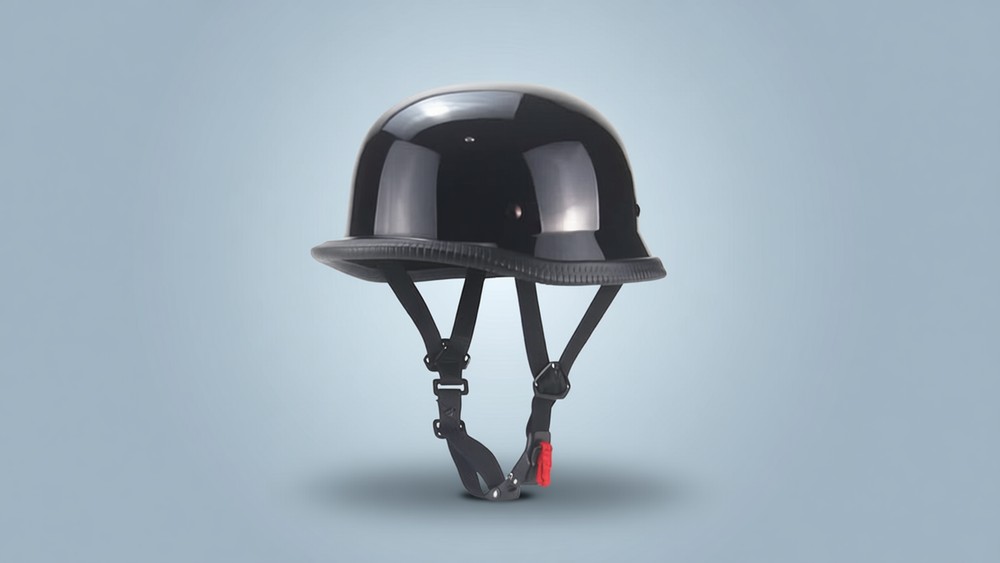
The BwondMand TK-2-B is a budget German half helmet with the weight of a real lid and a DOT claim its own listing won't back up. You get an ABS shell, a foam liner, a quick-release strap buyers like, and a one-year warranty.
You don't get proof of the DOT claim, and one of the ten texts actively disputes it. The comfort record splits, the sizing evidence is thin, and the listing's airflow and cycling claims describe features the spec table can't name. Order it if the style and the price work for you, and run the arrival checks below.
The price end of the catalog, and what the cheapest fifth buys
This helmet sits in the cheapest fifth of the 257 helmets we track, and the exact live position renders in the specs box on the comparison table.
For that money you get an ABS shell, a foam liner, a stated 1.91 pounds, a quick-release strap, and a one-year warranty listed in the spec table. That's the whole package, and it's more structure than the novelty beanies at the bottom of the market offer.
The 1.91 pound figure is the number worth pausing on. A helmet that genuinely passes DOT needs an impact absorbing liner roughly an inch thick, and that liner has mass, so a helmet this weight is at least shaped like one that could pass. A pound-scale beanie with a hard shell and no liner can't pass the test, and this isn't that.
What the price doesn't buy is coverage. A German half shell covers the top of the skull and stops above the ears, and the buyer who picks this style has already accepted that trade. The question this article answers is whether the rest of the package holds up.
A 4.4 star record with one loud dispute in it
The TK-2-B holds 4.4 stars from 153 ratings, and about 72 percent of those are five stars. Ten ratings carry any text at all, and every one of them is purchase-confirmed, so there are no drive-by one stars inflating the negative side and no paid-sounding praise on the positive side either.
The problem sits inside that record: one of the ten states flatly that the helmet is not DOT.
The listing says DOT approved and stops there. No certifying body, no test lab, no certificate, nothing a buyer could follow to check the claim on its own. The other eight texts either ignore the DOT claim or repeat the listing's words back.
Nobody on the page settles the dispute, so a careful buyer carries it open. Manufacturers certify their own helmets against FMVSS 218, the federal standard, and NHTSA can test sold helmets and fine sellers whose lids fail, which is why the Wikipedia motorcycle helmet article treats the label as a claim rather than a measurement. The arrival check is the stitched DOT label on the back of the shell.
Fit runs generous, comfort splits down the middle
The quick-release strap draws the clearest praise on the page, and buyers have called the fit great or comfortable in three separate texts. Against that, the four star text says a size smaller worked better, and nobody who praises the fit names the size they bought, so the runs-large signal stands on a single data point.
The comfort record genuinely splits. One text describes an inside that's extremely hard on the head and asks for some padding, while the listing promises a soft strap and comfortable wear. Both things can be true: the strap and the crown are different parts of the helmet, and a foam liner without padding density will feel exactly the way that text describes.
The spec table's age range is adult, and one text describes fitting it on a 16 year old, which fits an adult-range shell on a near-adult head.
Treat that as sizing evidence rather than a warning. Half helmets are hard to size because there's no cheek pad or chin bar to take up slack, so the shell sits on the crown and head shape matters as much as the number on the tape.
Claims the spec table cannot back
The bullets promise good ventilation for summer or winter riding. The spec table names no vents anywhere, and a half helmet has no chin bar to route air through, so the claim is describing the absence of a shell rather than a feature.
Air will move around an open helmet. That's not a vent.
The recommended-uses row lists cycling alongside motorcycling, while the DOT claim on the same page is the motorcycle standard. Those are two different products wearing one listing: a bicycle helmet is lighter, and a motorcycle helmet's weight on a bicycle is a comfort question, not a safety upgrade.
None of this proves the helmet is bad. It proves the page was written to sell rather than to specify, which is exactly why the arrival checks in the next section matter more here than they would on a listing with a clean spec table.
Who should order one and what to check on arrival
The buyer this fits wants the German half shell look on a modest budget and is willing to run a two minute inspection when the box arrives.
Run the same checks the DOT dispute demands: confirm the label is stitched on rather than a decal, weigh the helmet against the stated 1.91 pounds because a compliant liner has mass, and press the liner to feel roughly an inch of crushable foam. Given the one sizing data point, consider ordering a size down from your usual.
Say it plainly: a half shell protects less of your head than a three quarter or full face lid carrying the same DOT sticker. The style's trade is coverage for look and airflow, and the price position in the helmet comparison table is the honest upside.
Common questions about the BwondMand TK-2-B
Is the TK-2-B actually DOT certified?
The listing says yes and names no certifying body. One of the ten texts says no. The page gives you nothing that settles it, so check the stitched DOT label on arrival and return the helmet if it's a decal.
Does it run large?
The only sizing text says a size smaller worked better, and nobody who praises the fit names their size. Treat the runs-large signal as unproven but real enough to weigh, and order from a seller with returns.
Is there a warranty?
One year, per the spec table. The review record contains no warranty claim either way, so it's untested as far as the public record shows.
Can you wear it on a bicycle?
The listing recommends cycling alongside motorcycling. It carries a motorcycle helmet's DOT claim and a motorcycle helmet's weight, so on a bicycle it's a comfort trade rather than a safety upgrade.
Is the inside comfortable?
The record splits: three texts call the fit comfortable, one describes the inside as extremely hard and asks for padding. If you know you're sensitive to pressure on the crown, this is not the shell for you.