A 960 watt-hour pack for under two hundred dollars is the kind of price that fills the cheap end of a comparison table, and for a few months this one sat there. Then the page went dark. The listing for the Q RQTEBAT 48V 20Ah battery no longer resolves, the ASIN fails every lookup we run, and five buyer ratings from the summer are all the grading it ever received.
That scarcity cuts both ways. Nobody left a detailed account of how these cells aged, so nothing here can call the pack great or junk. What the record does hold is the listing itself: every figure it printed, the charger it bundled, and one charge-time promise you can disprove with a pocket calculator.
This review walks through what survives on paper, what the numbers say a 960Wh pack should deliver, and the checklist worth running against any seller wearing the same title today.
On paper, this pack had most of its act together. The 960Wh figure is plain arithmetic, the 25A BMS covers the title's own 1000W motor ceiling with room to spare, and the lock, switch and charge-indicator trio showed up on a battery priced near the budget end of our ebike battery table. What it never got was evidence.
The Q RQTEBAT 48V 20Ah battery page is gone, so the links in this review point at a tagged Amazon search where sellers under similar names still trade.
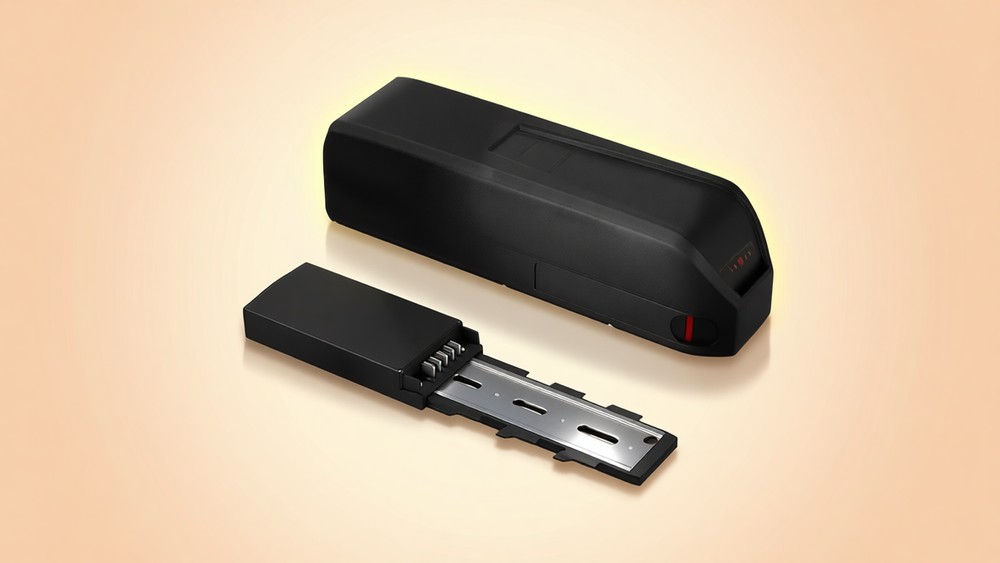
A big pack at a small price, gone before the grades arrived
The listing first went dark in October 2026, and a fresh probe on November 2 confirmed the ASIN itself no longer resolves in Amazon's product database.
When a whole capacity rung disappears like that, the review stops being a buying recommendation and becomes a record, and that is what this is. The recorded price was 199.79 for 960 watt-hours, which works out to about 21 cents per watt-hour and placed the pack in the cheaper third of the 324 batteries we track.
The grading record deserves its own plain sentence. Our old article from August 2026 counted five ratings averaging 4.6 stars, and that count is all anybody captured.
No review text was ever saved and our data row carries no rating at all, so nothing in this article claims that an owner rode this pack and found it good. The five-rating figure is provenance, not evidence.
That combination, a tempting price and a nearly empty record, is exactly the shape of listing worth studying before it vanishes, because the same seller template keeps reappearing under new names.
The numbers the listing did print
Start with the arithmetic that held up. A 48V nominal, 20Ah pack stores 960 watt-hours, and the title paired that with a 25A battery management board. At 48V, a 25A board allows about 1200W of continuous draw, while the title capped compatible motors at 1000W, a load of roughly 20.8A.
The claim fit inside its own BMS figure with about four amps to spare, which is more than most budget listings can say.
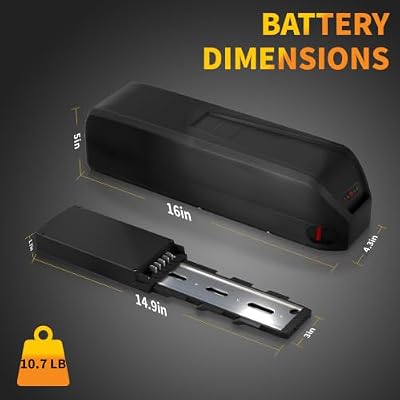
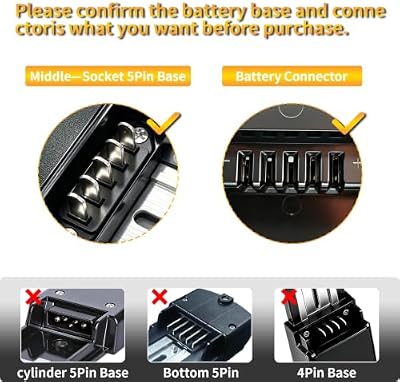
The recorded case ran about 16 by 4.3 by 5 inches and 10.7 pounds, big enough that mounting space matters more than usual. Connection was a 5-pin base on a slide rail, with mounting plates and screws included for bikes that needed a screw-down install instead. The box also carried two keys, a four-LED charge indicator, a physical power switch, and TX60 and TX90 output cables for accessories.
Then come the claims nobody can check. The listing advertised 1500-plus discharge cycles, a waterproof ABS casing, and an anti-seismic internal bracket, and it named no cell brand for any of it. A cycle-life number without a cell name behind it is marketing, and the waterproofing claim never came with an IP rating, so treat both as unproven.
The charge-time promise arithmetic forbids
Here is the error the old write-up made, and it is the kind worth learning to catch. The recorded charger was 54.6V at 3A, and the old article promised a full charge in roughly three hours.
A 20Ah pack on a 3A charger needs about seven hours from empty, since 20 divided by 3 lands near 6.7. On the 2A chargers common in this tier, the same job takes about ten hours. Three hours was never possible with the charger in the box.
The voltage matters as much as the amps. A 48V pack runs 13 cells in series, and 54.6V is the full-charge voltage for that layout, so any replacement charger has to match it.
The old article also suggested buying a 4A or 5A charger to cut the wait, without a word about whether the pack's connector or charging circuit tolerates that current. That advice was incomplete at best.
Run the charge math yourself on any listing you consider. Divide amp-hours by charger amps, and if the promised time sits far below the quotient, the listing's other numbers deserve the same suspicion.
What 960 watt-hours actually delivers
The em3ev 48V 20Ah guide, verified in November 2026, puts the 960Wh class at about 30 to 40 miles on throttle alone and 50 to 65 miles on light pedal assist. The guide's author reports about 55 miles on Level 2 assist in mixed-terrain riding, and 30 to 35 miles when leaning on a 750W motor with the throttle.
The old article's 45-mile level-1 figure sat just under that sourced band, and its 20 to 25-mile throttle figure sat below the sourced throttle band, which made the pack look worse on throttle rides than the arithmetic supports.
The spread between those two bands is the whole story of big-capacity packs. Full throttle burns roughly 30 to 35 watt-hours per mile, so a 960Wh pack spends itself in under two hours of hard riding. Light pedaling stretches the same energy to roughly one and a half times the throttle distance.
Every range claim you read, here or on a seller page, needs its riding style attached, because the number without the denominator is half a claim.
Replacing it: the checklist the listing skipped
The listing never printed a cell brand, an IP rating, a cycle-life source, or a warranty, and it recorded no compatible-bike list either. That silence is the checklist.
When a seller under a similar title appears, ask for five things in this order: the printed BMS amp rating against your motor's draw, the cell manufacturer by name, the charger and its amperage in the box, the IP rating, and the warranty terms. Motor watts divided by pack volts gives the amps your controller will pull, and the BMS has to allow that continuously, not just in bursts.
Fitment is the other half. The 5-pin slide-rail base has to match your bike's mount or your mounting plates, and the 16-inch case length needs a measuring tape against your frame or rack before anything else. A pack this size has few hiding places.
The one idea worth carrying forward is the safety trio. A key lock, a power switch, and a charge indicator cost a seller very little, and they were this pack's most practical features. Demand them alongside the numbers.
FAQ: the ASIN that stopped answering, the 1200W motor at the ceiling and the seven hours that replace the impossible three
Can you still buy this pack?
No. The listing went dark in October 2026 and the ASIN stopped resolving entirely by November 2. The tagged search link at the top of this review turns up current sellers under similar names, and any of them should be checked against the five-point list above. Our review of the 12Ah sibling covers the smaller rung under the same brand name.
Will a 25A BMS run a 1000W motor?
Yes, with headroom. A 1000W motor draws about 20.8A at 48V, which sits about four amps under the board's 25A continuous limit. A 1200W motor would sit right at the ceiling, so anything larger needs a different board.
How long does a full charge take on the 3A charger?
About seven hours from empty, because 20Ah divided by 3A is nearly 6.7. The three-hour promise the old article repeated was impossible on the charger in the box. On a 2A charger, plan for about ten hours.
What did the lock and switch actually do?
The key lock secures the pack to the bike, which matters for a 10.7-pound brick sitting in view. The power switch cuts the circuit at the pack, so idle drain stops and a bump cannot wake the controller while the bike is stored. Both are cheap features that deserve to be standard.