Owners of a Lectric XP 1.0 or XP 2.0 who need a replacement pack discover something fast: Lectric sells complete bikes and its own batteries, but the third-party shelf around the XP's 48V 10.4Ah standard is crowded, cheap-looking and hard to tell apart.
The PowHonhinen 48V 10.4Ah battery sits on that shelf at 178.00, which works out to about 36 cents per watt-hour. That is among the more expensive positions in our comparison table, and the live figure renders in the specs box below, so you don't have to take our word for it.
What separates this listing from the crowd is paperwork, not price. Its parameter card names the cell configuration, both voltage cutoffs, both port types, the charger's amperage and the temperature windows, which almost nothing else in this band prints. What it doesn't have is a single owner account, and this article walks the card line by line so you can decide whether the paper is enough.
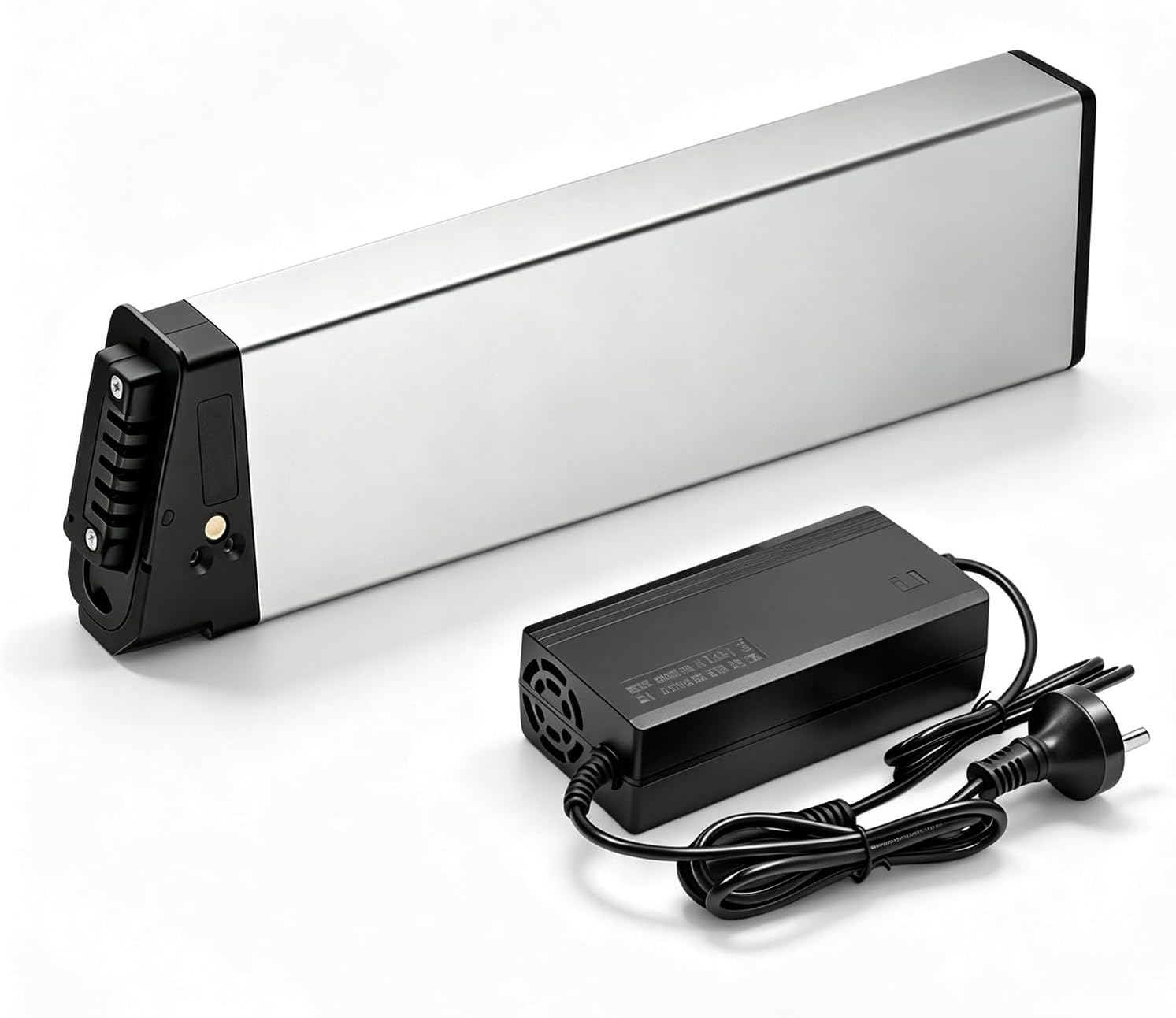
A zero-record listing with an unusually complete card
There is no rating on this page and no review of any kind. We checked the recent and helpful sort of the reviews section while signed in, and both came back empty, so the star field you may see rendered near the buy box is client-side decoration rather than evidence.
That puts the whole purchase on the listing's own claims, which is why the card matters.
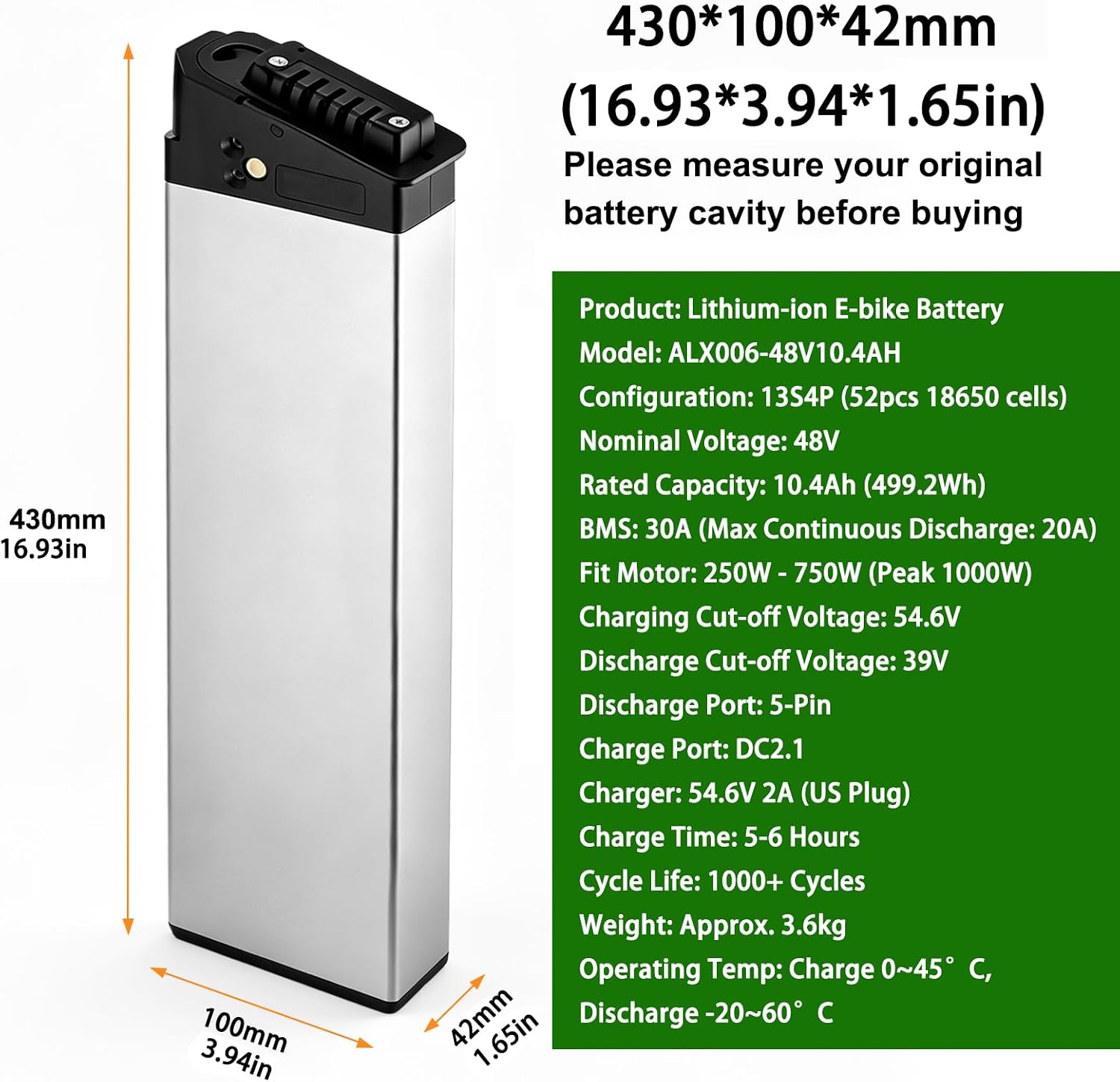
The card prints a 13S4P configuration built from 52 cells of the 18650 type, a 54.6V charge cutoff, a 39V discharge cutoff, a 5-pin discharge port, a DC2.1 charge port, a 54.6V 2A charger and a weight of about 3.6 kilograms. Few listings at any price print all of that, and most of it is checkable, which we do below.
The card also prints what the card does not usually print elsewhere: operating windows. Charge between 0 and 45 degrees, discharge between minus 20 and 60. If you ride through a real winter, that discharge floor is a specification worth having in writing.
What nobody can tell you is how any of it behaves on a bike. No owner has reported whether the 5-pin plug actually mates with a Lectric connector, whether the mount rail lines up with the XP's tray, or how the pack holds up after a season of charging. The questions a Lectric owner would most want answered are precisely the ones the empty record cannot touch.
Two motor bands on one page
The listing argues with itself about power before you ever reach the card. Bullet one says the pack reliably powers motors from 100 to 1000 watts.
The card says the fit band is 250 to 750 watts with a 1000 watt peak. Those are different ranges, and the difference isn't cosmetic, because the top of the card's continuous band is where a controller lives day to day.
The weight rows fight, too. The card says about 3.6 kilograms, and the details table prints 8.8 pounds, which is about 4 kilograms. Half a kilo is not a rounding difference, and on a pack you carry up stairs it is worth knowing which figure is real.
The honest read is that the card's number describes the pack and the table's number describes it with packaging slack, but the listing never says so.
Bullet three claims complete UL2271, UN38.3 and SDS test reports. No document, number or certifying body appears anywhere on the page, so treat that as a claim about paperwork existing rather than evidence you can inspect.
The two-BMS decode, and what it means for a Lectric
The most important line on the card is easy to misread. It says the BMS is 30A, and then, in brackets, that the maximum continuous discharge is 20A. Two numbers for one component, and the smaller one is the one to plan around.
Twenty amps at 48 volts is a 960 watt continuous ceiling. A 750 watt motor drawing hard sits near 15.6 amps, comfortably inside it. The 1000 watt peak claim sits above the continuous ceiling, which is what a peak rating's for, but a buyer shouldn't build a daily commute on the peak.
The voltages close cleanly. Thirteen cells in series charged to 4.2 volts each is 54.6 volts, which matches both the printed cutoff and the charger in the box, and thirteen times 3.0 volts is the 39 volt discharge floor. That internal consistency is worth more than it sounds, because listings in this class print charger voltages that do not match their own packs often enough that we check every one.
Charging arithmetic checks as well. A 2 amp charger on 10.4 amp-hours needs about 5.2 hours, and the printed 5 to 6 hours leaves room for the taper at the top of the charge. Nothing here is inflated.
The weight closes the loop in the honest direction. At the card's 3.6 kilograms, this pack stores about 0.14 kilowatt-hours per kilogram, and even at the table's 4 kilograms it stays near 0.125.
Mass-produced lithium-ion cells store roughly 0.16 to 0.30 kilowatt-hours per kilogram before any case, BMS or wiring, so a finished pack landing below the band means the printed weight leaves room for the hardware. Some listings we have covered print densities the chemistry cannot deliver. This one does the opposite.
Buying a Lectric replacement when nobody has reported back
Zero-record listings aren't automatically bad bets, but the purchase has to become a test you control. The listing itself asks for the first step twice, in the bullet and on the card: measure your original battery cavity before buying. The printed footprint is 430 by 100 by 42 millimetres, and the XP's tray has less slack than product photos suggest.
The second step is the port. The card promises a 5-pin discharge connector, and this shell family has a real connector history on our site. The ShunTongDa Lectric XP pack, which we have reviewed in full, is the covered rung of this shell class aimed at the same bikes.
Until an owner confirms the PowHonhinen plug, the pin count on the card is a claim, so compare it against your old pack's plug before paying.
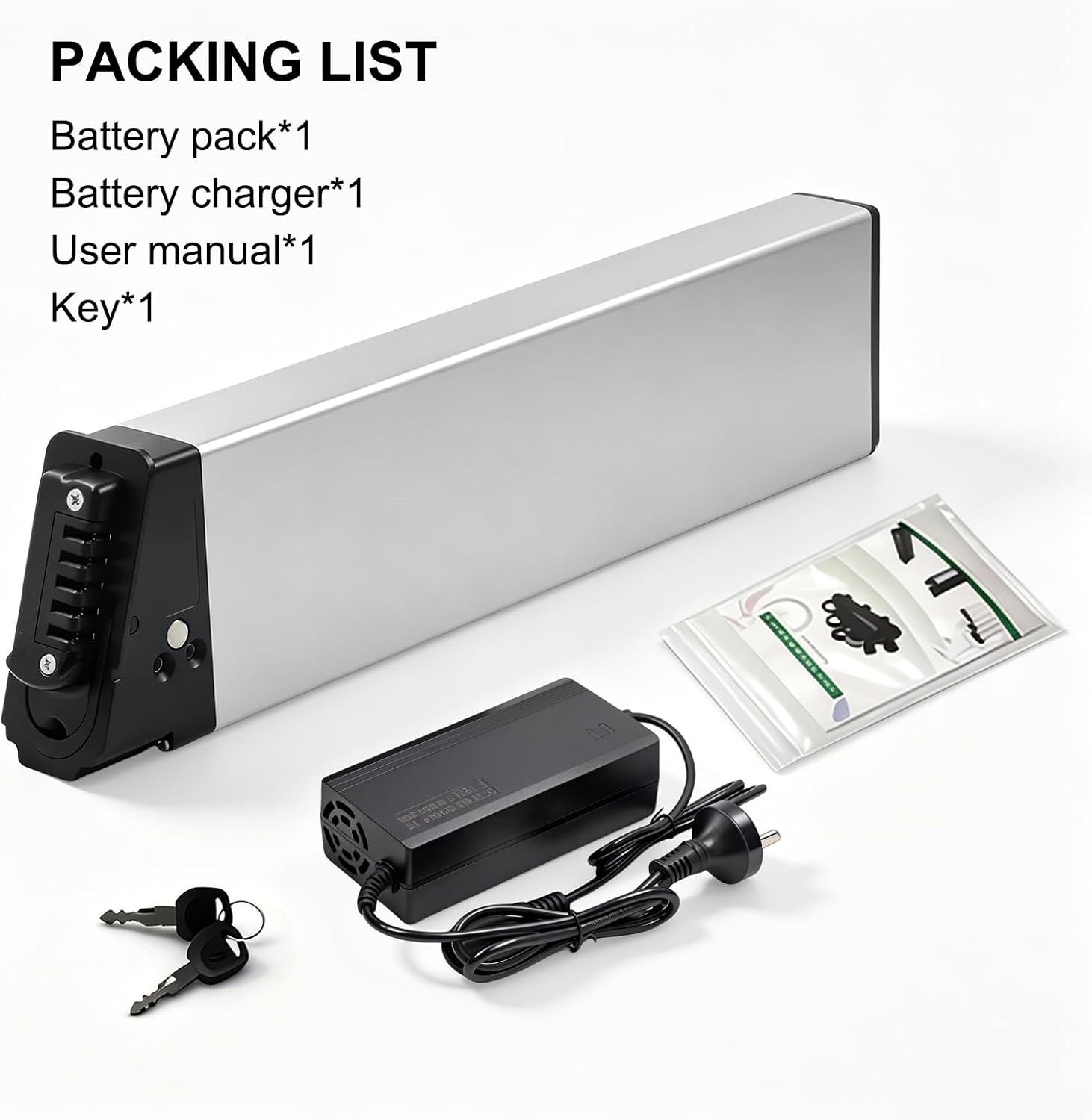
The third step is the weigh-and-meter routine. A pack landing far under 3.6 kilograms cannot contain the cells the card claims, so put it on a scale on arrival. Then meter the first week: full charge, short rides, and a watch on the gauge against the 499.2 watt-hours the card promises.
The box charger's 2 amps are slow, which is normal for this pairing, not a defect.
For context on what else fits this standard, our Lectric XP Lite 48V 10Ah review covers the Lectric XP Lite replacement pack, and the comparison table holds every 48V pack we track with live price-per-watt-hour positions. The PowHonhinen sits pricier than most of that table, and if value is the priority, several covered rungs of the same shell class cost less per watt-hour.
Frequently asked questions
Will this fit a Lectric XP 3.0 or XPeak?
The listing names the XP 1.0 and XP 2.0 Step-Over only, and the Samebike LO26 as a second fit. It makes no claim about the XP 3.0 or the XPeak, so the printed 430 by 100 by 42 millimetre footprint and the 5-pin port need checking against those bikes' own batteries before you assume anything.
How long does a full charge take?
The box charger runs at 2 amps, so about 5.2 hours for 10.4 amp-hours, matching the printed 5 to 6 hour window. There is no fast-charge option on this listing.
Is the 1000-cycle claim believable?
It sits in the top half of the 400 to 1,200 cycles typical for consumer lithium-ion cells. Nothing on the page names the cell brand behind it, so plan on the band rather than the top of it, and let the meter tell you how the pack ages.
Should you buy it with no reviews?
If you're comfortable testing a pack yourself, the card gives you the checklist to do it with, the listing carries a one-year manufacturer warranty, and the return window is still your fastest exit. If you want owner evidence first, the covered ShunTongDa and Lectric XP Lite rungs carry records you can read today, at lower prices per watt-hour.