A dead or dying pack is the most common way a Lectric XP leaves the garage. The bike is fine, the motor is fine, and the battery inside the frame tube won't hold a charge anymore. Lectric sells replacement packs, but an OEM pack costs real money for a bike that might be three or four years old, so the aftermarket is where most owners end up looking.
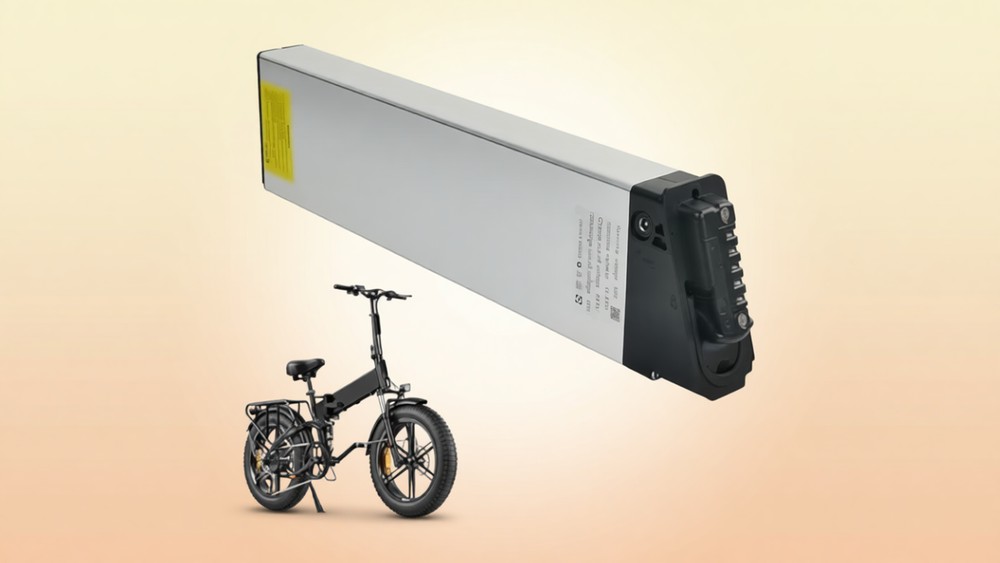
This ShunTongDa pack claims to be the direct answer: 48V, 10.4Ah, the 5-pin port, and a size matched to the XP 1.0 and 2.0 frame. It's also a listing that can't keep its own numbers straight, and a review record that split down the middle in September. Three buyers in summer described a pack that fit and worked.
Three recent buyers say it didn't fit their bike at all, and one of those is the only review anyone found helpful.
This is a fit gamble with a known shape. The pack itself is straightforward: 48 volts, 10.4 amp hours, 499.2 watt hours, a 30A BMS, and a key lock that doubles as the power switch. Whether it works for you depends almost entirely on one measurement, and the listing's own advice to confirm the size before buying is the only real protection on the table.
A fit record that changed in September
The text record splits by date, and the split is clean. Every success in it arrived between late June and September 3: one owner brought a first-generation XP back to life, another calls it a perfect XL replacement at about half the Lectric store price, one says it fit a first-generation bike just fine, and two more report that it simply works. Every failure arrived on September 4 or later.
One buyer's pack didn't fit after they compared the listing's pictures and dimensions against their own bike, a three-star text says only that it doesn't fit, and an unverified trike owner reports the same miss.
The only text anybody marked helpful is one of those fit failures. All five 5-star texts carry purchase confirmation, by contrast, so this isn't a record of fake praise running against real complaints. It reads more like a listing that fits some bikes in a family and misses others, or one whose fit changed.
You can't tell which from the outside, and that's exactly why the tape measure in the next section matters more than the rating. Compare it against the rest of the field in our battery comparison table.

Measure the old pack before you order
The listing claims the Lectric XP Step-Over 1.0 and 2.0, and it names the numbers that decide the fit: 430 by 100 by 43 millimeters, with a 5-pin discharge port and a key lock that switches the pack on and off. The spec table rounds that size to 430-100-42, one millimeter off, which tells you how carefully the page was put together. The kit includes two keys, a charger, and a manual.
Here's the check the listing asks for and almost nobody runs. Pull the old pack out, measure its length, width and thickness, and count the pins in the discharge port. Write the numbers down and compare them against the listing before you pay, not after.
The unverified October text from a trike owner whose XP3 doesn't fit shows what happens the other way: newer Lectric models keep finding this page, and the listing has never claimed them. If your bike isn't an XP 1.0 or 2.0 Step-Over, nothing in the record says this pack fits it.
One more habit worth keeping: the key is the switch, so it stays on while you ride, and a pack that seems dead may only be locked off.

The numbers on the page don't all agree
The core capacity is actually consistent. 48 volts times 10.4 amp hours is 499.2 watt hours, the spec table's own energy content agrees, and nothing in the listing contradicts it.
The trouble starts in the power bullet, which calls the pack a "48V 10.4Ah 14ah battery" and promises a "real 500Wh". That stray 14ah is nonsense by the listing's own math, because 48 times 14 would be 672 watt hours, a third more than the pack's stated energy content. One of those numbers is wrong and the page never settles which.
The spec table labels the energy content "wattage: 499 watts", which confuses energy with power, the same slip a lot of listings make. The bullet caps supported motors at 800W, yet the 30A BMS would pass about 1440W on a fresh pack, so the honest reading is that the BMS isn't the limit here.
The title says UL Certified with no certificate image or file number anywhere on the page, and UL keeps a free public lookup called Product iQ, which a claim with no file number gives you nothing to check against. The 1000-plus recharge cycle promise sits two to three times above the 300 to 500 cycles consumer cells are typically specified for, according to Battery University's BU-808.

What 499 watt hours runs on an XP
The listing promises no range and no buyer gives one, so the only honest number comes from the category. An e-bike battery usually lasts 25 to 75 miles per charge depending on the power level you use, per Wikipedia's e-bike article.
A 499.2Wh pack is small for a 48V system, and most of the packs we track at this voltage carry more watt hours than this one, so plan on the bottom half of that band with real pedal assist and the bottom of it with a throttle.
At roughly 20 watt hours per mile of throttle-heavy riding, that's about 25 miles between charges. Light assist stretches the same energy a lot further, which is where the band's upper half comes from.
Neither figure is a measurement of this pack, and it's worth saying what the record doesn't cover: no buyer mentions charge time, no buyer reports a range figure, and the only durability signal either way is one owner's report of overheating after about three weeks. One report isn't a pattern, but it's all the long-term evidence that exists.
Cheap against the OEM, expensive per watt hour
The value question has two answers and both belong next to each other. Against the alternative a buyer actually faces, an OEM Lectric pack, the record is positive: one owner reports paying about half the Lectric store price and reviving an XL, which is the strongest single fact in the record. The kit arrives complete, with charger, keys and lock, so there's nothing else to buy.
Against the wider market it's a different story. At 188.00 for 499.2Wh, this works out to about 38 cents per watt-hour, which sits among the most expensive packs we track. The live specs box under this article shows the exact position as the market moves, and the battery comparison table sorts the whole field on the same math.
The premium buys a pack that fits one specific bike family, and it's only worth paying when the fit is certain, which is what the measuring section above is for. If the fit isn't certain, the same money buys more watt hours elsewhere in a standard mount.
FAQ: the newer bikes it never claimed, the pack that overheated after three weeks and the UL claim with no number to enter
Does it fit the Lectric XP 3.0 or XPeak?
Nothing supports that. The listing claims the XP Step-Over 1.0 and 2.0 with a 5-pin port and a 430mm length, no buyer text confirms any newer model, and one unverified trike owner reports an XP3 that doesn't fit. Treat the claimed models as the whole list.
One owner mentioned overheating. Should that stop a buyer?
One owner has reported a pack that ran about three weeks and then overheated. That's one report in a small record, not a pattern, but it's also the only durability signal the record holds. The 1-year warranty is the recourse, so test the pack early and hard rather than shelving it until summer.
Does it come with a charger and keys?
The listing says the kit includes the battery, a charger, two keys and a manual, and one owner confirms receiving its own key and charger. Nothing in the record contradicts that.
How can I check the UL claim?
UL's Product iQ database is a free public lookup for certified companies and products. This listing shows no certificate image and no file number, so there's nothing to enter. A certification claim you can't look up is a claim you take on trust.
How far will it go on a charge?
The listing makes no range claim and no buyer reports one. The category band runs 25 to 75 miles per charge depending on assist level, and a 499.2Wh pack sits at the low end for 48V, so plan for the bottom half with real assist and the bottom of it under a throttle. If it isn't the right fit, the battery comparison table sorts every option we track.