A two-pack of intercoms for 59.99 works out to about 30 per rider, and that math is the whole pitch. Name-brand units cost more than that each, so budget packs live in every cheap helmet, and most don't bother with the one spec that actually ends a ride: water protection. This IP65 two-pack prints the rating next to its price.
The buyer record is small enough to read in full. 70 ratings at 4.0 stars, 14 written texts, every one tied to a purchase. They split cleanly into three piles: pairing and passenger talk that work, a volume ceiling that shows up at highway speed, and a waterproofing claim with one direct counter-report.
That last pile is the one worth reading past the spec sheet for, because the rating on the box promises more precision than the word "waterproof" does.
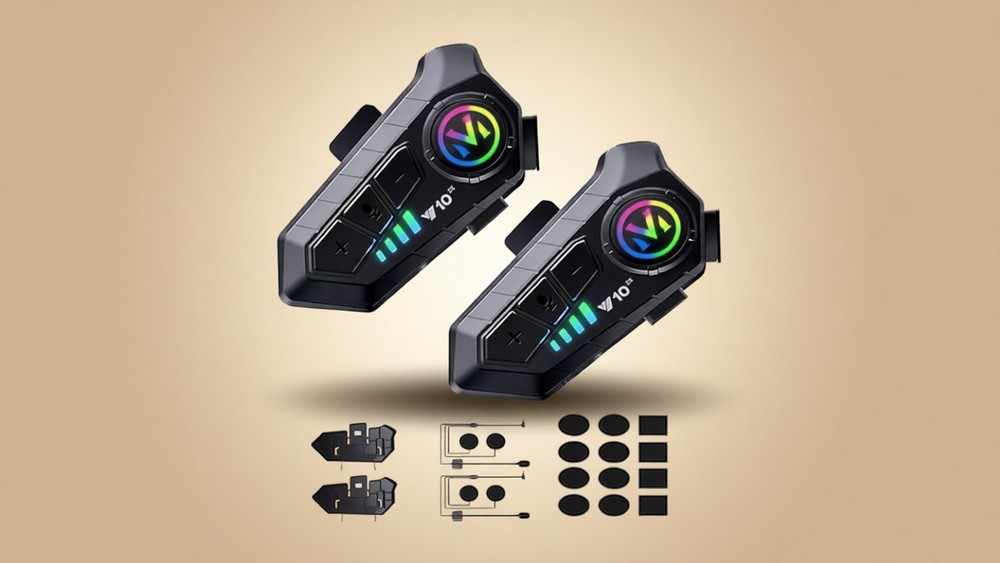
What the listing promises, and the two ratings it prints
The bullet list covers the usual budget-pack ground: a 1000mAh battery with up to 32 hours of claimed playtime, USB-C charging, a 1000FT communication range for two riders, CVC noise cancelling, 1.2cm thin speakers, and large buttons sized for gloved hands. Nothing unusual there, and one entry is even a small honesty win: the spec table lists the manufacturer as "china" rather than inventing a brand story.
The spec table then undercuts itself twice. One row prints IP Rating IP65.
Another row prints Waterproof Rating IPX6. Those are two different test levels under the same international standard, IEC 60529, and a listing that prints both has told you it was tested for neither. The table also says Number of Items is 1 while Number of Packs is 2, and gives the warranty as "1" with no unit attached, so a year of what remains unstated.
Here is what IP65 actually certifies, from the standard's own definition: the 6 means dust tight, and the 5 means the enclosure survives water projected by a 6.3mm nozzle at 12.5 litres per minute and moderate pressure from 3 meters away. That is a jet test. It is not a soak test, and the standard exists precisely to replace vague marketing words like "waterproof" with something a buyer can check.
On our own intercom table this pack sits near the middle of the 192 units we track on price per rider, which is where a 30-per-rider two-pack with no brand behind it should sit.
The interesting number is elsewhere: of the 72 two-packs we track, only 19 carry any water rating at all, so a rating at this price is normal. What is rare in any of those records is proof the rating survives a ride.
Jets on paper, one soaked unit in the record
The record holds exactly one direct test of the waterproofing, and it failed. A buyer who had praised the pack a sentence earlier, "long range clear and loud", reports it didn't last through one drive in the rain and plans to replace it with a water-resistant unit from a brand they trust. They left three stars.
That is one account, and it sits against no counter-evidence, because no other text describes rain at all. A single failure doesn't disprove an IP rating, and jets from a lab nozzle are not the same as road spray pushed past a helmet edge at speed.
But the failure report is also the most specific water data anyone has bothered to write down for this pack. Between a spec table that contradicts itself and one owner's dead-after-rain unit, the honest reading is that the sealing is unproven, and a buyer who rides in wet weather should plan for that rather than trust the word "waterproof".

The 45 mph volume wall
The most-voted text in the record is a two-star, and it deserves the votes, because it is the most useful thing anyone has written. The owner pairs quickly, operates it with gloves, and gets crisp clear sound at lower speeds, all of it working.
Then the wall: great sound up to about 45 mph, very hard to hear at 55, and at highway speed something is playing but not loud enough to make out. That owner tried the units in several full face and modular helmets and moved the speakers through multiple positions looking for the volume. The result stayed the same.
Two other texts land on the same wall from different angles. One calls the build cheap and the speaker volume poor. Another reports the audio fades in and out and isn't loud enough to hear the other person.
The microphone has its own limit: one owner returned their first pair over poor pickup on one mic and found through experimenting that you have to have your lips right on the microphone before it picks up your voice. The small-print instructions and the thin pairing guide didn't help them.
Put together, the shape is consistent. This is a quiet unit, and its ceiling sits right where city riding ends.
What works: pairing, buttons, and the passenger conversation
The positive half of the record is consistent too, and it clusters around exactly the things a two-pack exists for.
Setup keeps coming up as easy: one owner reports the units connected automatically without issues and worked flawlessly on a few trips, and another needed about 10 minutes per helmet with a quick link-up afterward. The large buttons earn their mention from the same owner who hit the volume wall, who still calls them easy to press with gloves on.
The rider-to-passenger case is where the pack does its real work. One buyer reports the intercom with their passenger working great with conversation possible at speed. Another says the two riders can talk without yelling into each other's ears and calls the noise cancellation excellent while riding.
One owner has found the link holds at least 50 plus yards apart, which is the only range data point in the record and a long way short of the 1000FT claim.
Because both units ship in the same box, the usual budget-intercom compatibility lottery disappears. Two identical units, one charging cable type, no cross-brand pairing questions.

Skip it above 45 mph, keep it for town riding
The decision this pack forces comes down to one number. If your riding stays under about 45 mph, the record says the important things work: it pairs, it reconnects, it carries a rider-and-passenger conversation at speed, and it installs in minutes. At that use, the IP65 two-pack is priced fairly, and the water rating, jets only, is a bonus most packs at the price don't print.
Three buyers should keep scrolling. Highway riders should skip it, because the volume wall sits at the bottom of highway speed and no speaker position in the record has moved it. Music sharers should skip it, because two separate texts report you cannot share music between the two units, a gap the listing never mentions and one that matters exactly in a rider-and-passenger pack.
And anyone who wants a company standing behind what they bought should skip it, because the manufacturer field reads "china", the warranty reads "1" with no unit, and one owner with a hardware fault reports a pair that stopped charging after a month.
Frequently Asked Questions
Is it actually waterproof?
IP65 means dust tight and protected against water jets from a 6.3mm nozzle at 3 meters. It does not mean submersion, which is a different level of the same standard.
The listing's own spec table also prints IPX6 in a second row, which contradicts the first, and the record's one rain test ended in a dead unit. Treat it as splash-rated at best.
How far does the range really reach?
The listing claims 1000FT. The only measured report in the record is a link that held at 50 plus yards, about 150 feet. Bluetooth range through helmets, bodies and traffic is always shorter than the open-air claim, and no text in this record confirms anything close to 1000FT.
Does the battery really last 32 hours?
No text in the record confirms or tests the 32-hour claim, and the one buyer who mentioned battery life at all said they can't say yet. The related failure worth weighing is the owner whose pair worked for a month and then wouldn't charge.
Can two riders share music?
Two separate texts report the units cannot share music with each other. If passenger music or shared navigation audio matters to you, this pack doesn't do it.
Is installation difficult?
The record says no, with a small catch. One owner reports about 10 minutes per helmet.
Another found the first helmet tricky and the second easy. The buttons are large enough to use with gloves on.
Who should skip this pack?
Highway riders, anyone who wants to share music, and anyone who needs a real warranty and a company to complain to. Town-speed rider-and-passenger use is the case the record actually supports. If it isn't the right fit, the intercom comparison table sorts every option we track, including the CNBRO two-pack.