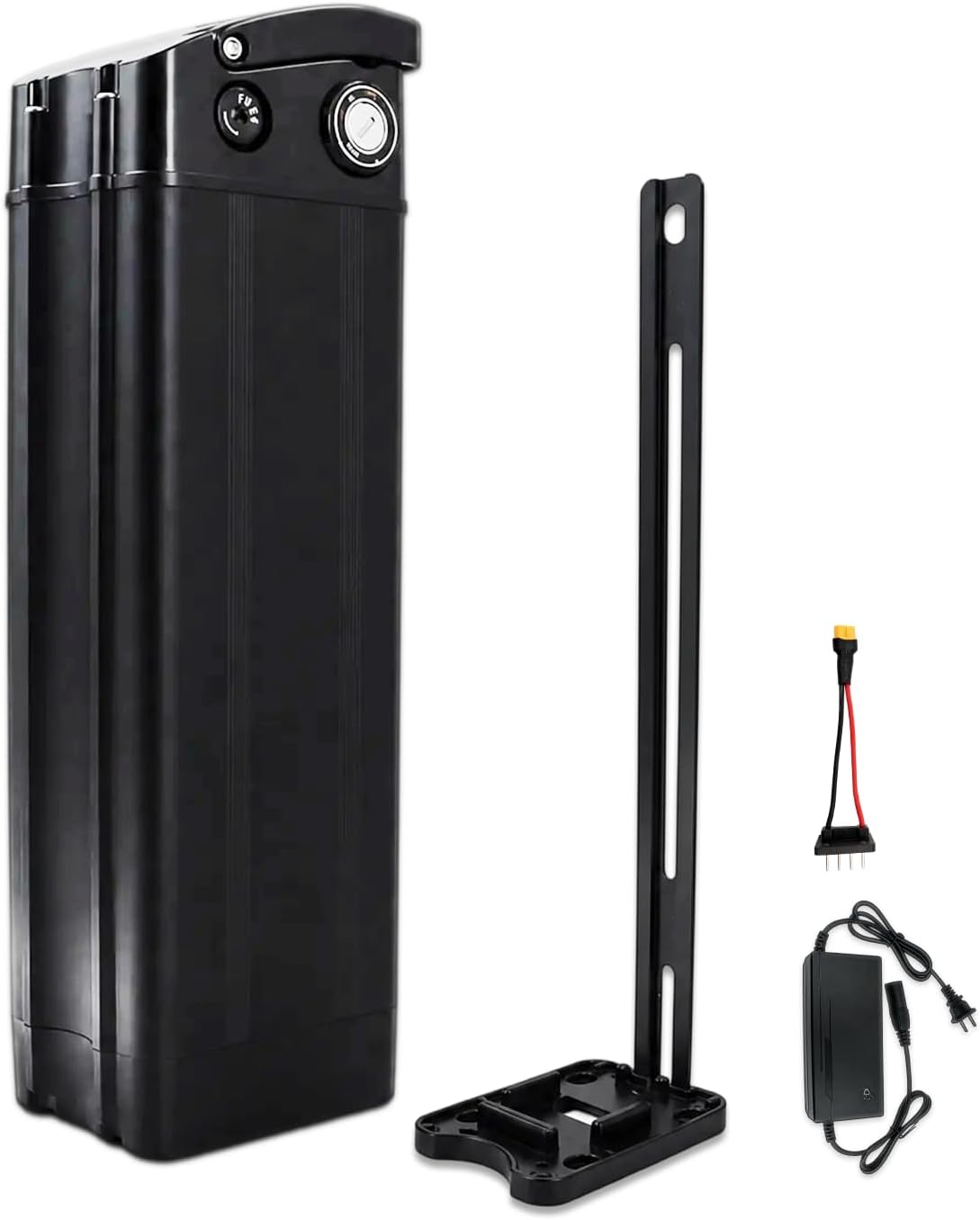
LOCKBUS has eight packs on our comparison table, and not one of them looks like this. The LOCKBUS 48V 20Ah silver fish battery is a downtube shell with a key lock, a 4-pin connector and a price of 219.99, and it has no ratings at all. Six were left in stock when I read the listing.
I went through the bullets, the details table, the gallery cards and the review page. The record is empty, so the listing has to stand on its own printed numbers, and those numbers argue with each other in two places that matter. One is the 1500W motor claim. The other is the charge time on the specification card.
A brand you have met, a pack you have not
We have reviewed eight LOCKBUS packs, and none of them looks like this one. The covered 48V 20Ah is a DIY PVC pack with T-plug wiring from a different factory, built for projects rather than bikes. The covered 13Ah is a folding-bike pack with a 20A board. There is a folding 20Ah, a USB-port 20Ah with a 40A board, a shark-shell 36V 10Ah, and two 52V packs. None of that history transfers to this listing, because this is a different product made by a different company.
The details table names the manufacturer as Dongguan Yizhan Electronics Technology, and the model number reads FP4820R0-097. That model pattern and that factory match the LZIXYM 13Ah we reviewed earlier this month, which is context rather than proof, but it tells you which family of packs this belongs to. It also explains the shared design language: the same safe lock, the same charge-socket warning label and the same spec-card format appeared on that listing too.
The seller is Xinrun E-Commerce, not a LOCKBUS storefront, and the pack carries a one-year warranty in the details table. Sales rank sits deep, at 743,809th in Automotive and 1,595th in Powersports Batteries, and that's what an untouched new listing usually looks like.
The 1500W claim against a 30A board
What the board actually supports
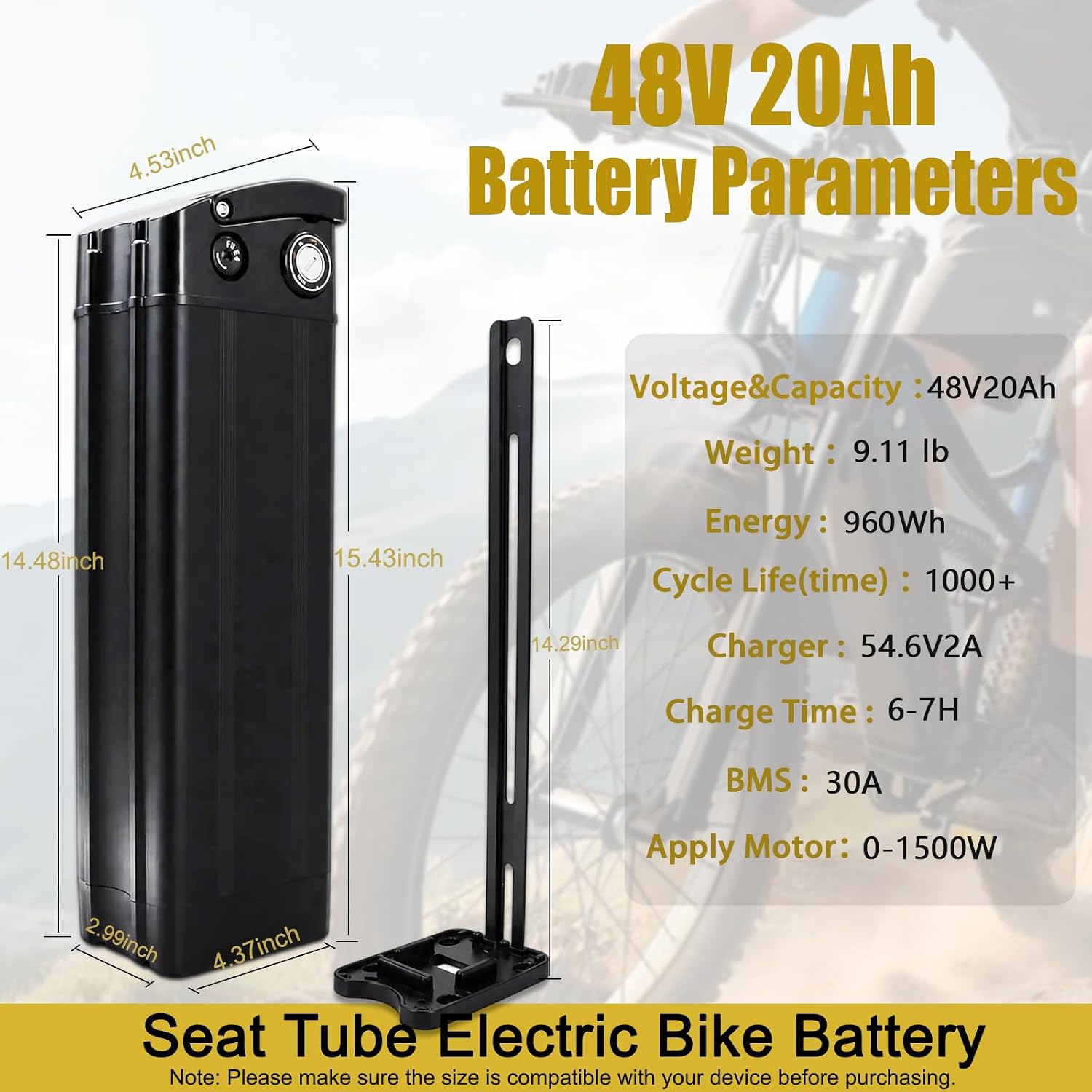
The title says the pack runs motors from 100W to 1500W, and the specification card repeats 1500W as the top of the range. The board under it is 30A, printed in the title, the second bullet and the card.
A 1500W motor at 48 volts draws about 31.25 amps at full load. That's over the ceiling of a 30A board, which caps the pack at 1440W continuous. The gap is one amp wide, so it's not a fantasy number the way a 3000W claim on a 25A board would be, but the arithmetic does not close either. If you ride a full-throttle 1500W build, this board either trips or runs hot, and the listing gives you no way to know which until it happens.
The practical read is the one we give every pack in this position: plan around the board, not the title. Treat this as a 1440W pack and it covers every motor from 250W to 1000W with room to spare, which is most conversion kits on the market. The claim fails only at the very top, and the listing prints that top twice, so decide with your eyes open.
The card settles the smaller numbers
The gallery specification card is the most useful image in the set, and most of its rows hold up. Energy 960 watt-hours, which matches 48 times 20 exactly. Charger 54.6 volts at 2 amps, which is the right brick for a 13S pack, and 54.6 divided by 4.2 lands on 13 exactly. Cycle life 1000-plus, which sits inside the band a chemist would accept for ordinary lithium-ion cells, though near the top of it. The Wikipedia range for standard lithium-ion cycle durability runs 400 to 1,200 cycles, so the claim is believable without being generous.
One row on that card does not match the title. The card labels this a seat tube battery, while the title and our own row call it a silver fish shell. The printed dimensions, 392 by 76 by 115 millimeters, fit either reading, since bottle-style and silver-fish packs share that footprint class. Measure your mount before you buy, because the listing cannot decide what shape it is selling.
The charge time fails its own arithmetic
The card says a full charge takes 6 to 7 hours. The charger in the box is 2 amps. Twenty amp-hours over 2 amps is 10 hours, from empty, before any charging taper.
That gap's not a rounding error, and it's not the first listing this month whose printed charge time rounds below what its own charger can deliver. The 6-to-7 figure only works from a partial charge, and the listing never says so. The card's own fine print gets closer to honest: a note under the LED gauge explains that the pack ships only partly charged, which at least warns you that the first ride happens on a half tank.
The gauge itself is well specified, and the card decodes it fully. Four blue lights means 100 percent, three means 75, two means 50, and one red light means 20. The charge socket carries its own limit, five amps maximum, which matters if you ever buy a faster brick. A 5-amp charger would cut the floor to 4 hours, but the one in the box will not, and nobody should expect the printed 6-to-7 figure from it.
The weight sits at the top of the band
The listing prints the weight three times and keeps it consistent, which is rarer than it should be. The bullet says 9.11 pounds, the card says 9.11 pounds, and the details table splits the difference at 9.1. That's 4.13 kilograms for 960 watt-hours, or about 0.23 kilowatt-hours per kilogram at pack level.
Wikipedia's specific-energy band for standard lithium-ion cells runs 0.16 to 0.30 kilowatt-hours per kilogram, and a finished pack should land below that band once the case, the board and the wiring take their share. This pack lands inside the cell band instead, which means the arithmetic only closes if the cells inside are near the top of the range and the enclosure is thin. That's not impossible. It's the tight side of plausible, and it's the kind of claim a kitchen scale settles in a minute when the box arrives.
The rest of the hardware reads cleanly. The 4-pin discharge connector prints its polarity on the card, red for positive and black for negative, with a warning to check your cable matches before you connect it. The smart BMS card lists seven protections, the usual set from over-charge through over-load, and the case carries an IP65 rating in the third bullet.
Where it sits on price
At 219.99 for 960 watt-hours, this pack costs about 23 cents per watt-hour, which puts it in the cheaper third of the 324 packs we track. The exact position changes as prices move, so check the live number on the comparison table rather than taking my word for it.
The ladder has one other rung. The 13Ah sibling sells at 169.99 for 624 watt-hours, about 27 cents per watt-hour, so the 20Ah is the better value of the two by a clear margin. The 13Ah listing carries its own junk detail, a title claiming compatibility with motors from 0W to 1000W, and no motor starts at zero watts.
Frequently Asked Questions
Will this fit my e-bike?
Measure first. The shell is 392 by 76 by 115 millimeters with a mounting base the pack unlocks from, and the listing itself ends with a reminder to confirm voltage, capacity, power and dimensions before ordering. The form-factor naming drifts between silver fish and seat tube on the page, so trust the millimeters over the label.
Can it really run a 1500W motor?
Not continuously. The 30A board caps the pack at 1440 watts, and a 1500W motor draws about 31 amps at full load. Motors up to about 1400W sit inside the board, and everything from 250W to 1000W runs with room to spare.
How long does charging actually take?
Plan on 10 hours from empty with the included 2A charger. The card's 6-to-7 hour figure only works from a partial charge. The socket accepts up to 5 amps, so a faster third-party brick could cut that floor to 4 hours if you ever want one.
Should I buy a pack with zero reviews?
Only if the printed numbers hold up without them, because you'll be the one testing them. On this listing the energy, the charger voltage and the cycle-life claim all check out, the weight is tight but arguable, and the charge-time row is the one figure I would ignore.