Replacing a folding ebike battery is a stranger job than swapping a downtube pack. The battery lives inside the frame, the slot sets the dimensions, and the connector is whatever the manufacturer chose that year. You're not shopping a category, you're matching a part.
A dozen listings in our comparison data sell a 48V 20Ah folding pack with a 30A BMS and a safety lock for about 199, and the titles read like copies of each other. When the spec sheets are identical, the review record is the only thing left to shop on.
The Lithium Hellas 48V 20Ah folding pack sat at the class price with the worst record in its class: one 2-star rating, no text behind it, and now a dead listing. What the recorded data still holds - the slot size, the T-Plug connector, the 10-hour charge floor, the range arithmetic - is exactly what a replacement hunt needs to start from.
The honest verdict is short. On paper this was a good row in our data: 199 for 960Wh works out to 0.21 per watt-hour, which puts it in the cheaper third of everything we track.
In its own tier it was just the going rate, and its record was the worst one we follow. The listing is gone, so you can't buy it at any price. What's left is a template for shopping the tier and a set of dimensions to match, and that's what the recorded data gives you.
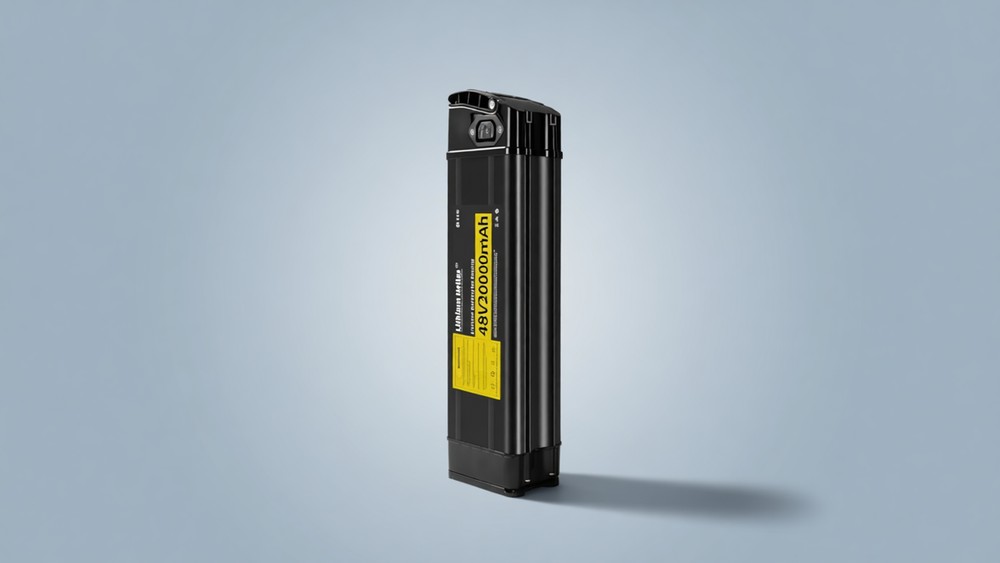
The price was the class price. The record wasn't
Our comparison data tracks 324 packs by price per watt-hour, and the exact position renders in the specs box on our comparison table. On that measure this pack looked like a find. 199 for 960Wh is 0.21 per watt-hour, which puts it inside the cheapest third of the whole table.
The class comparison flattens the find. The folding 48V 20Ah tier clusters hard: SEENRONGYUAN at 189.99, SHEWAIHE at 199, VODIPOWER at 199.49, LZIXYM at 199.99, Cefito at 199.98, Cavepower at 199.99.
Every one of them is a 20Ah pack with a 30A board and a folding case, and a dozen rows sit within a dollar or two of the same number. This pack never undercut the tier. It was the tier.
When the hardware is interchangeable, the record is the only differentiator, and here the pack held the worst one we track.
One rating at two stars, no written text, no count beyond one. Two class siblings did better on our data: a near-twin listing at 198 with a 4-star average, and another at 215 with 5 stars. A single rating can land anywhere, and the old write-up was right to refuse to guess whether it measured the pack or a fit problem.
But the listing's death froze the record at that single bad data point, and it can never grow now.
That's the whole story of this pack: the price said nothing, the record said one thing, and the record stopped.
Matching a replacement to the frame slot
Measure the slot first
The recorded dimensions are 14.96 x 4.33 x 2.76 inches, the slim elongated shape that slides into a folding bike's frame cavity. This mount will not drop into a downtube bracket, a rear rack, or a Hailong-style shark case, so don't shop the generic 48V 20Ah rows - shop the folding rows.
Measure your old pack's length, width and height, and check where the discharge port sits, because some folding cases put the port at one end and some in the middle. The safety lock adds a second matching problem: your frame's latch has to line up with the case's lock point, and that varies between brands.
The T-Plug question
The recorded listing called out a T-Plug, also sold as a Deans connector. T-Plug is an RC-car standard that carries high current in a small body, and it's uncommon on production ebikes, which mostly run XT60, Anderson or bare bullets. If your bike's harness ends in anything else, you're looking at an adapter.
Adapters work, and riders have used them for years, but each one adds a resistance point and one more connection to check when something misbehaves. The live folding packs with safety locks mostly ship XT60 now, so the T-Plug hunt is getting narrower every year. Before ordering any folding replacement, look at the plug on your own bike first. It's the cheapest diagnostic there is.

Charging: ten hours, honestly
The listing called its bundled charger a 2A fast charger. The arithmetic doesn't support the adjective.
Twenty amp-hours at 2 amps is a 10-hour floor from empty, before the balance tail that tops the cells off at the end. The old write-up estimated 10 to 12 hours and called it overnight charging, and that estimate holds. Nothing about 2A on a 20Ah pack is fast.
The charger rule matters more than the label. A 48V pack is 13 cells in series and charges to 54.6V, so any replacement or second charger must say 54.6V output - the recorded listing never stated its charger's voltage at all, only the 2A. If overnight-only charging bothers you, the fix is a higher-current 54.6V unit bought separately, not a different pack.
Range and the cycle-count claim
The old write-up claimed 20 to 35 real-world miles and blamed folding aerodynamics for the low end. The category anchor disagrees with both the band and the blame. Our 48V range guide puts real-world hub-drive consumption at roughly 24 to 31 watt-hours per mile on throttle and roughly 15 to 19 on light pedal assist.
Scaled to 960Wh, that's about 30 to 40 miles on throttle alone and 50 to 65 with light pedaling. Small wheels and an upright folding posture trim a few miles from those figures. They don't drag the floor down to 20, which is where the old band started.
The 1000-cycle claim runs hot too. Lithium-ion cells typically deliver somewhere between 400 and 1,200 full cycles before capacity sags to 80 percent, per the Wikipedia lithium-ion battery article, and a claim sitting near the top of that band without a named cell datasheet is marketing, not a promise. Plan on the middle of the band and treat anything above it as a bonus.

FAQ: the frozen record and the replacement hunt
Why does one two-star rating carry so much weight here? Because the tier gives you nothing else to judge. A dozen packs share the same spec sheet and nearly the same price, so the ratings are the whole signal, and this pack's signal was one unexplained two-star rating. The dead listing froze it there. One buyer's bad day and a genuinely bad pack look identical at this sample size, which is why the honest move is to shop the better-recorded siblings.
What charger does a pack like this need? A 54.6V lithium charger for a 48V pack, at whatever current you can wait for. At 2A, expect about 10 hours from empty on a 20Ah pack. A 3A or 4A unit cuts that to 5 to 7 hours, and it must state 54.6V output - not 48V, which is the nominal rating, not the charge voltage.
Will this class of pack fit my folding bike? Only if the slot matches. The recorded case is 14.96 x 4.33 x 2.76 inches with a frame-cavity mount. Measure your old pack, check the port position, and confirm the latch line-up before you order anything.
How do I know if my bike uses a T-Plug? Look at the connector where the battery's discharge lead meets the bike's wiring. A T-Plug is a flat, two-blade plug with one red and one black blade side by side. If you find XT60, Anderson or bullet connectors instead, plan for an adapter or a re-termination.
Is 0.21 per watt-hour a good price for a folding pack? Against our whole table of 324 packs, it's the cheaper third, and that's a fair number. Within the folding 20Ah tier it was simply the going rate - every comparable row costs the same. The price tells you nothing in this tier. The ratings do.
Where this leaves a shopper
If you're replacing this exact pack, the recorded dimensions and the T-Plug are your shopping list, and the 48V folding rows on our comparison table now carry live listings with real rating histories to compare. If you're replacing any folding pack, the same three checks apply: slot size, connector, charger voltage.
The plain downtube sibling in the same family shows how much the mount changes the math, and our review archive collects every pack we've taken apart this way. Shop the class on its records, not its prices - in this tier, the prices are all the same.