The LGECOLFP 36V 15Ah was a complete hailong kit for 36V bikes: a 540 watt-hour downtube shell, a 30A board, a 3A charger, a keyed lock, an LED gauge and a set of anti-vibration pads, all in one box. It sold for 189, and that price is the reason it's worth a write-up even now.
The listing is gone from Amazon, so this is a record read rather than a shopping recommendation. And the record cuts both ways. The kit was generous and the charger math closed clean, but 189 for 540 watt-hours works out to about 35 cents per watt-hour, which sits among the most expensive packs on our battery comparison table. I'll carry that number through the whole article, because a pack this well equipped still has to earn its price with the cells, and this one didn't.
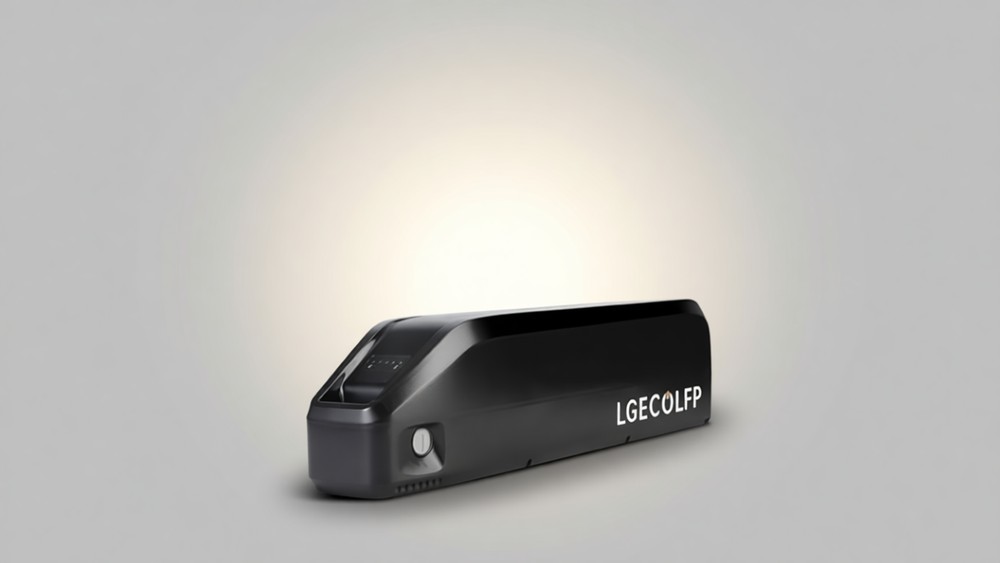
A complete kit at the top of the price table
The box contents read like a checklist of what budget packs leave out. You got the battery, the 42V 3A charger, a 5-pin mounting plate with the female XT60 discharge cable already wired, a male XT60 pigtail adapter, two keys for the lock, anti-vibration pads pre-glued to the base, and a manual. LGECOLFP, which the record ties to a Guangdong battery manufacturer, sold the same shell in 36V, 48V and 52V configurations from 15Ah to 20Ah, with a USB-port version offered as a listing variant.
You were paying for the kit, not the cells. A 3A charger alone would take a real bite out of a separate order, and the lock and gauge are conveniences you use every day. But 35 cents per watt-hour is well above what the budget 36V tanks on our table ask, and nothing in the record says the cells behind the shell were premium ones. If you're shopping now, the 36V 15Ah hailong class on Amazon is where the cheaper equivalents live, and the checklist at the end tells you what to confirm before ordering one.
The board, the tank and the charger
The recorded sheet put a 30A board on the pack, and thirty amps at 36 volts is a 1,080-watt ceiling. The listing claimed motor compatibility from 0 to 1,200 watts, which stretches past the board's own limit, so read that claim as marketing. A 250 to 750W motor sits comfortably inside the board. A 1,000W hub on 36 volts would run it near the ceiling on every long climb, and climbs are exactly where a board at its limit trips and ends your ride.
The tank was the honest part. Thirty-six volts times 15 amp-hours is 540 watt-hours, which matches the em3ev 36V guide line for line. That guide also fixes the full-charge voltage of a 10S pack at about 42 volts, and the included charger was rated 42V 3A. On a campaign where I've caught a 48V pack shipping a 58.8V charger, a bundle where the charger arithmetic closes exactly is worth noting.
Range is scaled math from there, and I'll label it as math. The em3ev range table states 30 to 40 miles on the throttle and 50 to 65 on low pedal assist for the full-size 960 watt-hour tank that sits at the other end of our table. Five hundred forty watt-hours is 56 percent of that, which scales to roughly 17 to 22 miles on the throttle and 28 to 37 on low assist. Hills, cold weather and rider weight pull those down.
Charging time was the feature. Fifteen amp-hours divided by three amps is five hours from empty, before the taper every lithium charger applies. A 2A charger, which is what most packs in this class still ship, would put the same tank at seven and a half hours or worse. Across a year of daily riding, the 3A unit saves you something like two and a half hours on every full charge.

The 5-pin base and the XT60 output
The pack slides down into a metal mounting plate bolted to the downtube, and the electrical connection runs through a 5-pin base connector on the bottom of the case. Power to your controller comes off the plate's own wiring on an XT60. The greenbikekit hailong connector page documents that the same outer hailong case ships with 4-pin, 5-pin or 6-pin discharge connectors, and that detail kills more replacement orders than any spec mismatch.
So count the pins on your old pack's base before you order anything. A 4-pin pack dropped onto a 5-pin plate doesn't make contact, and sellers don't always print the pin count in the title. The XT60 side is the easy half, because pigtails are cheap and common if your controller runs something else.
One recorded owner made exactly that flexibility count. They bought this pack for a Rad Step-Thru because the first-party replacement was cost-prohibitive, and the included pigtail plus some bracket adjustment got it working. Several charge cycles in, it was still running. That's one account, not a fitment guarantee, but it shows the adapter path works.
What the recorded owners said
The listing carried a 4.2 star average across 34 reviews when it died, and that number needs its caveat in the same breath. The reviews were an aggregate for every voltage and capacity configuration on the listing, 36V through 52V and 15Ah to 20Ah, so they describe the family rather than the 15Ah pack this article covers.
The recorded lines worth keeping, at recorded strength: one owner ran the pack alongside a second battery and reported it charged to the correct voltage and felt well built. One repeat buyer had purchased five of them and planned to buy more. One dirt-bike owner mounted one on a hub-motor dirt bike, crashed hard enough to flip the bike onto its side, and reported the pack survived and powered right back up. The same account praised the foam packaging and reported the charge holding six months on.
Against that stands one recorded warning. An owner with a failure past the warranty window found support unresponsive and unhelpful. The warranty ran 12 months with a 30-day return, and the lesson generalizes to every budget pack, not just this one. Test the battery hard inside the return window, because once it closes you're relying on the manufacturer's goodwill, and at least one recorded buyer found there wasn't any.

Replacing a dead 5-pin pack
What a replacement has to match, in order:
The pin count. Count the pins on the old base. The same case shape ships with 4, 5 or 6 pins, and the wrong count means no contact.
The connector. This pack's output was XT60. If your controller runs a different plug, budget a pigtail.
The charger voltage. A 36V 10S pack charges at about 42 volts, and the em3ev 36V guide is blunt that the charger must match the pack. Never accept a charger printed higher.
The footprint. The recorded shell ran about 14.5 by 3.7 by 4.2 inches for the 48V rung, with the 36V similar or slightly smaller. Measure the old case and the mounting points.
The board. Thirty amps at 36 volts is a 1,080-watt ceiling. Match it to your controller rather than to the biggest number on the listing.
Our review of the 48V 30Ah rung of the same brand shows what LGECOLFP recorded elsewhere in the family, and the comparison table lists what's currently trackable.
At the recorded price, this rung was 35 cents per watt-hour, and I can't call that a good deal even in hindsight. The kit was complete, the charger math closed, and the lock and pads were real. The cells were priced like premium ones without premium evidence, and now the listing is gone anyway. If you need the same shape for less, the current 36V hailong listings on Amazon close the value gap with the same case and a 2A charger you can upgrade later.

FAQ: the charger that shipped, the pin count on the plate and the range the dead listing left behind
What charger did the LGECOLFP 36V 15Ah ship with?
A 42V 3A fast charger, which is the correct output for a 10S 36V pack. A full charge from empty takes about five hours before the taper, against seven and a half or more on the 2A chargers common in this class.
Did the reviews describe this exact pack?
No. The 4.2 average across 34 reviews was an aggregate for every voltage and capacity configuration on the listing. Treat it as a read on the brand and the shell, not on the 15Ah pack specifically.
How many pins did the base connector have?
Five, with the XT60 discharge output on the plate itself. The same outer hailong case ships in 4-pin and 6-pin versions too, so count the pins on any pack you're replacing before ordering.
How long would the pack have lasted?
The listing claimed over 1,000 charge cycles. Published figures for lithium-ion cells run 400 to 1,200 full cycles, where cycle life means the point capacity falls to 80 percent, so the claim sat at the top of the band. It was a ceiling promise, and with the listing gone it's history rather than an offer.
Was it waterproof?
LGECOLFP stated a waterproof case, which in practice means rain and road spray. Like any hailong shell, it wasn't built for submersion or pressure washing near the seals.
How far did 540 watt-hours actually go?
Scaled from the em3ev range table, roughly 17 to 22 miles on the throttle and 28 to 37 on low pedal assist, with the low end applying to hills, cold and heavier riders.