A dead factory pack is the most expensive way to learn what a warranty is worth. One rider's original battery died in a cold barn after a couple of winters outside, and the factory replacement cost more than this whole pack: a 48V 15Ah unit at 720Wh from a brand most riders have never heard of.
LFPNERYE is not a household name, but its details table names a manufacturer our LGECOLFP review records too, so the same Guangdong factory stands behind both. The listing makes a big promise, more than 1,000 recharge cycles, and quietly disagrees with itself about how long you get to send it back.
This review walks through what the numbers actually support, what sixty ratings and fourteen written reports show, and which of the three warranty windows you should believe.
The LFPNERYE 48V 15Ah sits close to the middle of the 301 packs we track on price per watt-hour. Check where it lands today on the comparison table. Stock read twenty units when we checked.
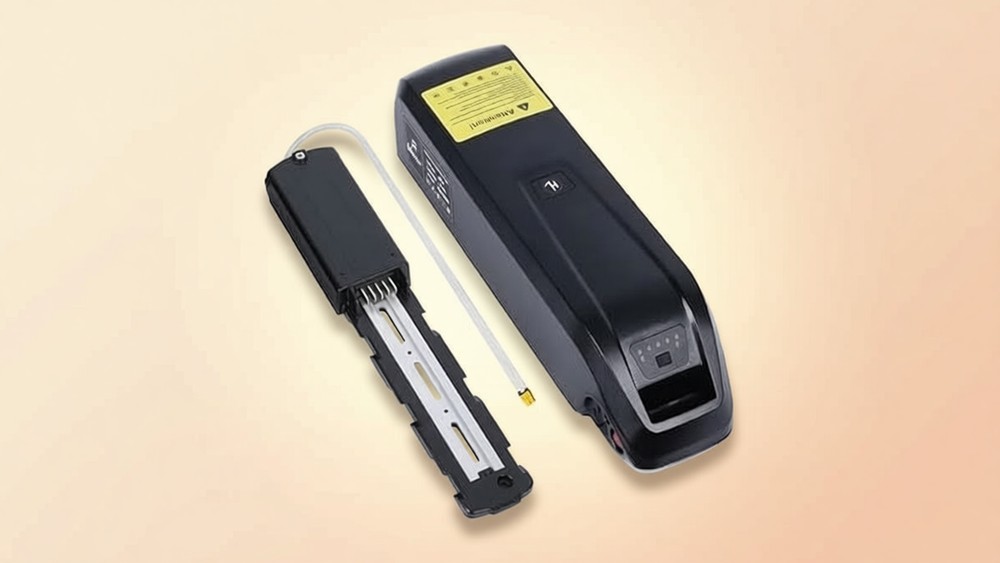
What 720Wh and a 30A BMS buy you
The honest arithmetic
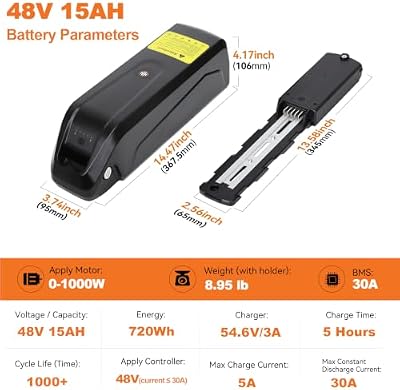
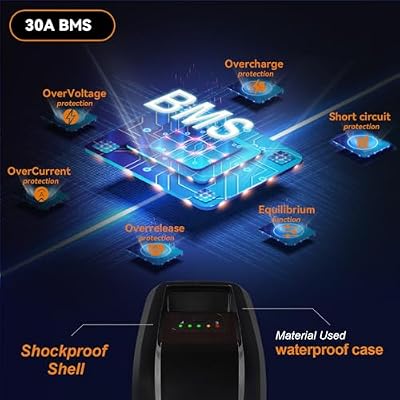
The core numbers are simple. 48V times 15Ah is 720Wh, enough for a commuter or a scooter swap. The 30A BMS puts the continuous ceiling near 1,440W, and the title claims 1000W power output with the bullet allowing 0-1000W motors, so the power story carries headroom rather than a shortfall.
The fit check worth copying
The fit check is the part worth copying. The listing itself tells you what to verify before ordering: a 48V controller, a rated current at or under 30A, and a battery bay that fits 14.47 by 3.7 by 4.17 inches. That last number matters more than any marketing line, and one swap buyer confirms it, noting this pack is a different physical shape than the factory 10Ah unit it replaced.
Weight comes in at 8.95 lb, a single figure on this listing, which is refreshingly ordinary. Discharge is XT60, the base is the 5-pin type, and the pack adds an onboard USB port the listing pitches as phone charging. Two keys ship with it by design, so one can live at home.
The 1,000-cycle claim against the norm
The bullet promises more than 1,000 recharge cycles and a life expectancy of up to 5 years. No chemistry is named, and that silence does work here, because the consumer norm is a lot lower.
Battery University's BU-808 notes that manufacturers specify lithium-ion at 300 to 500 full discharge-charge cycles, that a full-depth NMC cell manages about 300 cycles before it holds just 70 percent, and that fade is gradual rather than a cliff, with laboratory packs falling to 73 to 84 percent of where they started after 250 full cycles.
A 1,000-cycle claim at this price is two to three times the norm, which you can read two ways. Either the pack uses genuinely long-life cells, or the number is marketing. Nothing on the page settles it, and no reviewer has owned one long enough to test it, since the oldest written report dates to May 2024.
The practical move is the same either way. Meter the pack's range in the first month so you have a baseline, favor partial charges, and treat the 12-month free-repair window as the promise you can actually act on.
Three warranty windows, read them before you order
Here is where the listing argues with itself. The spec table says full money refund or replacement within 30 days, plus a 12-month warranty.
A bullet says 3 months for return, resend and refund, plus 12 months of free repair. Those are two different refund windows on one page, and neither says who pays to ship a nine-pound battery back.
Whichever window is real, you find out at the worst possible moment, so your window to act is the first month.
Unbox it, charge it fully, ride it, and compare the range against what the gauge promises while you can still send it back. One buyer's report shows why the timing matters: their pack shutdown several times during rides while it showed sufficiently charged, a fault that only reveals itself on the road.
The 12-month free-repair term is the consistent part, and it matches the class norm. The 30-day and 3-month figures cannot both be the refund policy, and the page does not say which one wins.
What sixty ratings and fourteen reports show
The histogram reads 69 percent five-star, 13 percent four, 6 percent three, no twos, and 12 percent one, so 18 percent of ratings sit at three stars or below. Thirteen of the fourteen written reviews carry purchase confirmation. The single unverified one is a five-star one-liner, so the warm base is not inflated by anonymous praise.
The most-endorsed report is a May 2024 five-star, and it is the concrete one buyers want: pedal assist up to 30 mph without problems, a thirty-mile ride with no power loss, and an install that went easy by the instructions. Other warm reports add a dual-battery setup on a rear rack that doubled range and torque, a charger faster than the OEM one, and a thank-you letter from the company in the box.
The failure reports are all recent, and they are specific. A May 2026 one-star describes shutdowns during rides while the pack showed sufficiently charged.
An August 2026 one-star describes a pack that won't take a charge, with capacity readings that disagree between the ebike's display and the battery's own gauge. That gauge mismatch is worth knowing about, because it is exactly the kind of fault a first-month range test would catch.
Two reviews praise the support experience, one naming the agent who handled a small problem personally. And one five-star says only that the pack works great after a modification, with no detail about what was changed, so read it as a shrug rather than evidence.
Fit, rain and the USB port
The shell is curved, and the listing pairs that shape with a hedge worth quoting in spirit: it helps keep rainwater off the battery, but don't stay in the rain for a long time. One reviewer calls the lock box waterproof, which goes further than the seller is willing to. No IP code appears anywhere on the page, so plan for splashes, not storms.
Small hardware notes from the box: the anti-vibration pads arrive glued to the base, the pack ships with only two keys on purpose, and one buyer has found the box missing screws while also noting the charger runs noisy. None of it is a deal, but all of it is easier to know before the garage session.
The USB port is a genuine extra at this price, pitched as phone power. No reviewer mentions using it, so treat it as a bonus rather than a reason to buy.
Frequently Asked Questions
Is it good for a 1000W motor? The arithmetic says yes. The 30A BMS at 48V works out near 1,440W continuous, above the 1000W claim, and the listing itself asks you to confirm your controller's rated current stays at or under 30A. Check that number on your controller before you order.
How long will the pack actually last? The listing claims more than 1,000 cycles against a consumer norm of 300 to 500 full cycles, with no chemistry named to settle it. Meter the range in month one, favor partial charges, and judge the pack against the 12-month free-repair window rather than the cycle count.
What range should I expect? No reviewer gives a figure except one thirty-mile ride on pedal assist. By the class figure of 15 to 25 watt-hours per mile on moderate assist, 720Wh works out to roughly 29 to 48 miles, and full-throttle riding near 30 watt-hours per mile lands around 24 miles.
Is it waterproof? There is no IP rating anywhere on the listing, and the seller's own words say not to stay in the rain for a long time. One reviewer calls the lock box waterproof, but the listing's hedge is the safer guide. Store and charge it dry.
Should you buy it? If your controller stays under 30A and your bay fits 14.47 by 3.7 by 4.17 inches, this is a mid-band pack with a warm early record and two recent failure reports, one of which a first-month test would have caught. Compare the field on the battery table first, or browse 48V 15Ah packs on Amazon, and whichever pack you choose, test it inside the refund window.