The Jetson Bolt Pro is the kind of bike nobody builds a battery aftermarket for, so when the original pack dies, the owner's choice is a scavenger hunt or one specific listing that names the bike in its title. The Kornorge 36V 6Ah battery is that listing, and on paper it looks simple: 36 volts, 6 amp-hours, 216 watt-hours, a 15-amp BMS, plug-and-play fit.
It's not simple, and the reason is the best thing about the pack. Three buyers who measured or read their arriving packs say the thing in the box is a 10Ah battery, not the 6Ah one the title sells. The listing's own capacity row agrees with the buyers. I rebuilt this page once before, when the review record was twelve five-star ratings, and the record has since nearly quadrupled and learned to criticize, so this rebuild starts with what the page gets wrong and what the owners measured right.
The Kornorge 36V 6Ah battery sells for 145.99 from a third-party storefront, and taking the title at its word, 36 volts times 6 amp-hours is 216 watt-hours. On our comparison table that works out to about 68 cents per watt-hour, which sits among the most expensive of the 301 packs we track. It's not a bargain at either reading, as you'll see below. You are paying for a drop-in fit that almost nothing else on the market offers.
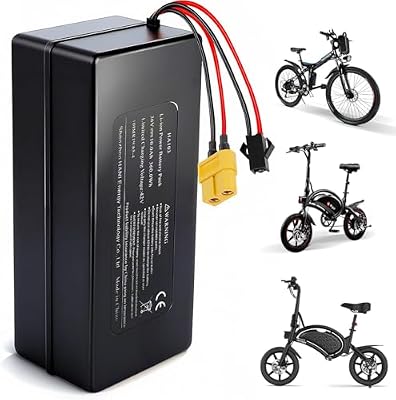
Three buyers say the pack is 10Ah, not 6
The spec table's Battery Capacity row reads 10.4 amp-hours, and a reader would wave that off as template junk, because the title, the model number row and the slug of the listing all say 6. The reviews say the row is the honest one. An October buyer opened a pack marked 10Ah instead of 6Ah, noticed it was heavier than the original, and ran the same route on both batteries: 6 miles on the five-year-old factory pack, 24 miles on this one.
A September buyer who logged weeks of riding wrote that they could not verify the exact 360Wh the markings implied, but reported stable voltage and no mid-ride cutouts. A January buyer who documented the whole install noted the pack is the same shape and size as the original even though it provides 10 Ah instead of 6. Even a four-star text from February calls it about a 50 percent boost in capacity.
Put numbers on it. 36 volts times 6 amp-hours is 216 watt-hours, and 36 volts times the row's 10.4 amp-hours would be 374 watt-hours. That's about three quarters more energy than the title admits, and the buyers' own markings say 10Ah, or 360 watt-hours, sits between the two readings. The upside is real range for the same money.
The risk is quieter. A listing this careless about its own capacity is a listing that can change again, so check the stamp on the case when the box arrives and keep your order record handy if you ever need to argue about what you were sold.
The owner-measured range matches a pack of that size. The typical spread for pedal-assist riding runs 25 to 75 miles per charge depending on assist level, terrain and rider input, and Wikipedia's e-bike article sketches that spread. This pack on this bike sits at the bottom of it: one buyer got 24 miles on a Bolt Pro, another rode 60 minutes at 9 to 13 mph carrying 180 pounds and drained one of the four LED bars, and guessed at more than 2 hours of riding total. On a bike this light and slow, the bottom of the band is plenty. Nobody buys a Bolt Pro to cross a county.
Every critical review is about a connector
The one-star texts are short, and all three complain about the same thing. One buyer found the connectors much larger than the matching part on the bike. One wrote wrong connection on the battery. One returned the pack because it was not compatible with their Jetson Bolt, and that word matters: the Bolt and the Bolt Pro are different bikes, and the title promises the Pro. Not one of the written reviews reports a dead pack, a thermal event or a capacity shortfall. The criticism on this page is entirely about plugs.
The closest thing to a performance complaint proves the opposite. An August buyer watched the bike cut out and the front light blink and assumed the battery was defective, then traced the fault to a wire they had pinched while closing the battery case, soldered it, and reported the pack has worked perfectly since. The lesson is not just be careful, though you should be. It's that the Bolt Pro's battery bay is a tight wiring environment, and an install fault there looks exactly like a battery fault.
So the buying rule is blunt. This pool says the pack fits the Bolt Pro the way the title claims, with several owners reporting the original connectors lined up without adapters. It also says a Bolt owner, a larger-connector owner and a wrong-connector owner each lost an afternoon to the return counter. Compare the connector photos against your bike before you order, not after.
The spec table argues with itself
The capacity conflict is only the loudest of the page's self-contradictions. A row labeled Unit Count says 6 Count, because the 6 from 6Ah leaked into a field meant for pack quantities, and the buy box now helpfully prices the battery at 24.33 per count as though you were ordering a six-pack.
The Number of Batteries row demands 30 Nonstandard Battery batteries required, which is nonsense as written, though 30 cells in a 10-by-3 layout is exactly how a 36V 6Ah pack gets built, so the row may be a cell count wearing a template's clothes. Included Components reads simply 1. The warranty row shows Amazon's generic 30-day return text while a bullet elsewhere claims a 1-year U.S. warranty, and a housing described as weatherproofing carries no IP rating anywhere on the page.
None of these rows is dangerous on its own. Together they tell you nobody audited this listing, which is the same disease behind the 6Ah title and the reason it hasn't been fixed.
The one row worth real attention is the manufacturer of record, Shenzhen Hani Energy Technology, which is the same factory behind the smseler replacement pack I rebuilt earlier this month. A shared factory is context, not a verdict. It tells you where the cells probably come from, and nothing about whether they're any good.
The electrical claims actually hold
The 15-amp BMS against the 350-watt top of the motor bracket is the rare listing where the numbers leave honest room. Fifteen amps times 36 volts is a 540-watt ceiling, and a 350-watt motor draws about 9.7 amps at full load, so the bracket sits comfortably inside the protection's limit. Half the packs I rebuilt this month claimed motor sizes their BMS could not feed. This one could run a slightly bigger motor than it advertises, which is the right direction for a claim to err.
Charging is the claim I can't check. A bullet promises a full charge in 2 to 3 hours, 50 percent faster than standard, and the page never prints a charger amperage, so there's no arithmetic to run. What I can say is that 2 to 3 hours fits a 6Ah pack on a 2-to-3-amp charger, while the 10Ah pack the buyers actually received would need a 3-to-5-amp charger to hit that window. One owner charged until the charger's light turned green and reported normal temperatures, and that is the entire evidence file. Plan on an overnight charge and treat the fast-charge bullet as marketing until someone prints an amp rating.
The weight rows survive checking, which is worth saying out loud in a month when several listings printed weights that could not physically contain their claimed energy. The battery row reads 2 kilograms and the second weight row 2.29, and 360 watt-hours of bare cells needs roughly 1.2 to 2.25 kilograms at the densities real cells come in. The pack-level figure works out to about 0.18 kilowatt-hours per kilogram, at the low end of normal, with just enough room left for a case and a BMS. It's plausible, if snug.
Where this pack lands on price
At the title's 6Ah reading, 145.99 for 216 watt-hours is about 68 cents per watt-hour, among the most expensive of the 301 packs we track on the comparison table. If the capacity row and the three buyers are right, the real figure is 145.99 for about 374 watt-hours, or roughly 39 cents per watt-hour, which lands in the pricier end of the table rather than the embarrassing end. The specs box on this page renders the live position, and one honest caveat comes with it: our table currently carries the title's 216 watt-hours, so if the buyers are right, the box understates this pack's value the same way the listing does.
Either way, the money is not buying cheap energy. It's buying a case that slides into a Bolt Pro bay with the original connectors, which the pool confirms over and over and which almost no other listing can offer. If your frame takes a standard shell, the table will show you two or three times the energy for the same money. If your frame is a Bolt Pro, you don't have that option, and this pack is priced like it knows that.
Common questions before you order
Will it fit my Jetson?
Bolt Pro owners report drop-in fits across the record, with the original size and connectors matching. The plain Bolt is a different bike, and one buyer returned the pack over exactly that mismatch, so match your model and connectors first.
How far will it go on a charge?
Buyer evidence says 24 miles on a Bolt Pro, and a 60-minute ride at 9 to 13 mph used one of four LED bars. That is the bottom of the usual 25-to-75-mile pedal-assist spread, which is normal for a small pack on a light bike. Buy this pack for fit, not for range.
How long does charging take?
The 2-to-3-hour bullet is unverifiable, because no charger amperage is printed and the pack in the box may be 10Ah rather than 6. One owner charged to the green light with normal temperatures. Plan on an evening.
Is the 1-year warranty real?
It lives in one bullet. The warranty row shows Amazon's generic 30-day return template, which is what governs your first month. Save your order record and the listing page in case the bullet is the only place the promise exists.
Is it really built by the original factory?
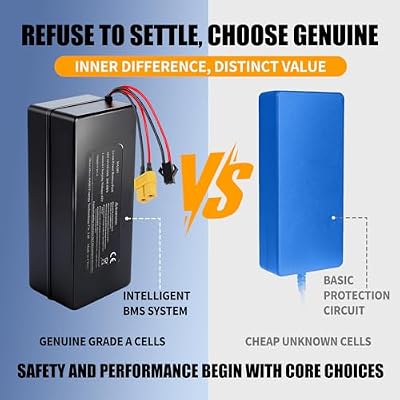
The page claims genuine OEM battery cells and never names them. One buyer found the same manufacturer markings as the original and wrote presumably the original battery manufacturer, which is exactly right: a presumption. I can't verify it, and I'd buy this pack for its fit record rather than its pedigree. Check the current price and listing on Amazon before you commit. The brand's bigger 48V 20Ah hailong pack never gathered an owner record at all, and that article covers what a spec-sheet-only listing can still tell you.