A 52V pack sits near the top of what a DIY ebike asks of its battery.
Fourteen cells run in series, high-power controllers pull hard, and the range that felt generous in spring can feel thin on a hot hill climb in August. Buyers in this tier are rarely casual shoppers. They're converting a bike, they have a motor picked out, and they want to know the pack will hold its rating under that load.
The Joyisi 52V 20Ah is unusual for a reason the listing never manages to state. Its written record reaches back to March 2022, which makes it one of the longest owner histories on any budget pack we track.
But the listing has changed underneath that record. The title still says 20Ah while a spec row now reads 25, the promised charger has arrived in two different bodies three years apart, and the cell brand depends on whether you read the bullet or the buyers.
This article walks through what that record can and cannot settle. It covers the drift, the range reports, the mounting friction the listing never mentions, and the support history that five separate owners have described.
The Joyisi 52V 20Ah ebike battery earns its place on the strength of that record rather than the strength of its paperwork. Fourteen confirmed-purchase owners have written about it across four and a half years, the range reports converge on 40 to 50 real miles, and the seller has replaced, repaired and reimbursed through at least five separate warranty contacts. The problems are real too.
The listing argues with itself about capacity and BMS amps, nobody has measured the 25Ah pack the spec table now describes, and the mounting story lives entirely in the reviews.
On price per watt-hour it sits close to the middle of the 301 packs we track, and the exact position is in the specs box above. This is a known quantity with a sloppy label, which is a better trade than most of the band offers.
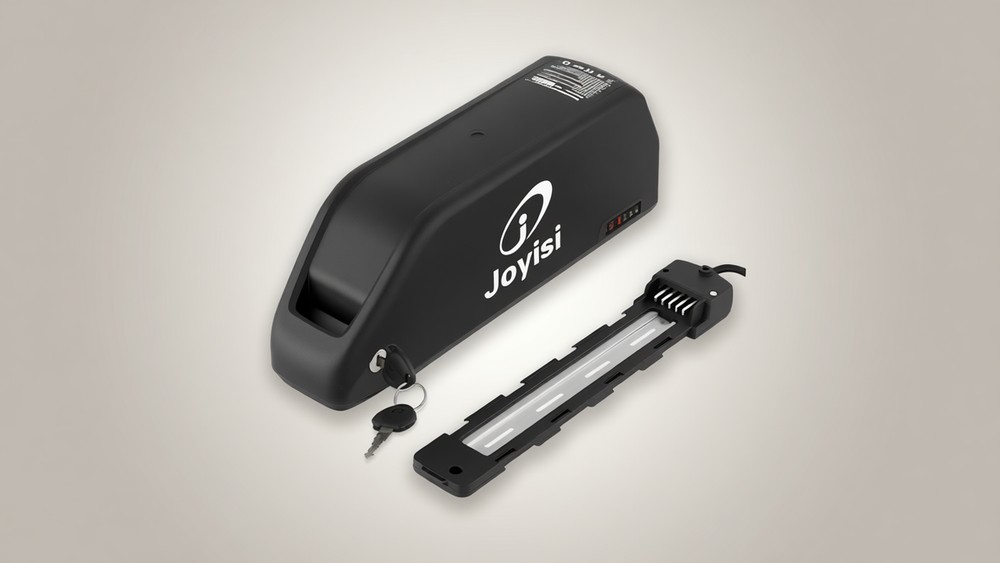
The record outlived the listing it was written on
Every captured text on this ASIN is a confirmed purchase, and the oldest goes back to March 2022. That age cuts both ways.
A four-year record tells you how the packs wore, which almost nothing in this price band can do. It also means many of those 41 ratings describe hardware the current page doesn't sell.
The drift is visible in three places. The earliest owner text describes a 19.2Ah unit.
The title and the first bullet sell 20Ah. The spec table's Battery Capacity row now reads 25 amp hours. Two buyers have described the mismatch from their side: one has noted that the listing showed a 20Ah unit when they ordered and shows 25Ah now, and another has said they do not know why the 25Ah figure appeared as the battery they bought.
Read plainly, the seller moved a bigger pack into the same listing and kept the accumulated rating history with it.
That matters because the record is the reason to trust this listing, and the record wasn't built on the pack the page now describes. Nobody has written about the 25Ah unit yet. If you buy from this page today, you're buying a pack the reviews can't vouch for, wearing a reputation earned by its smaller siblings.
LG or Tesla, 30 amps or 50
The listing contradicts itself twice on hardware, and the owners add a third version.
Bullet one claims LG 5000 cells. Two owners have called their packs Tesla-cell units, one in 2022 and one in 2026, and a third has separately described an 18Ah sibling as an LG-powered battery. LG and Tesla can't both be the cell inside one pack.
The listing supplies no cell datasheet, no cycle-life claim and no certification row to settle it, so the cell question stays open no matter which word you believe.
The BMS numbers disagree inside the listing itself. Bullet one says max discharge is 50A. Bullet two says the protection board is rated 50A.
The spec table's Amperage row reads 30 A. One 2026 owner has praised the 50A board as the best part of the pack.
No owner has reported a cutoff or shutdown under load, so the record neither confirms nor refutes either figure. If you run a hungry controller, that's the one question to put to the seller directly, because a BMS that passes less current than your controller requests will trip the bike into cutoffs on climbs.
The rating a board claims and the rating a pack can deliver are different things, and this listing will not tell you which one you are buying.
Range reports agree, with one holdout
Three owners on three different bikes have logged range, and the numbers land in the same band.
A BBSHD commuter recorded 44, 41 and 42 miles on the first three charges, riding at an average the owner put at 18 to 20 mph. A mid-drive build on a Toseven DM02 measured 51 miles before the gauge read 31 percent, with more than ten of those miles at full power, which works out to about 14 watt-hours per mile.
The same owner's update past 1,200 miles still reports more than 50 miles, with the pack now topping out at 96 percent charge. A fat-tire 2000W build rode two hours and switched off with 40 percent remaining.
Against that, one 2024 owner has written that their 18Ah pack outlasts this 20Ah one, and that a suspiciously fast full charge makes them doubt the capacity figure. Both accounts sit in the same record. One owner suspects, three owners have metered.
The arithmetic favors the metering: 52V times 20Ah is 1,040Wh, and a pack that truly held much less could not have carried three separate riders 40 to 50 miles at the consumption they each describe.
The aging reports read like normal lithium wear rather than scandal. One owner has watched range fall by half at about two and a half years of hard use, with one or two cells gone weak, and the seller sent a replacement BMS to address it. Another has noted the 96-percent charge ceiling after 1,200 miles.
Room-temperature charging and shallow discharge cycles are what extend a lithium pack's life, and the owners who charged gently have the healthier packs in this record.
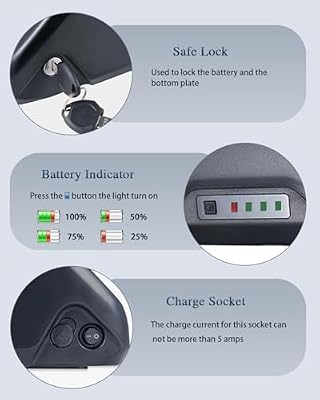
Mounting, keys, and a charger that changed
Nothing about physical installation is in the listing, and it's where most of the friction lives.
The case mounts on a Hailong-style base, and one owner has measured the difference that matters: the 52V housing stands about 5 inches tall against about 4.25 for a 48V Hailong pack, though it still sat on the same 48V UPP base they already had.
Several owners report that the water-bottle-cage mount will not fit most frames, and more than one has solved it with the Grin Technologies double-bob mount. One owner has described screw slots so poorly placed that the pack has to slide uphill to seat. Another thought the mounting plate was missing until learning it ships pre-attached and takes real force to remove the first time.
The wiring needs a plan too. A 2026 owner has said you should expect to solder the connections or buy a connector and a heat gun, while the listing says XT60 connectors come in the box. Both can be true, but a builder with no iron on the bench should budget for a crimping session or an extra part. You don't want to discover that mid-build.
Then there's the charger, which has quietly changed under the same bullet. The listing promises a 58.8V 3A charger. A 2022 owner received an aluminum-bodied unit with a cooling fan that stayed cool to the touch, and compared it favorably against the UnitPackPower 52V pack whose plastic charger measured over 155 degrees with a temp gun.
A 2025 owner received a plastic-bodied 3A charger that gets hot, like the cheaper unit on their old 48V pack. Same promise, different object in the box. Three years apart, two chargers under one promise. The charge math at least matches the listing: 1,040Wh into a 3A charger at 58.8V is about 176 watts, which is almost exactly the at-least-six-hours figure the bullet gives.
One owner has also learned the hard way that the key is not a standard blank. Their pack arrived with the wrong key set, half a dozen locksmiths could not cut a copy, and the workable fix was re-keying the lock, which the seller reimbursed in full. Measure your tray, plan the mount, and order a spare key plan with the pack.
The support record is the strongest fact here
Five separate owners have described warranty or support contact, and all five describe it well.
A replacement pack arrived quickly after a charging failure that hit one month before the one-year warranty expired. The re-key reimbursement came through in full. The range-halving owner received a BMS to repair their pack rather than a refusal.
An installation question got answered with annotated photos showing the pre-attached plate on and off. A fifth owner compared the brand's service directly against a competitor and called it the better company to deal with when something goes wrong. The listing itself promises a one-year warranty plus lifetime technical support, and the record backs the first year of that promise with examples.
The negative side of the record is thin, but it is not empty. The star histogram shows an empty two-star band and about three one-star ratings, and only one of those carries text. It says to buy nothing from this sale and that the people are not very nice, with no specifics at all.
Two more one-star ratings are wordless. Whatever went wrong for those buyers, the record doesn't preserve it, and pretending otherwise would be making something up.
If you're building a high-power bike and want a pack with a track record rather than a fresh listing with fresh claims, this is one of the few in the band that can offer one. If you need the 25Ah capacity the spec row now shows, or you want a certification name on the page, or your frame cannot take a 5-inch-tall Hailong case, look elsewhere.
Our battery comparison table sorts the field on price per watt-hour, including the packs that publish their cell brand and their BMS amps.
Frequently Asked Questions
Which capacity is this listing actually selling?
The title and bullet say 20Ah, the spec table says 25Ah, and the owner record describes 19.2Ah and 20Ah units. The seller has moved a bigger pack into the listing without resetting the rating history. Ask the seller which model number ships before you order, because nobody has written about the 25Ah unit yet.
What charger does it need, and how long does charging take?
A 58.8V charger, which is the full-charge voltage of 14 lithium cells in series. The promised 3A unit moves about 176 watts, so a 1,040Wh pack needs about six hours from empty, which matches the listing's own guidance. Never use a 48V charger, which stops at 54.6V and undercharges the pack.
How far does it go on a ride?
Three owners have measured 40 to 50 real miles on mid-drive builds at moderate assist, one working out to about 14 watt-hours per mile. Throttle-only riding consumes more per mile and cuts that figure. The exact range depends on terrain, assist level and the weight of bike and rider.
Will it fit my frame?
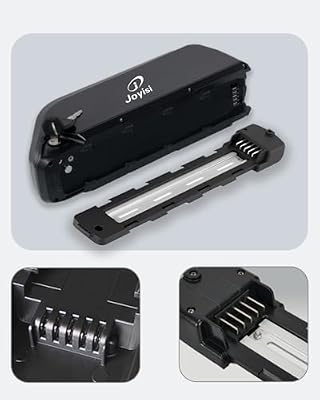
It mounts on a Hailong-style downtube base and stands about 5 inches tall, taller than a 48V Hailong case. One owner has confirmed it sits on an existing 48V base, and the owners who could not use the water-bottle-cage mount solved it with a double-bob adapter. Measure your tray height before ordering.
Is the 50A BMS real?
The bullets say 50A twice and the spec table says 30A. No owner has reported a cutoff, and one praises the 50A board, but nothing in the record settles the question. If your controller peaks near or above 30A, confirm the figure with the seller before buying.
You can check the current Joyisi listing on Amazon for price and availability.