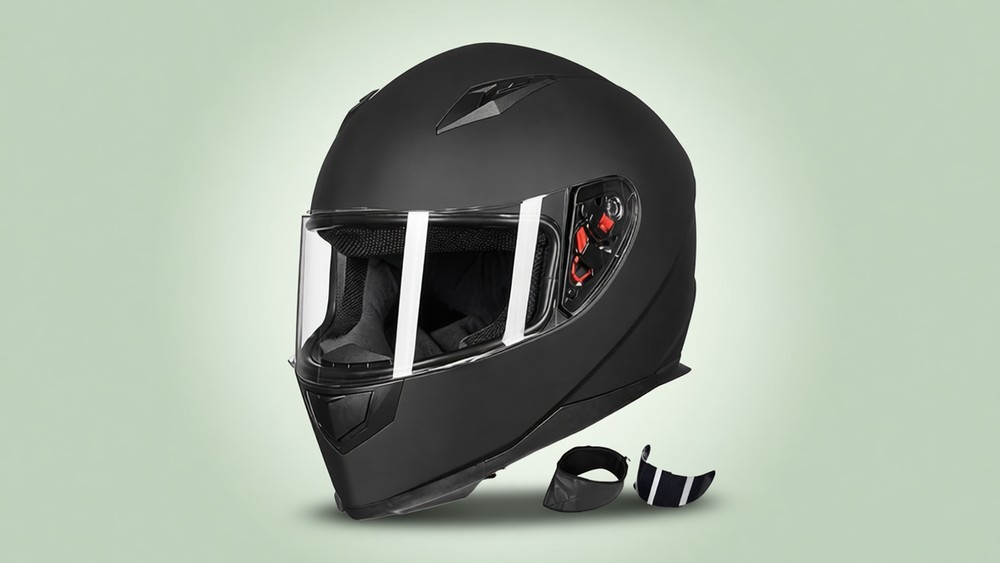
The ILM Full Face Motorcycle Helmet (Model ILM-313) comes with two visors and a removable winter neck scarf right in the box. That combination is unusual at any price, and at the budget end of the full face market it is basically unheard of. The helmet is DOT certified, uses a lightweight ABS shell, and has a streamlined aerodynamic design meant to cut wind noise and drag. Over 5,000 Amazon ratings put it at a solid average, which tells you something about the value here.
Specs and Build
The ILM-313 is a full face street helmet built around an injection molded ABS shell. ABS is the standard material for budget and midrange helmets, and it keeps the weight manageable without inflating the price. Here is a quick rundown of the specs.
- Shell material. Lightweight durable ABS
- Safety rating. DOT FMVSS-218 certified
- Visor system. Clear main visor plus smoked drop-down internal visor
- Closure. Quick release clasp with strap. Not D-rings, a push-button metal buckle
- Liner. Removable and washable inner lining pads
- Weight. Lightweight, comparable to other ABS full face helmets in this class
- Sizes. Multiple sizes from small through XXL
- Extras. Removable winter neck scarf included, two visors included (clear + smoked)
The quick release buckle is a nice touch for everyday use. You snap it closed and push the button to release. It is faster than threading D-rings, especially in cold weather when your fingers are stiff. The buckle is metal and clicks into place with a solid feel. There is no chance of accidental release during a ride.
The liner pulls out completely for washing. That matters more than people realize. After a season of summer riding, the interior of any helmet traps sweat, oils, and odor. A removable liner lets you wash it in warm water with mild soap and snap it back in. The padding uses moisture wicking material that handles sweat better than bare EPS foam.
Dual Visor System
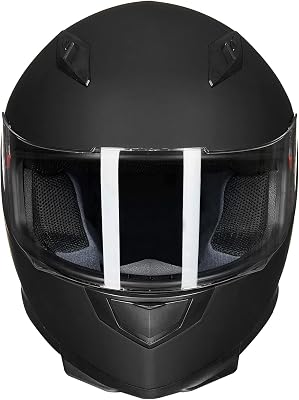
The dual visor setup is the headline feature here. You get a clear outer visor for everyday riding and a smoked inner drop-down visor for sunny conditions. The clear visor seals against the face shield gasket and provides full coverage against wind and debris. The smoked visor flips down from inside the helmet with a slider on the left side.
Having both visors means you never have to swap shields mid-ride. You start out in bright sun with the smoked visor down. You hit a tunnel or a shaded tree-lined road, and you flick the slider up. The transition takes a fraction of a second and you never take your eyes off the road. That convenience is the main reason riders pay more for modular and premium full face helmets. Getting it at this price point is the big selling point of the ILM.
The smoked visor provides good glare reduction without making the world too dark. It is not a photochromic lens that adjusts automatically, but it does not need power or batteries. It just lives inside the helmet ready to flip down when the sun gets in your eyes. The mechanism on the slider feels smooth out of the box and holds position without sagging.
Comfort and Winter Features
The ILM-313 ships with a removable winter neck scarf that attaches around the bottom of the helmet. This is a cold weather accessory that blocks wind from getting up under the chin bar and down your jacket collar. Riders who commute in chilly weather will appreciate it. On warmer days you take it off and the helmet breathes better.
The interior padding uses moisture wicking fabric across the cheek pads and crown liner. The cheek pads are designed to create a snug seal around the jawline without being too tight. A proper fit means the helmet should feel secure but not painful. If the cheek pads feel too snug at first, they break in over the first few rides. That is normal for any helmet.
Winter Neck Scarf
The included neck scarf is a practical add-on that sets this helmet apart from other budget full face options. It wraps around the bottom edge of the helmet and covers the gap between the helmet and your jacket. In cold weather, that gap is where heat escapes and cold air rushes in. The scarf blocks it effectively. It attaches with snap buttons and comes off in seconds when the temperature climbs.
Amazon reviewers consistently mention the scarf as a selling point for winter commuting. Several riders note that it eliminates the need for a separate balaclava on moderately cold days. At freezing temperatures you will still want a full balaclava, but for 30 to 50 degree mornings the included scarf does the job.
Sizing and Fit
ILM helmets tend to run true to size based on customer feedback. The helmet uses an intermediate oval shape which works for most head shapes. If you are between sizes, go up one size and the cheek pads will hold things snug. The quick release buckle makes it easy to take the helmet on and off without adjusting the strap every time.
Reviewers mention that the shell accommodates glasses reasonably well. The visor seal creates enough space for temple arms to slide in without bending. Riders who wear sunglasses underneath report that the drop-down smoked visor works fine over glasses.
Safety and Certification
The ILM-313 carries DOT certification under FMVSS-218. That means it passed impact absorption, penetration resistance, retention system strength, and field of vision testing. DOT is a self-certification standard, meaningthe ILM against the federal requirements and certifies compliance. NHTSA performs random compliance testing on helmets sold in the US, and manufacturers whose helmets fail face fines.
The quick release buckle is more than a convenience feature. In an emergency situation, getting the helmet off quickly matters. Pushing a button is easier than cutting or fumbling with D-rings if you are wearing gloves and the adrenaline is pumping. The buckle uses a spring-loaded metal mechanism that holds securely during normal riding but releases instantly when you press the button.
The ABS shell is designed to manage impact energy by cracking and absorbing force, which is how all single-use helmet shells work. If you take a hard enough hit to crack the shell, replace the helmet immediately. That goes for any helmet regardless of price or brand.
Compare this helmet with other options in our motorcycle helmet comparison table to see how it stacks up against similar full face models from other brands.
What Amazon Reviewers Are Saying
With thousands of ratings on Amazon, the ILM-313 generates clear patterns in customer feedback.
What riders love. The dual visor system gets the most frequent praise. Reviewers consistently say the drop-down smoked visor is the reason they bought this helmet and that it works exactly as expected. The included winter neck scarf comes up as a close second. Multiple reviewers mention being surprised that a helmet at this price comes with two visors and a scarf. The comfort of the liner also gets strong marks. Several customers say the padding feels soft against the face and the moisture wicking fabric helps on hot days.
Another common point is the noise level. Riders who upgraded from open face or half helmets say the full face design is significantly quieter. The aerodynamic shape cuts wind noise at moderate speeds. Some reviewers note that wind noise increases above 60 mph, which is typical for helmets in this price bracket.
Common complaints. A few reviewers mention that the helmet feels heavier than expected. ABS shells are heavier than the fiberglass composite shells used in premium helmets, so this is a trade-off of the material more than a design flaw. Some customers received the helmet with minor scuff marks on the shell, though this seems to be a packaging issue rather than a widespread quality problem.
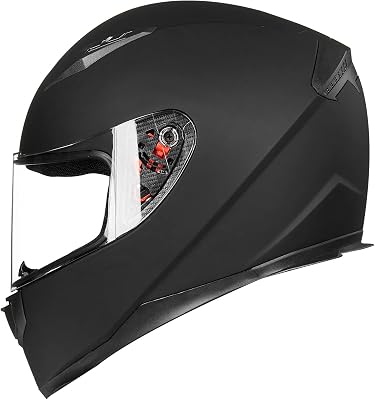
The breathability in hot weather gets mixed feedback. The ILM-313 has a chin vent and top vents, but some riders say airflow is modest compared to helmets with more aggressive ventilation systems. Riders in very hot climates may want to look at helmets with more extensive venting. See other options in our helmet reviews for more ventilated choices.
Long term feedback. Owners who have had the helmet for over a year report that the visor mechanism holds up well. The drop-down visor does not develop wobble or stick over time. The liner holds its shape after multiple washes. A few reviewers mention that the paint on matte finishes shows scuffs more easily than gloss, which is true of any matte helmet regardless of brand.
Check current pricing and read more customer feedback on Amazon.
Frequently Asked Questions
Does the ILM-313 Come with Both Clear and Smoked Visors?
Yes. The helmet ships with a clear outer visor installed and a drop-down smoked internal visor. You do not need to buy anything extra for sun protection. Some sellers also include the smoked visor as a separate external swap visor depending on the package variant, but the internal drop-down smoked visor is always included.
Can You Wear Glasses with This Helmet?
Yes. The visor seal area provides enough clearance for most glasses and sunglasses temple arms. The drop-down smoked visor also operates smoothly over glasses. Riders who wear prescription glasses regularly say the helmet works well for daily use. The interior cheek pads do not push glasses frames into the sides of your head.
Is the Winter Neck Scarf Removable?
Yes. The neck scarf attaches with snap buttons around the bottom edge of the helmet. It takes about 10 seconds to remove or reattach. When it is off, the helmet breathes normally and looks like a standard full face helmet. The scarf is machine washable and holds up to regular use.
How Does the Sizing Work?
ILM recommends measuring your head circumference and matching it to their size chart. The helmet uses an intermediate oval shape that fits most riders. If you are between sizes, sizing up is the safer choice. The cheek pads provide the snugness that keeps the helmet secure, so a slightly larger shell with firm cheek pads is better than a shell that is too tight on your forehead.
How Loud Is This Helmet on the Highway?
Wind noise is moderate for a budget full face helmet. The streamlined aerodynamic design helps reduce drag and noise compared to boxier helmet shapes. At highway speeds above 65 mph you will notice wind noise, which is normal for any helmet at this price level. Earplugs are recommended for extended highway riding regardless of the helmet you wear.
What Colors Are Available?
The ILM-313 comes in matte black, gloss black, matte white, gloss white, and several graphic designs. Solid colors tend to cost less than the graphic versions. Color availability varies by size and seller. Check Amazon for current color options in your size.
Is This Helmet Good for Winter Riding?
Yes, this is one of the strengths of the ILM-313. The included neck scarf blocks cold air from coming up under the chin bar, and the full face design keeps your entire head and face covered. Pair it with a heated jacket liner and you can ride comfortably well below freezing. The clear visor also works well with anti-fog treatments for cold weather condensation management. For cold weather riders who want a similar helmet from the same brand, check the ILM Dual Sport ADV helmet review which has a Pinlock ready shield for extra fog protection.
See the ILM the unit on Amazon for the latest price and color options.