The dual sport helmet shape solves a real problem for riders who ride more than one kind of road. Visor down on the highway, drop-down sun shield for the low evening light, peak up when the pavement turns to trail. Most helmets that do all three cost well past three figures, which is exactly why the budget end of this category keeps growing.
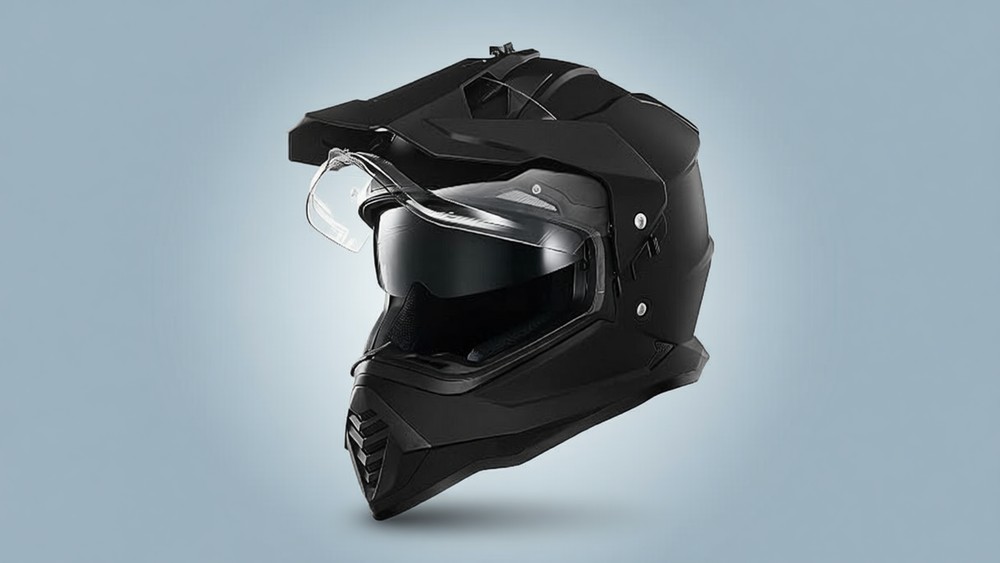
The ILM WS902 dual sport helmet is an ABS-shell helmet sold at 109.99 with a five-year manufacturer warranty, which is a claim almost nothing else at this price makes. It carried 4.4 stars from 636 ratings when we checked, and the written record behind that average runs back to March 2024, long enough to show a pattern.
Two things keep it from being a simple recommendation. Sizing runs unpredictable in both directions, and the fog fix that owners say actually works is an insert ILM doesn't put in the box. Here's what the buyer record shows about both, and about the helmet underneath them.
What DOT on the label does and does not tell you
The listing leads with FMVSS-218 and DOT on the label, and it's worth being clear about what those words mean. DOT is the maker's own signed word that a helmet meets the federal minimum. No independent lab retests it before the helmet ships.
The SHARP programme exists because that minimum doesn't separate the safest helmets from the merely legal ones, and its regime is not subtle about the difference: 32 impact tests per model, at least 7 helmet samples, at speeds up to 8.5 metres per second. That's faster than the European 22.05 and 22.06 standards demand.
No SHARP rating and no ECE rating appears for the WS902, so what you're buying is the maker's own word plus whatever the owner record shows.
On that record, no buyer reports a crash, and a written-review span of two and a half years carries no durability failure of the shell or liner. That's not the same thing as independent test data, and it's the honest limit of what can be said about safety here.
The build details on the page are the expected ones for the class: an ABS shell over EPS foam, an oval shape, and a quick-release clasp on the strap. Nothing exotic, and nothing that pretends otherwise.
Sizing: expect an exchange, not a fit
The dominant complaint in the record is fit, and it points both ways at once.
Three texts from 2026 say the helmet runs small. One buyer's usual 2XL wouldn't go on at all, a three-star review says whatever size you are, go one higher, and a five-star buyer needed one size larger than the chart suggested. A cold-weather rider with more patience sums up the reality: it may take a few tries to find the size that fits.
Then the most-endorsed text on the page, sitting at 26 helpful votes, says the opposite.
A medium wearer reports this helmet fits slightly bigger, needing the chin strap adjusted almost to the end of its slack before it felt snug. Both experiences are real, both are purchase-confirmed, and no chart resolves them. Buy from a seller whose exchange process you can live with, and check the cheek-pad seal on your head before the first ride rather than after.
Two smaller fit complaints repeat in the same texts. The padding catches the top of some ears until you settle it, and the internal sun shield stops half an inch to an inch short of where one rider wanted it. Neither is a dealbreaker on its own, but both are the kind of thing an exchange window is for.
Fog, ventilation and the insert that is not in the box
Fogging is the second theme, and the record is blunt about it. A September 2024 buyer calls the fogging dangerous at its worst, says anti-fog treatments did nothing, and describes riding with the shield cracked open, which distorts the view through the shield's angle, or all the way up on the inner sun shade. That text also reports the cheek pads run tight without breaking in, and that thicker replacement pads aren't offered for the WS902.
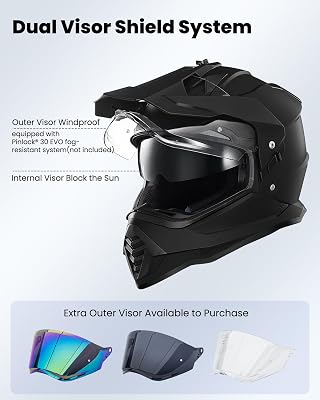
The fix exists, and the listing itself names it: the visor takes a Pinlock 30 anti-fog insert, which works as a second lens sealed inside the shield so condensation forms on the wrong surface.
A Pinlock is a thin lens that presses between two posts inside the visor, leaving a trapped air gap, and you can see how the Pinlock system seals in the maker's own instructions. One long-term owner, a rider of several decades, reports exactly that outcome: with the insert fitted, deep breaths onto the shield fog everything below it and nothing on the vision surface.
The catch is in the listing's own words, Pinlock 30 not included in package, so budget for it as a second purchase and treat the stock shield as a fogging shield until it arrives.
Airflow splits by season, and both camps make fair points. A summer rider cruises with the shield cracked or rides shield-up to get decent air and calls low-speed airflow the weak spot.
The cold-weather owner calls the same low airflow great news. A fourth text lands in the middle, ventilated pretty well with expected wind noise at highway speeds for the price. The honest summary is that this is a warm-weather compromise and a cold-weather benefit, and nobody in the record calls it quiet or loud in absolute terms.
Daily use: peak, cameras, Bluetooth, and whether it earns its price
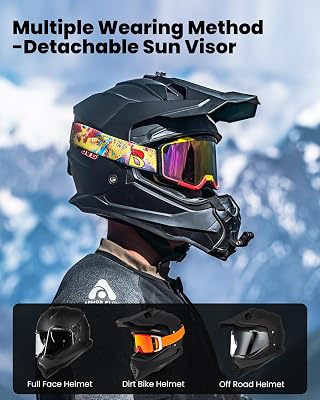
The practical picture from the texts is warmer than the complaint list suggests. The peak unscrews with three screws, and the most-endorsed buyer removed it for highway riding because it catches wind below that. The visor itself stays put in gusts, which that same rider flags as uncommon at this price.
A chin-mounted action camera held firm through jumps and high speeds on the curved shell. Under the padding there's a molded recess for a Bluetooth module, so an intercom installs without pressing on your ears. Riders report it keeps dust out behind a group on dry trails, that conversation with the shield down is easy, and that noise levels run better than a motocross helmet.
One text is a genuine quality miss: a brand-new helmet arrived with the blue visor finish cracked and flaking in two places and a shield crack at the pin attachment. That's one report among 16 purchase-confirmed texts, but it's the kind of defect you want to find in your exchange window, not on a ride.
A second two-star complaint, from a buyer who likes the helmet but has no plans to use it, says more about that buyer's week than about the helmet, and the record treats it accordingly.
At 109.99, the WS902 sits close to the middle of the 257 helmets we track on price, and the live position renders in the specs box on our motorcycle helmet comparison table. What the money buys is the full dual-sport hardware set, the long warranty, and an owner record with no crash or durability failures across two and a half years.
What it doesn't buy is a guaranteed first-try fit or a fog-free shield out of the box. If you can live with an exchange cycle and the cost of the insert on top, the record says the helmet underneath is worth it. If you can't, the same money stretches toward a helmet with a certified shield and a better size chart, and the comparison table shows what those cost.
Check the current price on Amazon before you size up.
Frequently Asked Questions
Does the ILM WS902 run small?
The record says the sizing wanders both ways. Three 2026 buyers report needing a size larger than the chart, one 2XL buyer couldn't wear theirs, and the top-voted owner says it fits slightly big for a medium head. Buy with an exchange plan, and test the cheek seal before the first ride.
Will the visor fog up?
Yes, the stock shield fogs, and one owner calls it dangerous in the worst case while saying treatments didn't help. The known fix is the Pinlock 30 insert the visor is built to take, sold separately, which one long-term owner reports cuts fog on the vision surface to nothing.
Is DOT certification enough for a helmet?
DOT is the manufacturer's self-certification of the federal minimum, not an independent test result. The UK's SHARP scheme runs 32 impact tests per model at higher speeds than the European standards require precisely because minimum compliance doesn't rank helmets. No SHARP or ECE rating exists for the WS902, so the owner record is the only field evidence beyond the label.
Is it a good helmet for ebike riders?
One owner calls the light weight great for an ebike, and at 3.64 pounds it sits light on the neck for city speeds. The same DOT minimum applies legally, and the ventilation compromise matters less at ebike speeds than at highway speeds.
How does the five-year warranty work in practice?
The spec table promises a five-year manufacturer warranty, which is unusually long for a budget ABS helmet. Nobody in the written record reports using it, so there's no field evidence on how ILM honors it, and the honest position is that the promise is untested by the record.