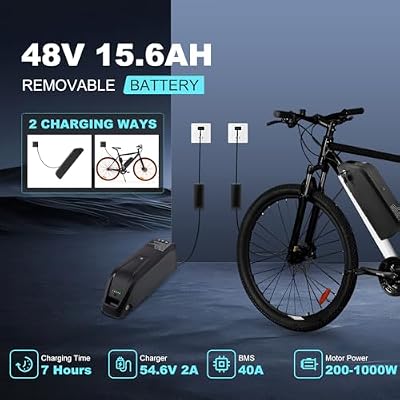
When we first covered the GSOIGSDKF 48V 15.6Ah ebike battery, the listing had no reviews at all, and the honest advice was that you would be the tester. That era is over. The record now stands at 3.3 from six ratings, and the record that replaced the empty page is more informative than a clean one, because it tells you exactly where this listing bites.
It bites at returns and fitment, not at charging or capacity. Two of the four written texts tell future buyers the same thing, and one of them says it in capital letters. Read those before you read anything the bullets promise.
Two buyers, one warning about returns
The clearest signal in the record comes from a buyer in late August who tried to match the pack against their existing setup, found the two were not compatible, and closed the text with a warning to everyone else: this is not a returnable product.
A second buyer, in October, received a pack that would not charge from the first day and wrote that they could not return it either. Those are two independent accounts, both carrying Amazon's purchase badge, and they agree on the one fact that changes how you should shop this listing.
The practical consequence is simple. On a listing where returns have not worked for the buyers who needed one, the pre-order checks carry all the weight. Connector, voltage, physical size, and the return terms shown at your own checkout all get verified before the money moves, not after.
The buyer who got a dead pack had no such path, so the pack's failure became final on arrival.
I want to be careful about what these texts do not establish. Neither says the seller refused a legitimate request in writing, and Amazon's return terms vary by listing and account, so I cannot tell you the policy is written down anywhere. What I can tell you is what two buyers have reported, and that both hit the same wall.
What the record actually covers
Four written texts exist behind the 3.3 average, all four verified. The oldest is the fitment mismatch above. Then comes a one-line text saying the pack was exactly what the buyer was thinking about, which tells you nothing except that somebody was satisfied.
A September text praises the pack as a second battery in a dual-battery setup, saying anywhere is possible now that the rider can go twice as far, which is the most useful positive in the record because it at least describes how the pack is being used. The October text is the dead-on-arrival account.
Nobody has posted a metered capacity figure, a charge-time report, or a word about long-term durability. The record is young and thin, and the 3.3 average rests on six ratings.
One of the four texts is effectively contentless, so the average leans heavily on the fitment complaint and the dead pack. That is not a record you buy on faith, and it is not a record that condemns the pack either. It is a record that says the risk lives in the order you place, not the weeks after.
The specs, checked
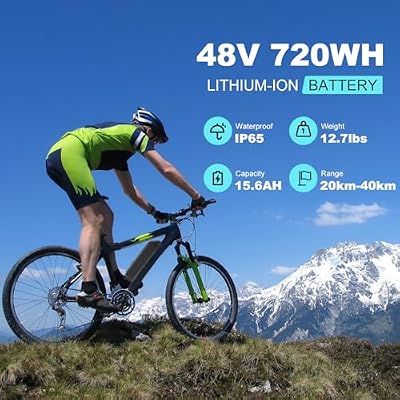
The electrical claims hold up, which counts for something. The bullet advertises a 40A management system, and 40 amps against a 48V bus raises a ceiling of 1,920 watts. The title claims motors from 100W to 1500W, and a 1500W motor draws about 31 amps at full load, comfortably inside the ceiling.
A 1000W motor draws about 21 amps and a 750W motor about 16, so nothing on the page argues with itself on current, unlike several listings we have read this fall.
The capacity arithmetic is fine too. This variant is 48V at 15.6Ah, which is 748.8 watt-hours, about 749. One bullet says "this 48V 15AH Battery", a rounding the seller never reconciles, and the title sells three capacities at two voltages, so confirm at checkout that the variant in your cart reads 48V15.6AH-4PIN.
The variant code is printed in the title, which is the only place the listing settles it.
Two claims get the skepticism treatment. The title's "1500+ Deep Cycles" is a ceiling figure under gentle lab conditions, not a promise, because cycle-life claims from budget sellers routinely run ahead of what cells deliver in real packs, where depth of discharge, charge voltage and heat all cut life short.
And the title's "Weatherproof Housing" comes with no IP rating anywhere on the page. An ingress-protection code is how a maker states what a case actually survives, and a housing described only as weatherproof tells you the marketing department's confidence, not a test result. Ride it in rain if you like, but do not plan around submersion or pressure washing.
The box list settles an open question from our first article: no charger ships. The bullets and the spec rows name no charger, so budget one at 54.6 volts for a 13S pack if you do not already own it.
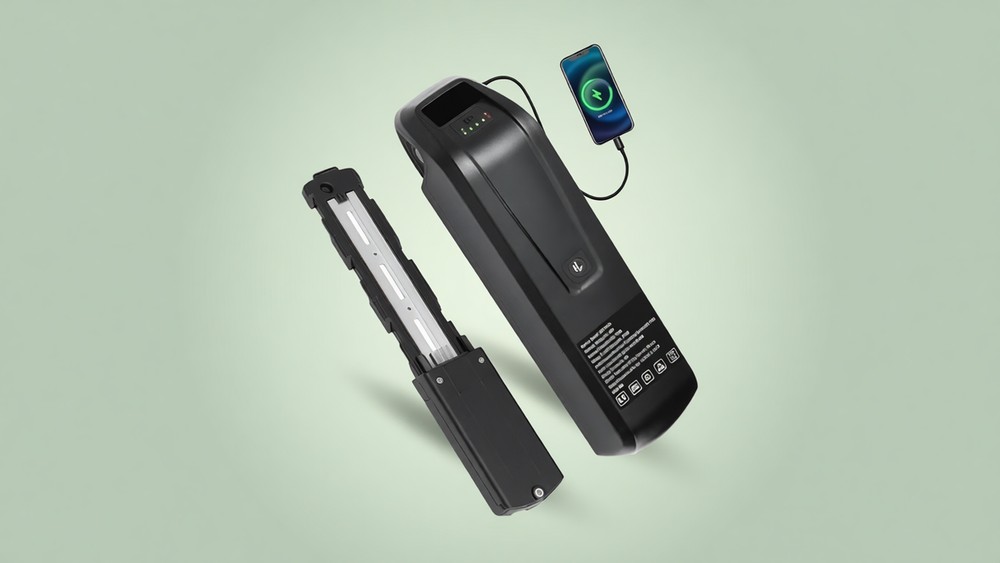
The built-in USB port is a bullet claim, and the LED charge indicator and keyed lock are title claims, all with no counter-evidence in the record. No buyer has contradicted any of them.
Where the value sits
At 199.99 for about 749 watt-hours, this works out to about 26.7 cents per watt-hour. That lands close to the middle of the 301 packs in our ebike battery comparison table, and the live position renders in the specs box there.
Our first article called this pack very reasonably priced, and that reading does not survive the wider table. It is not a scandalous price, but you are paying mid-table money for a bottom-table record.
The comparison that matters most is the one from the same day. The Sinigerel 48V 20Ah pack we rebuilt alongside this one sells at 149.99 for a claimed 960 watt-hours, about 15.6 cents per watt-hour, with a charger in the box and a one-year warranty. The Lockbus USB pack, which advertises the same 40A system and a USB port, lands around 22 cents for 960 watt-hours.
Against either of those, the GSOIGSDKF's case has to earn the difference, and the current record gives it no evidence to do that with.
What you do get for the money is the 40A headroom, which is genuinely generous for the class, and a variant family that covers 36V and 48V at three capacities if your build needs something this listing's siblings offer.
Fitment before money
This is the section that matters most on this listing. The pack uses a 4-pin discharge connector, and the August text is a buyer who attempted to match their current setup and could not. With no return path reported, a connector mismatch is not an inconvenience, it is the whole purchase.
So measure first. Photograph or read the discharge port on your current pack, count the pins, note the position, and match it against the 4-pin port this listing describes.
Confirm your controller is 48V, because a 48V pack on a 36V bike overvolts everything downstream of the connector. Check the case dimensions against the space your frame or rack offers. None of this is complicated, and all of it is cheaper than a pack you cannot send back.
The dual-battery buyer's account is the encouraging counter-example: for a rider whose setup matched, the pack has been doing its job as a second battery since September. The pack can work. The record just says the cost of being wrong about fitment is higher here than on a listing with normal returns.
Frequently Asked Questions
How far will the 48V 15.6Ah pack actually go?
At about 20 watt-hours per mile, typical for throttle-heavy riding, 749 watt-hours is near 37 miles.
Gentle pedal assist around 16 watt-hours per mile stretches that toward 47 miles, and full throttle on a heavy bike at 30 watt-hours per mile lands near 25. Pick the figure that matches how you ride, then divide. The dual-battery buyer effectively doubled their range by pairing it with a second pack.
Does it come with a charger?
No. The bullets and the spec rows name no charger, so this listing sells the pack alone. You need a 54.6-volt charger for a 13S 48V pack, and it is worth buying before the battery arrives rather than after.
Is the 40A BMS real?
The number is consistent with the motor claims, since 40 amps at 48V covers a 1500W motor with room to spare, and no buyer has reported the BMS cutting out early or failing to protect. That is consistency, not proof, because the rating is still a seller claim with a six-rating record behind it.
Can I return it if something is wrong?
Two buyers have reported that they could not, one of them in capital letters as a warning to others. I cannot see Amazon's policy terms for your account, so check the return terms shown at your own checkout before ordering, and treat this as a listing where the pre-order checks carry the weight.
Who should buy this pack?
Buy it only if your connector, voltage, and case size all match on the first check, and you accept a mid-table price with a six-rating record. Everyone else has better-supported options in the comparison table, including cheaper packs with more capacity. Our latest ebike reviews include the Lockbus USB pack, which advertises the same 40A system and USB port with a lower price per watt-hour.