A dead pack on an otherwise healthy ebike puts you in a specific market. The motor spins, the lights work, the bike is fine except for the one expensive part that died. You want the cheapest honest watt-hours you can find.
For a while, the Gofaro 48V replacement pack was close to the cheapest honest option we tracked: 0.17 per watt-hour, the cheapest fifth of the 324 packs in our comparison data, undercutting its own 20Ah class by a wide margin.
The catch sat in two words on the spec sheet. Form factor: Other. No Hailong slot, no named mount, no recorded dimensions - a box you had to measure your tray against and hope.
Now the listing itself has died, so the box can't even be measured anymore. What the recorded data holds - the price record, the 31.25A draw behind the 1500W claim, the 9.5-hour charge floor at 2A, the range math - is what a replacement hunt needs to start from.
The short verdict on the Gofaro 48V replacement pack: the price was real, the risk was fit, and the record was always one rating thin. Nobody should have bought it expecting a drop-in swap, and now nobody can buy it at all. What's left is the math, and the math says the same class of generic-box pack is still the cheapest way to revive a bike, if you measure first.
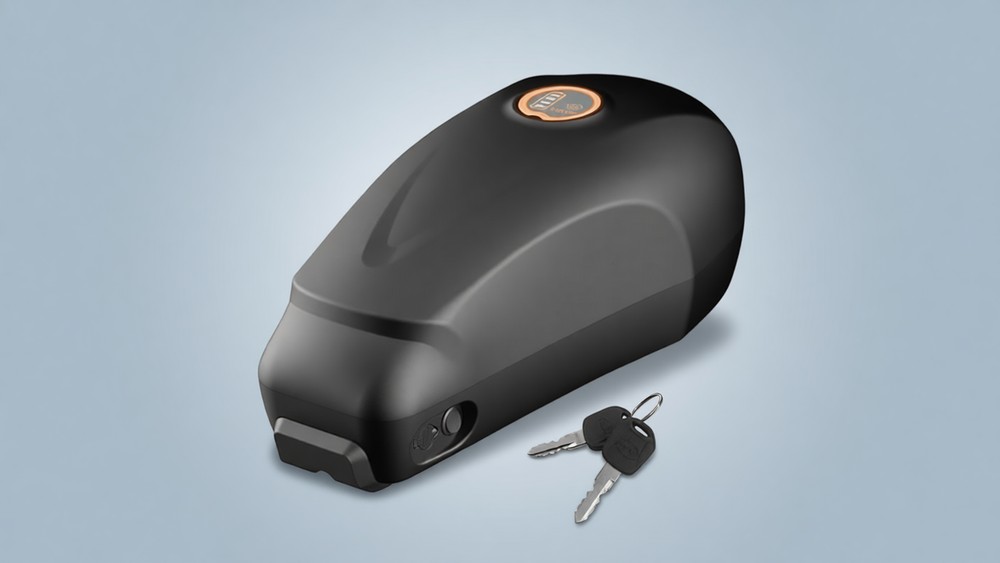
What 0.17 per watt-hour bought
At 152 for 48V x 19Ah = 912Wh, the pack sat in the cheapest fifth of everything we track, 11th of the 210 packs at 48V when we last ranked the data. That price was not just low for a replacement pack, it was low for its own class.
The 48V 20Ah folding tier - the Lithium Hellas pack, SEENRONGYUAN, SHEWAIHE and a shelf of near-identical listings - clustered at 0.20 to 0.21 per watt-hour, and the wider 48V 20Ah band runs 0.21 to 0.28. Gofaro undercut all of it by a fifth or more.
Our battery comparison table shows where every current listing sits against that record.
Two capacities in one title
The title said 19Ah and 20Ah in the same breath, which is 912Wh and 960Wh at 48V. A 48-watt-hour gap is small, but which pack shipped mattered for range and for charge times, and the listing never resolved it. The death of the page settles it in the worst way: the question is now permanent, and any buyer matching an old pack's size is guessing between two of them.
The fit nobody can check anymore
The form-factor row said Other, and that single word carried the whole purchase risk. This was not a Hailong case that slides into a downtube slot, not a rack pack, not a shark case. It was a generic box sold as a replacement for bikes that shipped with generic batteries, which means the mounting hardware was whatever you could fabricate: straps, a plate, an adapted bracket.
The old review flagged fit as the greatest risk, and it also never recorded the dimensions, because the listing apparently didn't state them clearly. That was recoverable when the page was live - a buyer could ask the seller or squint at the photos. Now it isn't.
The best anyone can reconstruct is a weight guess of roughly 4.5-5.5kg for a 912Wh box pack, and it's a guess, not a spec.
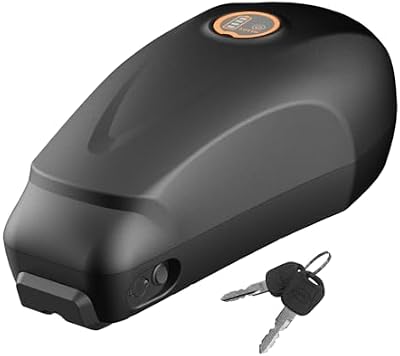
The 1500W claim and the silent board
The listing claimed it could run 1500W motors. A 1500W motor at 48V draws 31.25A continuously at rated output, before any peak headroom for hills or acceleration. The listing never printed a BMS amp rating, named a cell brand, or described the protection circuit, so the claim was unverifiable when the page lived and it's unanswerable now.
The old version of this article put the draw at "about 30 amps at peak," which understates it: 1500 divided by 48 is 31.25A, and that's the continuous figure, not a peak.
The honest reading is that the 1500W claim was marketing copy on a board nobody audited. A 750W motor draws about 15.6A and would have sat comfortably inside any reasonable board. Above that, the buyer was wagering on the seller's QC at 0.17 per watt-hour, and the low price was what made the wager worth considering.
Charging and range math, corrected
The old review estimated charging at 5 to 8 hours at 2-amp or 3-amp settings for a 20Ah pack, and the low end can't be true: 19Ah at 2A is 9.5 hours from empty, and even at 3A it's 6.3 hours, both before the tail while the cells even out.
The listing never confirmed a charger was in the box, so the practical figure for a buyer sourcing their own is the 9.5-hour floor at 2A. Any charger has to state 54.6V output, because a 48V pack is 13 cells in series at 4.2V each.
On range, the old review split its advice into 15-20 miles at full throttle on a 1500W motor and 30-45 miles on moderate pedal assist. The full-throttle figure is defensible only at that motor's heavy draw of roughly 46-61Wh per mile.
The pedal-assist band undershoots: the em3ev 48V guide puts hub-drive draw at 15-19Wh per mile on light pedal assist, which scales to about 48-61 miles from 912Wh. On throttle alone, at 24-31Wh per mile, the same pack covers about 29-38 miles. The old 30-45 band blended the two regimes and landed below either honest one.
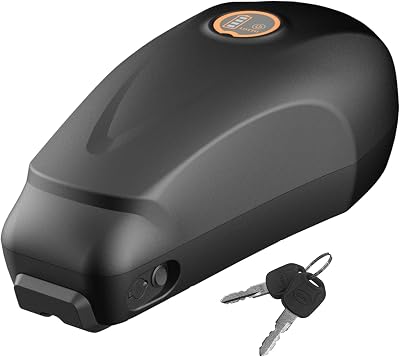
Replacing a pack you can't measure
With the listing dead, a replacement hunt runs entirely on the old pack's numbers. The order that works: measure the old pack's tray, because whatever you buy has to occupy the same space.
Match the discharge connector on the controller side - batterydex's connector guide covers the common types, and they don't interchange. Match the charge port. Then buy a charger stating 54.6V output.
One five-star rating was never a verdict in either direction, and the old review was right to treat it that way. Search 48V 20Ah replacement packs on Amazon for what's currently listed, and meter any secondhand pack before trusting it. More replacement candidates are in the review archive.
FAQ: the questions a dead listing leaves behind
Was it 19Ah or 20Ah?
The listing said both, and 48V x 19Ah = 912Wh while 48V x 20Ah = 960Wh. The page never settled the question, and its death takes the answer with it. For range planning, the difference is about 5 percent, well inside how much two riders differ.
Did the 1500W claim hold up?
There was never any evidence behind it. The claim needs 31.25A continuous, the listing published no board rating, and no cell brand ever appeared. A 750W motor would have sat inside any reasonable board, and anything above that was a wager.
How long did charging take?
Nine and a half hours minimum at 2A for the 19Ah figure, about 6.3 hours at 3A, plus the tail while the cells even out. The old review's 5-hour low end can't be true for a 19Ah pack. The listing never confirmed whether a charger shipped.
What range should a 912Wh pack give?
About 29-38 miles on throttle alone and about 48-61 miles on light pedal assist, using the em3ev per-mile figures for 48V hub drives. Cold weather, hills and a heavy right hand pull both numbers down.
What replaces it?
A pack you measure for, not one you search for. Match the old pack's tray size, its discharge connector, its charge port, and a 54.6V charger. If the old pack was strapped or bracketed into place, plan on reusing that hardware rather than expecting a drop-in.