Two helmets, one box, one price under 130. That is the whole pitch of the Fodsports T1 PRO 2-pack, and on paper it works. The single-unit version of the same radio sells on its own listing, so the pack undercuts it per helmet while promising the same six-rider group, the same 2000 metres, and the same one-button switching between group talk, private talk, other brands and shared music.
The catch does not live in the spec sheet. At this price tier, whether both units in your box work is a cost line of its own, and the owner record puts a number on it that the listing never mentions. This article walks that record the way we pulled it in October 2026: 28 ratings at 3.8 stars, 13 written texts, every one carrying the purchase badge, and not one helpful vote among them.
The units that arrived healthy draw genuine praise. The pattern worth your attention sits in the other texts.
The Fodsports T1 PRO 2-pack costs 129.99 at check time, which works out to about 65 per helmet, and on our intercom value table it sits mid-pack while landing near the expensive end of the six-rider field. The healthy units justify their rating: one owner compares them well against the Sena SMH5 they came from, and another rides where phones have no coverage at all.
The risk is the box itself. Three of the 13 texts describe a unit that arrived bricked, one that switched itself on and off, and one that would not pair properly, and the worst account ends with Amazon issuing the refund after Fodsports support went silent.
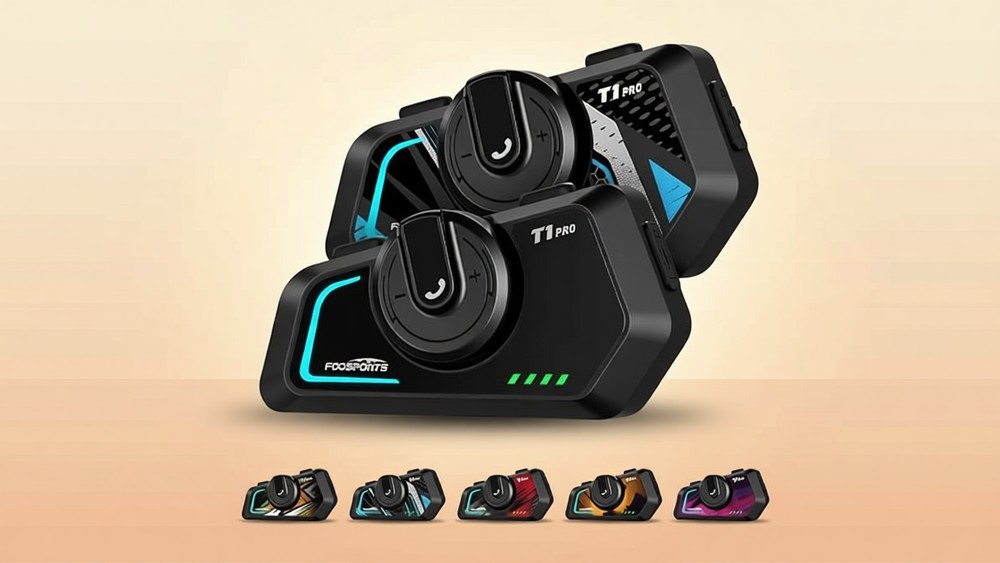
The pack economics, and the sibling that undercuts them
Start with the arithmetic, because it is the reason this listing exists. Two units for 129.99 is about 65 each. The single-unit T1 PRO V54, which we have reviewed separately, sat at 69.99 at its last check.
So the pack saves roughly five dollars per helmet, and it dresses two helmets at once, which matters when the alternative is buying one now and hoping the price holds for the second.
Set that against our own numbers, which no listing carries. We track 192 intercoms by price per rider, and this pack sits close to the middle of that table. Inside the six-rider field it fares worse, closer to the expensive end, because a lot of six-way hardware costs less per seat.
The exact position renders live in the specs box on the comparison table, and it moves with every data refresh, so treat the band, not a rank, as the fact.
The economics also change shape the moment one unit misbehaves. A 2-pack with one dead headset is not a bargain at 65 per helmet. It is a 129.99 purchase that returned half its value, and the record has a lot to say about exactly that.

Three texts describe a unit that arrived half dead
This is the section the listing cannot write for itself, and it is the reason the record matters more than the bullet points. Three of the 13 purchase-badged texts describe hardware faults out of the box, and each deserves its own account rather than a merged complaint.
One owner has reported the deepest failure in the record. They bought two 2-packs, four units in total, for a riding weekend. One unit bricked immediately.
A second powered itself off even on a full battery. The remaining two fought each other over pairing. They emailed Fodsports, received one automated reply full of spelling errors, and then heard nothing more.
Amazon stepped in with the refund. That is the whole support story, and it is worth reading twice: the escape route that worked ran through Amazon, not through the manufacturer.
A second owner opened a box where only one of the two units worked properly. The other turned itself on and off without being asked, and one speaker in the pack was blown on arrival.
A third owner, writing in Spanish, bought the pro pair and found one unit would not enter sync mode with the other intercom, and that the same unit played quieter through its speakers. Their verdict was still positive for daily use, which is fair, but the fault list is the fault list.
Three texts out of 13 is a small sample, and I would not call it a rate. But every failure in it is a box-level failure, not a wear-out failure, which means the risk attaches at purchase and the return window is where you find out.

What the owners with healthy units report
Strip the defective boxes out and the record reads the way the listing hopes it will. One owner rides areas with no cell reception, and the intercom carried the trip where phones could not, which is the oldest and best reason helmet comms exist. Another runs them with a group and with a passenger, and has been recommending them to the rest of the group they ride with.
The comparison that carries the most weight comes from an owner who moved over from a Sena SMH5. They report the Fodsports units play louder, sound good, and hold battery well, and they flag their own limit honestly: two months of use, so time will tell on longevity. That is the text I would weigh most if I were shopping this pack, because it is the only one that names the hardware it beat.
The rest of the positive record is shorter: clear speakers, easy install, a fair price, and one five-star text that says the pack works as intended with good packaging. None of the positive texts exercise the six-rider group or the music-sharing mode, which is the gap the next section covers.

The group talk the listing sells, and the static the record reports
The title sells six riders at 2000 metres on Qualcomm Bluetooth 5.4, and that is the claim nobody in this record has tested at distance.
No text describes a six-rider group. No text measures a range. The auto-reconnect behaviour, where the pack re-links on returning to range or wants a button press after three minutes apart, goes unmentioned by every owner.
What the record does have is four-unit group use, and it is mixed. One owner ran four of these and reports the connection forming fast between the first three units while the fourth often would not connect or took a very long time.
The same owner reports static interrupting the audio, maximum volume that stays quiet even at the top setting, echo when several people talk, and the need to speak up loudly to be heard.
A second owner, who paid about 135 for the pack, reports the music-sharing function does not work, that the coms shut off, and that rider-to-rider pairing was very difficult, while each unit paired to a phone fine on its own. Pairing difficulty shows up a third time in a one-star Spanish text that calls pairing very complicated.
Some context on the physics, because 2000 metres is a big number for a Bluetooth radio. Classic Bluetooth typically reaches less than 10 metres and about 100 at best, and the long-range modes in Bluetooth 5 stretch to 40 to 400 metres only under clear line of sight (Bluetooth, Wikipedia).
Intercom makers reach their bigger figures with high-power radios and open terrain, and every link in a group is capped by the weakest radio in it. A claim is not a lie for exceeding the phone-link numbers, but it is unproven here, and the record's group experience sits far below the headline.

A five-row spec table for a 65-per-unit radio
The spec table is where this listing stops trying. It carries five rows: brand, colour, ear placement, form factor, and 32 ohm impedance. That is a headphone filing, the same template pattern we have documented across the budget intercom tier, and it means the table holds no riders figure, no range, no battery capacity, no charge time, and no warranty term.
Everything that sells this radio lives in the title and the bullets only. The 6-way group, the 2000 metres, Bluetooth 5.4, the four functional modes, music sharing, microphone mute, FM radio, the scroll wheel that works with gloves, and five interchangeable sticker skins. The stickers are the one item the box definitely ships, and they are decoration.
The auto-reconnect bullet is the one feature description I would call genuinely useful, because it tells you what happens after a drop-out, but no owner has confirmed it works as written.
The missing warranty row deserves weight of its own given the box-lottery pattern above. The cheapest account of support in this record is an automated reply with spelling errors, and the most expensive one is a refund Amazon granted. If the listing will not print a warranty term, the return window is the warranty, and you should plan to test both units inside it.
Frequently Asked Questions
Is the 2000 metre range real?
Nobody in this record has measured it. The largest group anyone describes is four units, with pairing trouble on the fourth, and static and echo in multi-person talk. Treat 2000 metres as a marketing figure until an owner report says otherwise.
What happens if one unit in the pack arrives faulty?
In the worst account, Fodsports support answered once with an automated, misspelled reply and then went quiet, and Amazon issued the refund. The practical lesson is to test both units immediately and route any fault through the retailer inside the return window.
Is this the same hardware as the single-unit T1 PRO V54?
They are siblings in the same family, both claiming BT 5.4 six-way group talk at 2000 metres, and the V54 sells as a single unit. If you only need one helmet covered, the V54 review covers that listing's own record, and the smaller T1 sits below both on price.
Who should skip this pack?
Riders who need guaranteed-working hardware on day one, and groups larger than two, both carry more risk here than the listing admits. A pair of riders who can accept a return-window gamble, and who mostly talk helmet to helmet, are the buyers the price fits.