Mesh intercom used to be the expensive part of group riding. The big brands put it behind their flagship prices, and a rider who wanted ten-way talk paid for the privilege. So a listing that promises ten riders, a kilometer and a half of range, and a submersion rating, at well under flagship money, is going to catch eyes.
The EJEAS X10 makes exactly that promise, and then one line further down it promises something stranger: 5000 kilometers of rider-to-rider contact through a 5G mode that runs in an app. That second number is the tell for how this listing reads. Some of its claims match the engineering standards behind them. Others only work if you bring a phone, a data plan, and signed privacy terms.
The harder problem is the record. Seven written texts sit on the review page, five of them warm, and not one of those five is tied to an actual order. Just one purchase-confirmed report from a US buyer exists, and it is a hard no.
What follows takes the claims against their standards, reads the review signal the way a careful buyer would, and lays out what to test before the return window shuts.
The EJEAS X10 carries a real mesh spec sheet: ten riders in one group, 1.5 kilometers of open-terrain range, and 800 meters of penetration through complex terrain. The battery numbers are concrete too, a 910mAh pack rated at 15 hours of mesh intercom, 18 hours of music, 48 hours of standby, and a two-hour full charge. On paper that is a serious group unit.
The value position is not what the old bargain framing suggested. Per rider, this sits in the pricier third of the 192 intercoms we track, and the live figure renders in the specs box under this review. Mesh at this price is no longer rare, and the full comparison table shows what the same money buys from brands with longer purchase-confirmed records.
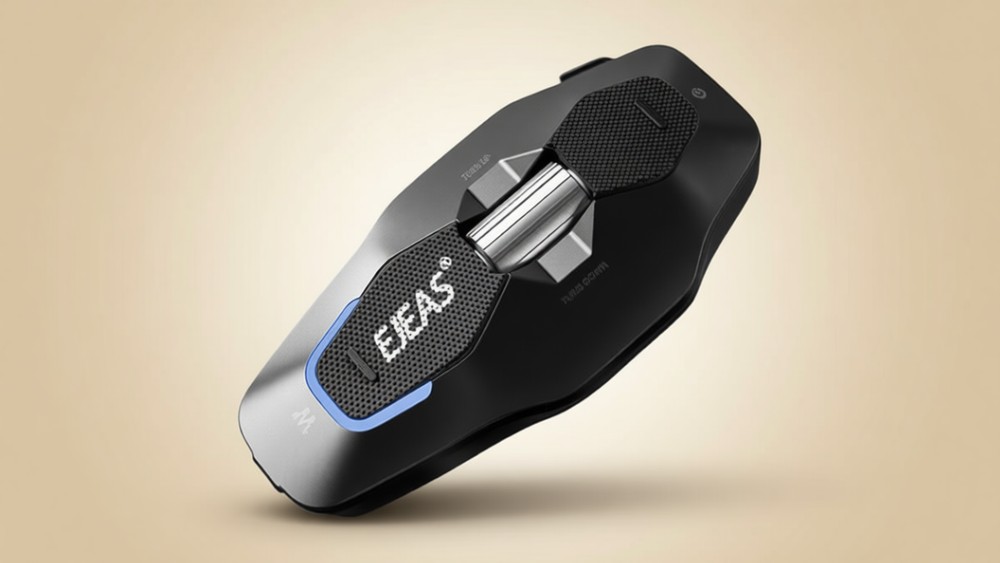
Ten riders, 1.5 kilometers, and a 5000-kilometer asterisk
The mesh claims live in one bullet and the long-range claim lives in another, so read them separately.
Mesh supports ten riders at 1.5 kilometers in the open, with 800 meters through complex terrain, and in a mesh group each unit relays for the others, so the link can route around a rider who drops out rather than dying with them. That is the category difference between mesh and the point-to-point Bluetooth links on cheaper units, and it is why group riders pay attention to it.
Then comes the asterisk. The listing says a 5G mode, enabled through the app, lets riders talk beyond 5000 kilometers, auto-switching between mesh and that mode.
Five thousand kilometers is not radio range. It's app-based talk riding the cellular network, which means it needs a phone with data, an app install, and signed privacy terms, and it ends wherever coverage ends. The listing's own bullet gives the game away by naming the app in the same breath as the number.
One owner has gone through exactly that install and reported that the app asked for a privacy and legal sign-off and then did basically nothing.
The IP67 claim checks out, but not the way the bullet implies
This is the claim that survives contact with the standard, with one catch worth knowing. Under the IEC 60529 IP code, IP67 means dust-tight and submersible in one meter of water for up to 30 minutes, and the listing's own numbers match that definition exactly. The gaskets, nano coating, and airtightness testing it describes are the right ingredients for the rating.
The catch sits in the comparison the bullet draws. It says IP67 surpasses standard IP65 splash-proof protection, and the standard doesn't rank them that way. IP65 is a jet test, water sprayed at the enclosure from any direction.
IP67 is a dunk test, a half hour under a meter of water. The water ratings stop stacking above IPX6, so a unit that passes the dunk hasn't proven it passes jets, and a unit that shrugs off jets hasn't proven it survives being submerged. The two digits measure different exposures, not a ladder with IP67 on top.
Two details in the spec table say something about how carefully the listing was built. The impedance reads 1.2 ohms, where helmet speakers are normally rated in the tens, and the warranty entry is a bare 1 with no unit attached.

Five warm texts, and not one purchase confirmation among them
The ratings stand at 3.6 stars from 11, with 46 percent five stars, 20 percent four, zero three-star, and 17 percent each at two and one stars. Seven texts sit underneath, and the shape of the pool matters more than any single star.
Five of those texts are warm US reviews with no order behind them, and they landed between late March and early June 2026. Several read like press copy rather than a report from a ride, and one says the headset has exceeded expectations. Another calls it genuinely thought-out for group riding. A third names group talk as the standout feature. The most-endorsed text on the whole page, at two helpful votes, is one of these unverified five-stars, so the page's social proof leans on texts no one has tied to a purchase.
The one verified positive is a two-liner from Canada in July: great music volume, and better than a Cardo at half the price. It's tied to an actual order, and it's warm. It's also three sentences long, with nothing about range, group behavior, or the app, so it can't carry the weight the five unverified texts can't either.
The only purchase-confirmed US report is a hard no
The September text is the only US review tied to an actual order, and it's a one-star from a rider who set the headset up for a four-person group. Its complaints are specific: the volume control jumps from off to on with nothing usable between, the audio quality is described as abysmal, and the Bluetooth connection is touchy. The app demands signed privacy terms before it does basically nothing, and the rider names that demand as part of the frustration.
Set that against the unverified five-star that praises the volume roller for making level changes easy, and you have two texts describing opposite hardware. Both can't be right about the same unit, and the tiebreaker is that only one of them carries an order behind it.
The gaps in the record are as useful as the complaints. No rider reports a range number, and one admits they haven't really tested the range at all. Nobody reports running the ten-rider group, nobody reports the 5G mode working on a ride, and there's no long-term report of any kind, so durability is unproven either way.

How to buy this one without betting on the record
The hardware list is real and the evidence behind it is thin, and both of those are facts a buyer can act on.
Mesh group talk, an IP67 build, a 15-hour battery with a two-hour charge, and two microphone options in the box, at a price that lands in the pricier third per rider of what we track. The current price is here, and the specs box carries the live value figure.
Treat it as unproven rather than bargain. Test three things inside the return window: the mesh group at your actual group size, the volume steps at your actual riding speed, and the app with the privacy terms it asks you to sign. If your group is four riders or fewer, compare it against the EJEAS Q8 and the V6 Pro, which have longer review records behind them, before the price decides for you.
Frequently Asked Questions
How many riders does the mesh group support?
The listing says ten riders, with 1.5 kilometers of range in open terrain and 800 meters through complex terrain. No rider in the record reports running a group anywhere near that size, so the claim is untested by buyers.
What is the 5000km range claim really about?
It's not radio range. The listing describes a 5G mode that runs through the app and rides the cellular network, so it needs a phone with data coverage and a privacy terms screen. The one owner who described the install reported the app asked for a privacy and legal sign-off and then did basically nothing.
How long does the battery last?
The listing rates the 910mAh battery at 15 hours of mesh or Bluetooth intercom, 18 hours of music playback, 48 hours of standby, and a full charge in two hours. No buyer report in the record confirms or contradicts those numbers.
Is IP67 good enough for rain?
Yes for rain, and more. Under the IEC 60529 standard, the 6 means dust-tight and the 7 means the enclosure survives one meter of water for up to 30 minutes. One note from the same standard: the water tests stop stacking above IPX6, so the immersion rating does not double as a jet-test rating.
Why do the reviews look so mixed?
The pool splits cleanly. Five warm US texts carry no purchase confirmation, the single verified US text is a detailed one-star, and the one verified positive is a short Canadian report. Read the warm unverified texts as unproven, weigh the purchase-confirmed ones most, and test the hardware inside the return window.