This listing has three names, and every one of them is doing a different job. The page header says DICHOU 52V 20Ah, the full product title says UPP with a UL2271 certificate by SGS claimed in parentheses, and the brand row in the details table goes back to DICHOU. The DICHOU 52V 20Ah battery sells at 281.00, is in stock, and has no ratings yet.
I read the bullets, the details table, the variant ladder and the gallery cards, and the empty record is the first thing to know, because nothing here has been tested by a single buyer in public. What the page does settle is identity, and identity turns out to be the most interesting thing about it.
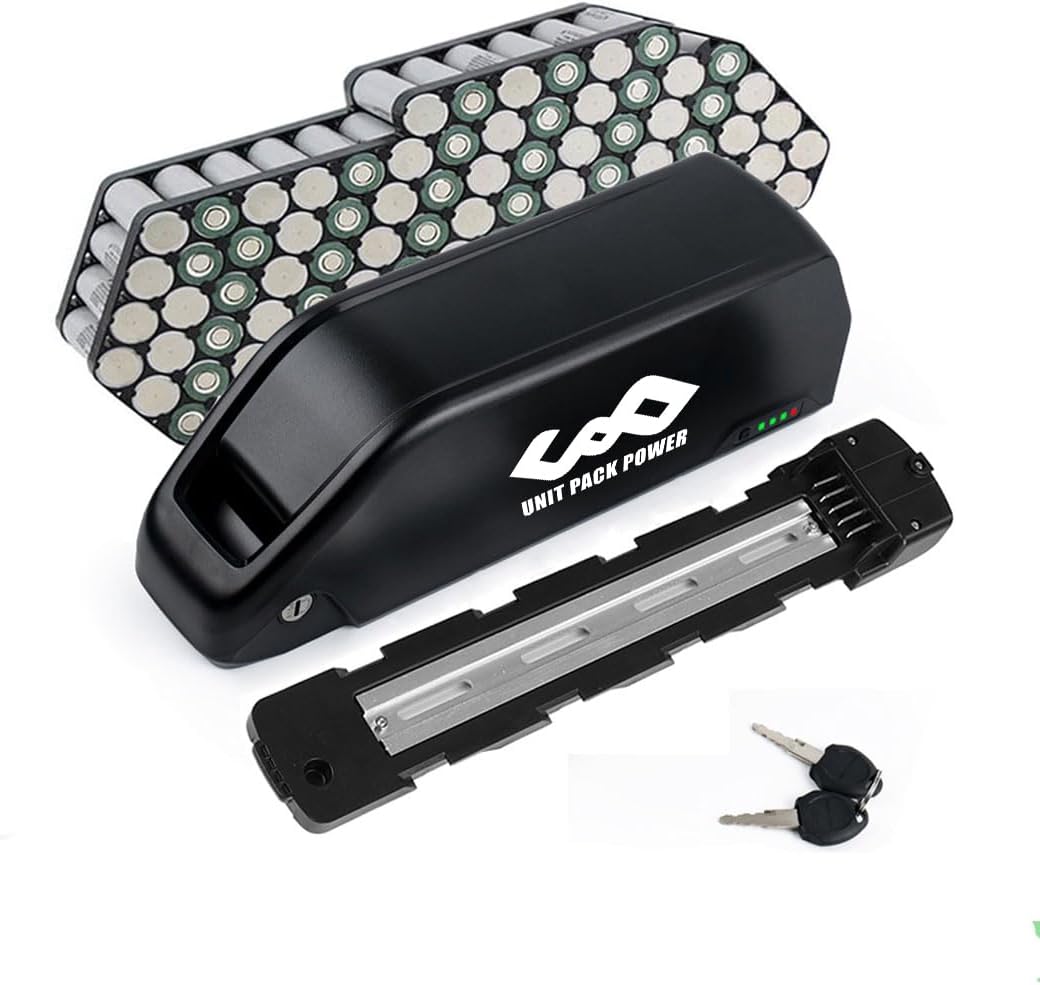
Three names, one model number
Two days before this review, we published a review of the EXECYC 52V 20Ah, a pack whose page ran the same three-name shuffle: UPP in the title, EXECYC on the brand row, Unit Pack Power on the seller line. The two listings share the same model name, R049-8, and the same manufacturer, Shenzhen Lian Pai Yuan Technology in Shenzhen. The prices sit three dollars apart.
The seller is UPP E-cycle, and the pack's one-year warranty is a details-table row. Sales rank sits at 279,120th in Sports & Outdoors and 587th in Scooter Batteries & Battery Chargers, mid-field for the category.
So these are two storefronts selling the same box from the same factory, and the interesting question is what changed between them. The answer is the claims. The EXECYC listing printed LG5000 cells twice, printed a 50A BMS twice, and offered a 5-pin base with XT60 leads. This DICHOU page drops the cell brand entirely, never states the BMS amperage in its bullets, and adds a USB port and an 8-hour recharge promise where the twin printed cycle numbers.
That's not proof of anything dishonest, and factory direct listings get reworded all the time. But if you read our EXECYC review and came back to this listing because it looked cheaper, the difference is not the price. It's that the stronger claims did not survive the trip across storefronts.
What the box card adds
The gallery's contents card lists the battery and base, the charger and key, the instructions, and certificates of conformity. That last item is the only support on the page for the UL2271 claim in the title, which names SGS as the certifier but shows no certificate document. Treat it as a claim, not a verification, until a buyer photographs the paperwork.
The bullet that sells 25Ah
The first bullet opens with a contradiction the rest of the page spends its time correcting. It reads that the battery is 52V 25AH, built with 5000mah cells. The title says 20Ah. The details row says 20 amp-hours. The variant ladder this listing lives on says 52V 20Ah for this exact ASIN.
Where does the 25Ah come from? One rung up the same ladder, a 52V 25Ah version built on LG5000 cells sells for 317.00, and the bullet's wording, 5000mah cells included, matches that rung's copy almost word for word. This looks like template reuse: the seller copied the 25Ah bullet and updated the price without updating the capacity.
The practical consequences are small but real. If the pack really held 25 amp-hours, it would carry 1300 watt-hours, not the 1040 the 20Ah figures give. That's a quarter more range than the title promises, and nobody gets to know which number shipped until the box arrives. Ask the seller for the capacity stamped on the case before you order, and check the sticker against the label when it lands. Our own table carries the 20Ah reading, so the comparison table figures assume the title is the honest one.
The 50A board lives on a gallery card
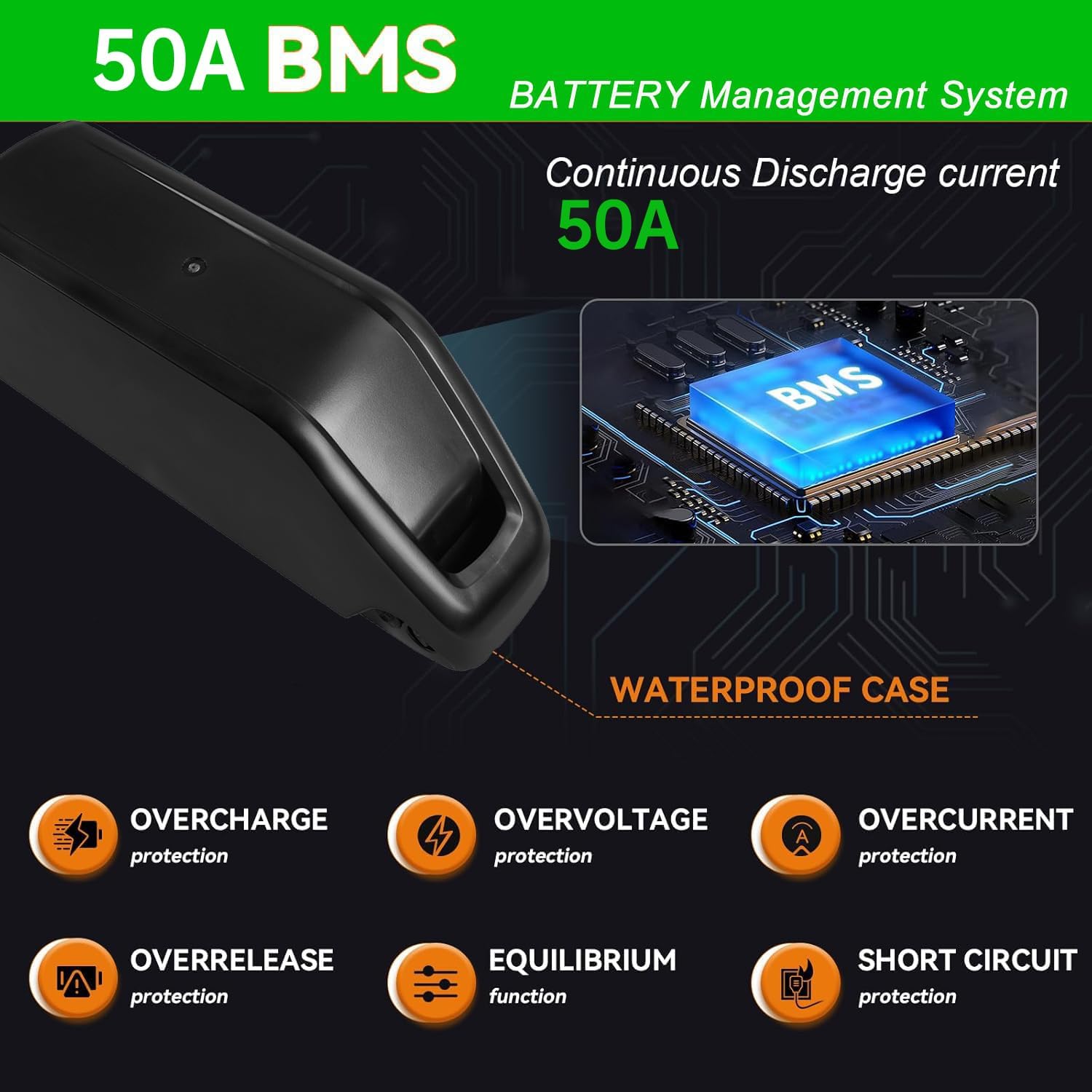
The bullets never state the BMS amperage. The gallery's protection card does: continuous discharge current 50A, alongside a waterproof case and the six standard protections from over-charge through short circuit. That single printed line is the only amperage figure anywhere on the page, and it carries the whole performance story, which is why I checked it twice.
At 52 volts, a 50A board supports 2600 watts, so the ladder's 0-2000W label works with 38.5 amps at full load, comfortably inside the board. A 1500W motor draws about 28.8 amps, which is ordinary territory. If the board were actually smaller, the 2000W ceiling would collapse, but nothing on the page suggests that, and the twin listing prints 50A openly.
One row in the details table argues with the whole ladder. The voltage field reads 48 volts against a 52V title, in a family that sells 36V, 48V, 52V and 60V rungs. That's wrong-rung junk of the same class as the 25Ah bullet, and it's one more reason the gallery cards, not the details table, are where this listing's real numbers live.
The one-kilogram weight row
The details table prints a battery weight of 1 kilogram. For a 1040 watt-hour pack, that cannot be true. At the standard cell band, Wikipedia's specific-energy range for lithium-ion runs 0.16 to 0.30 kilowatt-hours per kilogram, so 1040 watt-hours needs between 3.5 and 6.5 kilograms of bare cells before the case, board and wiring add anything. The printed row is off by at least a factor of three, and I would not carry it past the checkout page.
The EXECYC listing, same model, same factory, printed 0.1 kilograms, which was worse. Someone appears to have corrected a decimal and stopped there. Treat the weight row as junk, expect the real pack to weigh somewhere between 4 and 7 kilograms by the same arithmetic, and weigh it on arrival. The number of batteries field, which reads one AAA battery required, is junk of the same species.
Charging, cycles, and the five-year promise
The third bullet says a fully depleted pack recharges to 100 percent in 8 hours. Twenty amp-hours over 8 hours implies a charger around 2.5 amps, and the listing never names the charger's output. The box card confirms a charger ships with the pack, so read the brick's label when it arrives and check it against that 8-hour promise.
The cycle claim runs 800 to 1000 cycles, which sits inside the 400 to 1,200 cycle band that chemists accept for ordinary lithium-ion cells, and the five-year life expectancy is a promise about storage and care as much as chemistry. The bullet also says the pack has been through thousands of repetitive discharge and safety tests, which is a factory statement no buyer can check.
Fitment is the usual conversion-kit list: Bafang, Voilamart, AW and other motor kits, with the pack's 368 by 96 by 125 millimeter footprint matching the EXECYC listing exactly. The gallery includes a step-by-step install card and a guide to swapping a controller plug to XT60, which is more installation help than most listings at this price bother with.
At 281.00 for 1040 watt-hours, this pack costs about 27 cents per watt-hour, close to the middle of the 324 packs we track. The live position sits on the comparison table, and the EXECYC twin sits near the same line.
Frequently Asked Questions
Is this the same battery as the EXECYC pack?
By every printed signal, yes: same model name R049-8, same manufacturer, same dimensions, three dollars apart on different storefronts. The claims printed on the page differ, so read both reviews and decide which listing's wording you trust.
Is it 20Ah or 25Ah?
The title, the details row and the variant ladder all say 20Ah. The first bullet says 25Ah, which matches the 25Ah rung one step up the ladder. Assume 20Ah unless the seller confirms otherwise in writing.
What BMS does it have?
The gallery card prints 50A continuous discharge. The bullets never state an amperage, so the card is the only source, and it's an image the seller controls rather than a spec-sheet row.
Can I trust a pack with zero reviews?
Not on its own record, because it has none. What this listing offers instead is a printed spec sheet that mostly holds together, and a twin listing whose record is equally empty. You'd be testing the box yourself, and the weight row suggests the details table would not help you interpret the results.