Big 52V packs are where build budgets go to die, because the spec sheets are loud and the records are silent. The EXECYC 52V 20Ah battery is a clear case. It leads with LG 5000mAh cells and a 50A BMS, a strong pair of printed specs, and the storefront behind it belongs to Unit Pack Power, a name long-term builders know.
The problem hasn't moved since we first covered this pack in early September. Amazon still shows zero ratings and zero written reviews. Two months later, nobody has published a single word of experience with this exact listing.
So this review does what the listing can't: it checks the printed claims with plain math, it untangles three different product names on one page, and it tells you which questions to ask the seller before the buy box wins.
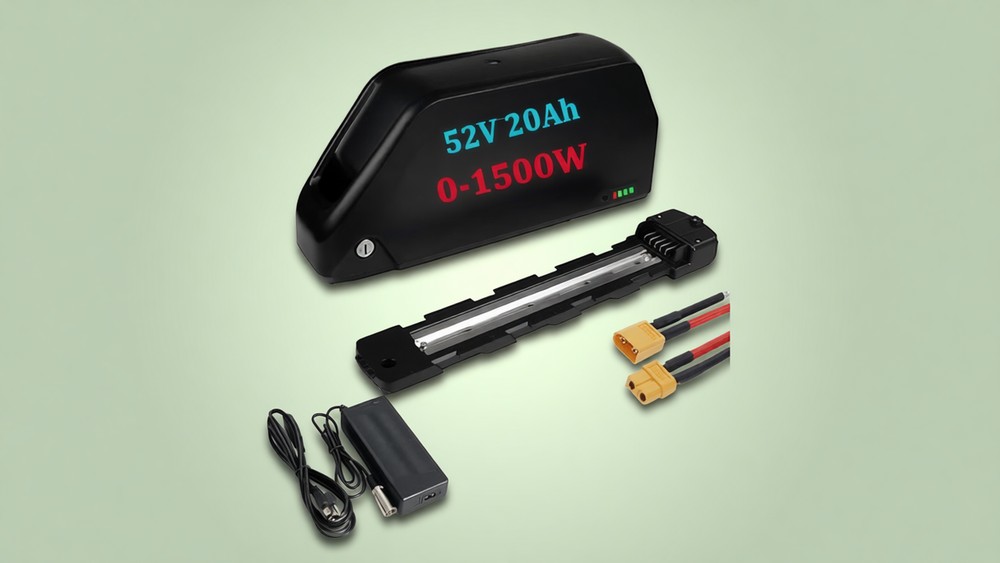
Two months on, the record is still empty
Zero-record listings are not automatically bad. They are unread, which is a different problem.
When the earlier version of this review was published, the record was empty and we said the LG cells and the BMS rating would have to carry the trust. That's still true, and it's worth being precise about what that means: the 1000-cycle claim, the promise of at least 80% capacity after 800 cycles, and the five-year life expectancy are all manufacturer statements with no independent account behind them on this page.
The honest reading is that you'd be among the first owners, and the price reflects that.
A used market, a support history, and a failure pattern all take time to form. If you need proof before you buy, wait. If you are comfortable being early, the printed specs at least hold together, which the next section checks.
Three names on one page
Look closely at who is selling this thing and it gets confusing. The title says UPP, short for Unit Pack Power, and cites UL2271 certified by SGS, complete with the typo "Certifated". The brand row says EXECYC.
The seller is Unit Pack Power's official store. The manufacturer row names Shenzhen Lian Pai Yuan Technology Co., Ltd, the same factory credited on a 36V pack under a different brand name we looked at the same day. The old title also named the amp-hour rating outright: our data row still reads "EXECYC 52V 20Ah".
The live title has dropped that figure entirely, so the 20Ah rating now survives in our data and the article address, not on the page you'd be buying from.
The copy quality tracks the identity muddle. The title also carries "Batterey" and "Conersion" as spelled.
One bullet ends with leftover Spanish template text praising a 48V battery on this 52V page. And the spec table states the battery weighs 0.1 kilograms, which is off by more than a factor of thirty: 1040 watt-hours of bare lithium cells needs roughly 3.5 to 6.5 kilograms at the standard energy density band before the case, BMS and base add anything (Wikipedia, Lithium-ion battery).
None of these slips changes the chemistry inside the box, but together they tell you how much care the listing has had. Ask questions before, not after.
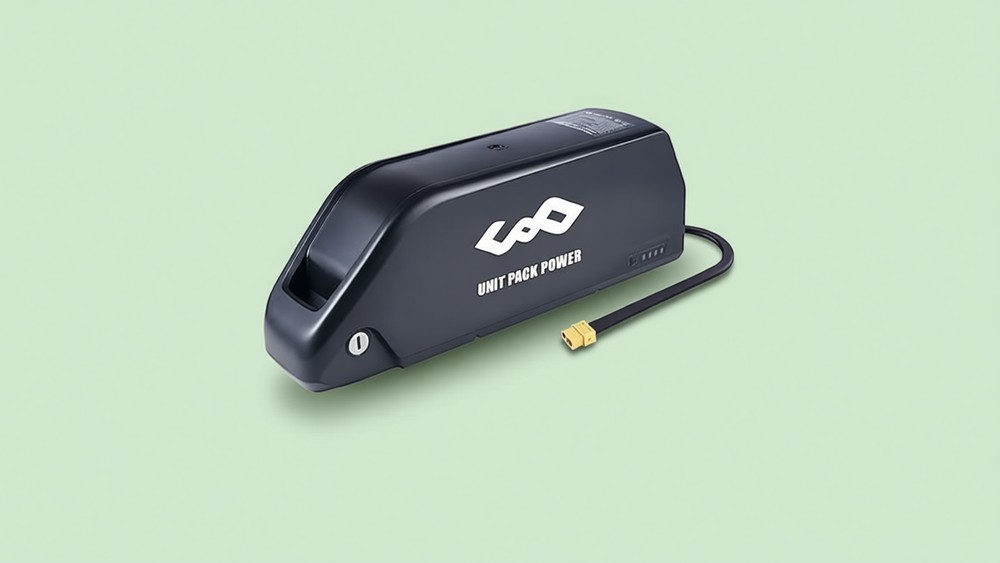
The electrical claims, checked
Start with the math that works. The voltage row says 52 volts, our data says 20 amp-hours, and 52 times 20 is 1040 watt-hours, a lot of energy for the money in this class.
The BMS is rated at 50A, and 50 amps at 52V is about 2600 watts continuous. That sits comfortably inside the 2000W motor claim, about 38 amps at full load, with room for a 1500W motor at about 29 amps. Unlike several 1000W listings we rebuilt this month whose 20A and 30A boards could not feed their own headline numbers, this pack's electrical claims support each other.
The cells decode cleanly too. LG 5000mAh cells arranged 14 in series for voltage and 4 in parallel for current give 52V and 20Ah from 56 cells, a standard 14s4p layout for this class. The cycle claims sit at the top of the 400 to 1,200 cycle band for lithium-ion, and the 80%-after-800-cycles figure describes cell behavior in a lab, not a pack in a vibrating frame bag.
The UL2271 citation in the title names a real safety standard for light electric vehicle batteries, but no certificate or listing number appears on the page, so ask for the document if that claim matters to your build.
One more gap: no charger is named anywhere on the listing. The previous version of this review described a 2A charger and a five-hour recharge, figures that are not on the current page. Without a charger rating there is no charge-time floor to compute, so add the charger question to the list for the seller.
Fit: measure the bay, then ask
The case measures 368 by 96 by 125 millimeters, and the first bullet is a measure-first warning: confirm the pack fits your space before ordering to avoid a return. That is fair advice for a pack this size.
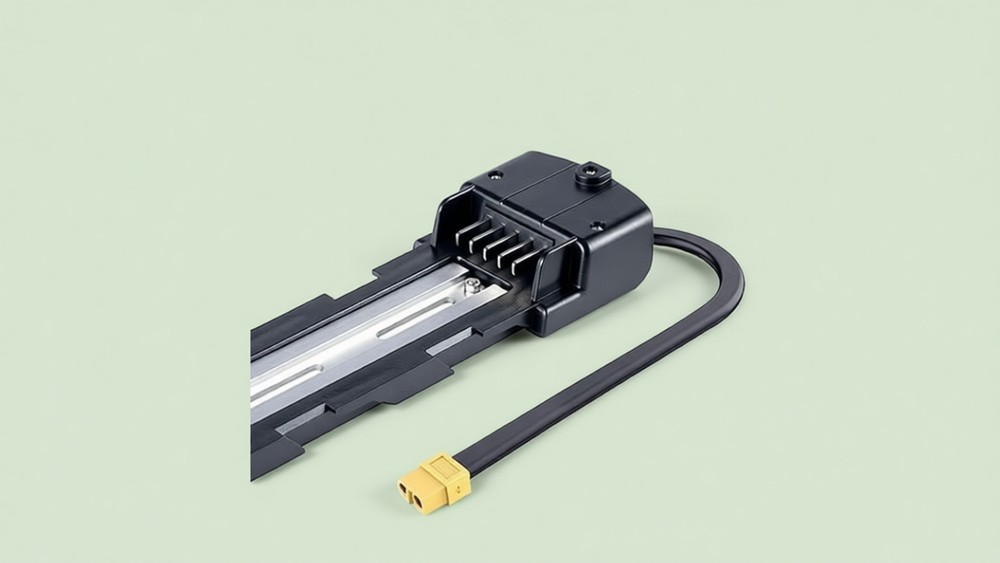
The 5-pin battery base ships installed at the bottom, with male and female XT60 discharge cables, and the listing tells you to check the manual or contact the seller if you don't know how to separate the base from the battery.
The hardware list is longer than most budget packs offer: a safe lock against theft, an LED power indicator, a power switch that cuts standby drain, anti-vibration pads, and the waterproof case.
The rank sits around #285 in Scooter Batteries and Battery Chargers, which fits a niche kit part rather than a volume product. If your build runs a 48V system, this isn't your pack, because a 52V battery on a 48V controller confuses the voltage sensing. Our conversion kit table lists the motors this class of pack usually feeds.
What it costs per watt-hour
At 284.00 for 1040 watt-hours, this pack works out to about 27 cents per watt-hour, close to the middle of the 301 packs we track. That is an unremarkable price, and the specs box on our ebike battery comparison table renders the live figure so you can see exactly where it lands among the 52V options.
You are paying a mid-table price for a top-table spec sheet with no witnesses yet.
The fair comparison inside the same brand is the Execyc 52V 25Ah sibling, which we rebuilt earlier with more energy for similar money. If the bay takes the size, more watt-hours per dollar is usually the better trade, and the sibling carries the same LG-cell story. Check both spec boxes before you decide.
Frequently asked questions
How far will 1040 watt-hours take me?
Ebike packs generally deliver 25 to 75 miles per charge across riding styles (Wikipedia, Electric bicycle).
A pack this size sits above the middle of that band. Light pedal assist should put you into the 40s of miles, and holding full throttle on a 2000W build can cut that to around 30. Nobody has published a measured figure for this exact pack, so treat those as math, not reports.
Can I use this on a 48V ebike?
No. The voltage row says 52 volts, and a 52V pack on a 48V controller confuses the low-voltage cutoff and the display. Match the pack to the system voltage first, connector second.
Are the LG cell claims trustworthy?
LG 5000mAh cells are real, widely used cells, and naming the cell supplier is more than most budget listings do. The cycle figures attached to them describe lab conditions, and the assembled pack adds a BMS, wiring and a case that the cell rating knows nothing about.
What should I ask the seller before buying?
Three things: the BMS discharge rating in writing, the UL2271 certificate document, and which charger they recommend, since the listing names none. Add the weight, because the spec table's 0.1 kilogram row can't be real.
The EXECYC 52V 20Ah is a spec sheet worth taking seriously wrapped in a listing worth questioning.
The electrical claims support each other, the cells are named, and the price per watt-hour is fair without being a bargain. Nothing has been proven by owners yet, so verify the BMS rating and the certificate with the seller, check the current listing, and compare it against the field on our comparison table before you commit.