A twenty-nine-inch hardtail is the most common donor bike in the budget conversion world, and it is exactly the frame this kit says it fits. The 700C/28/29-inch fitment puts the DDYOOK 48V 1000W kit on the same wheels as a road bike or a modern mountain bike, which most cheap 26-inch hub kits cannot claim.
At 189 with a buy box when we checked, the kit sits in the middle of the 191 conversion kits we track by price. That is a real position rather than a filler sentence. It costs more than the no-name 26-inch wheels and less than the branded rear-drive systems, and it backs the price with a record almost nothing at this money carries: 46 ratings, 17 written reports, and every single report a badged purchase.
The catch is not the motor. It is the paperwork and one owner account. The listing will not say which end of the bike the wheel fits, and the longest report in the record documents a pedal assist fault the vendor has acknowledged and not fixed.
The short verdict: the DDYOOK 48V 1000W 700C conversion kit is a decent throttle hub with a documented pedal assist problem, sold under copy that drifts between front and rear variants. It earns a look from throttle-first riders on a 28 or 29-inch frame. It does not earn a pedal-assist purchase until you accept that the motor may not restart once you stop pedaling.
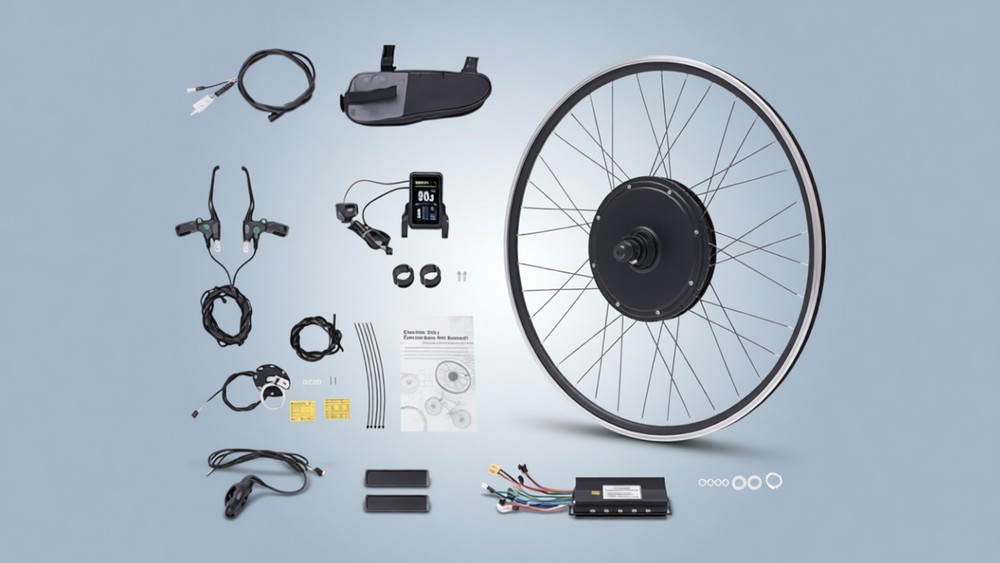
A listing that will not pick a wheel end
Count the ways this page describes its own wheel. The title says Front/Rear. The spec table says Size Front. The suspension row says Front, which is template junk on a hub motor anyway. A bullet block reads Minimum Flat Fork Distance 100mm, and 100mm is front fork spacing. Then the record goes and installs it in the back: the top-voted owner reports it fit like a glove in the rear dropouts of a Huffy Rock Creek 29, and the deep owner cites a standard 135mm rear dropout.
So the honest answer to which end this motor lives on is that the listing sells a front wheel and owners ride a rear one. Read that as recycled copy rather than a fraud, the same fault we documented on the GOSHET fat snow listings, but read it as a question to settle with the seller before you order, because dropout spacing is not a part you improvise.
The page carries smaller tells of the same habit. Every bullet opens with a cyclist emoji. The spec table says the kit weighs 24.2 pounds and the second spec block says 10 kilograms, about 22 pounds, and nothing explains the two-pound gap. The manufacturer of record is Aongslank, an alias, and the model number GYU89 appears nowhere in the bullets.
One row deserves attention because the record tests it. The warranty reads 2 year, while owners describe a partial refund on a return, a refused exchange on noisy spokes, no phone number for support, and a vendor who acknowledged the pedal assist behavior with no fix offered. Two years of paper against that record is a row to weigh, not a promise.
What seventeen owners wrote
The histogram reads 59 percent five-star, 10 percent four, 8 percent three, 3 percent two, and 20 percent one. All 17 texts carry the purchase badge, which makes this one of the cleanest records in the kit band by provenance, and one of the most negative at the bottom for a kit with a warm average.
The top-voted report, from January 2026 with ten helpful votes, is the throttle case in full. The owner weighs 180 pounds, reports speeds above 25 mph, and has to be careful in 20mph zones. The donor bike is a Huffy Rock Creek 29, the battery a 48V 10Ah pack, and the whole build came in under 600 on the bike, the kit and the battery. Setup needed no white-wire trick and the kit gained a sprocket, taking that bike from 18 speeds to 21.
The same owner left the single most useful setup lesson in the record. They turned the system on with the throttle halfway twisted, the controller calibrated itself to half resistance, and the fix is to power off, hold full throttle, and power back on.
Two more owners report about 30 mph, and a separate owner bought a second kit because the first worked. The negative record splits four ways: a fitment failure on an SE bike with no torque arm in the box, a partial refund on a return, a wheel that bounced and fought tire seating, and a forward-then-reverse fault that nearly threw one rider off. That last one is rare in our record and serious in kind, and the owner could reach no one by phone.
The deep owner's report
One owner, in August 2026, wrote 5,600 characters, and it is the most complete account of this kit anywhere. The praise is specific: extra-thick 12-gauge spokes that arrived almost perfectly true, a hub that fits a 135mm rear dropout, rim brake compatibility plus a disc rotor mount, a controller that accepts 36V, 48V or 52V batteries, and a direct-drive motor that is absolutely silent, pulling 20 to 25 mph on an eight-year-old 36V battery with the top speed capped at 28 mph.
Then the pedal assist account, which is the reason this review exists. The kit uses a cadence sensor and a thumb throttle, no torque sensor. When the owner stops pedaling, the motor stops as it should. When they start again, the motor often will not restart. It can take ten or more crank revolutions, sometimes it never comes back, and the workaround is slowing to 2 or 3 mph. The motor sometimes stops mid-pedal. They installed a replacement sensor and magnet from the vendor, and the vendor acknowledged in the end that the controller works this way by design.
Pedal assist is optional on this kit, the throttle runs with or without it, and fitting the sensor requires pulling the cranks and bottom bracket, in this owner's case a wider 122.5mm spindle for the magnet ring.
The same report decodes the display quirks the manual omits. A European Mode, toggled by holding the plus button, caps speed at 15 mph and shows 250W while active, and it brings a regenerative quirk that brakes the bike back down to the assist-level cap. The throttle's top speed matches whatever assist level is selected, so a low assist level quietly throttles the top speed down. The 23-page settings manual does not ship, the kit has an XT60 battery connector with no mating connector included, the connectors are not waterproof, and there is no torque arm in the box. The owner keeps their axle bolts at 50 newton-meters and checks them.
The spoke ledger
Four of the 17 texts touch spokes, and they tell one story. One owner running daily delivery work on the kit started losing spokes and asked for replacements or at least the spoke spec. One broke four. One reports loose, noisy spokes with no exchange offered. The deep owner, whose spokes held, praises the same 12-gauge spokes the others are chewing through, which is how a wear item looks in a young record: fine at first, then not.
The physics line up with the reports. Direct-drive hubs trade low-end torque for simplicity, and what torque they do make arrives in the wheel rather than the frame (Wikipedia). A 24-pound kit whose heaviest part swings inside the wheel is unsprung weight, and the kit ships no torque arm to spread the axle torque into the frame. If you build on this kit, check spoke tension early and often, torque the axle nuts properly, and buy a torque arm even though nobody sells it in this box.
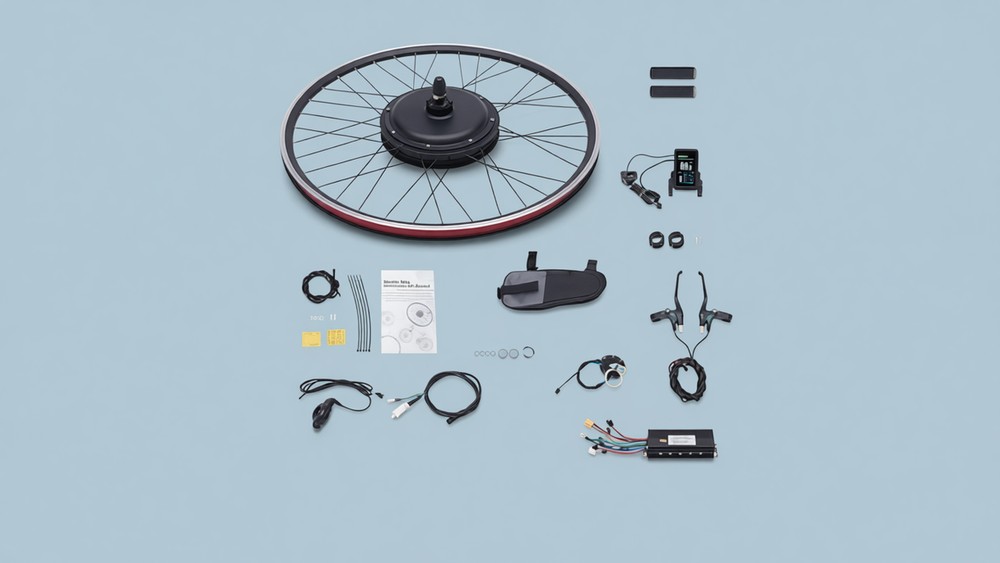
Speed, watts, and the battery pairing
The claim is 45 to 55 km/h, about 28 to 34 mph. The record's ceiling is lower: faster than 25, twice about 30, one capped at 28. Nobody has reported anything near 34 mph, so plan around 25 to 30 on flat ground and treat the top of the band as a no-load number.
The electrical math is straightforward and worth doing before you buy a pack. 1000W at 48V is about 21 amps continuous, and the listing recommends a 48V 13Ah pack or larger, which is 624Wh. A 13Ah pack at full draw gives you about half an hour of wide-open throttle and much less than that in stop-start city riding, though the deep owner's 20 to 25 mph on an old 36V pack shows the kit does not need a big battery to be useful. The controller accepts 36V and 52V too, which widens your used-market options.
That is the honest case for the kit. A silent direct-drive hub, mid-pack price, a fitment the owners have proven on both ends of a bike, and a record detailed enough to plan around. Our conversion kit comparison table sorts the field by price if you want to see what the same money buys, and our srtyghw 700C review covers the same dual-mode controller bullet nearly word for word from a different brand, which tells you where the copy comes from. The pedal assist account above is the part to weigh first.
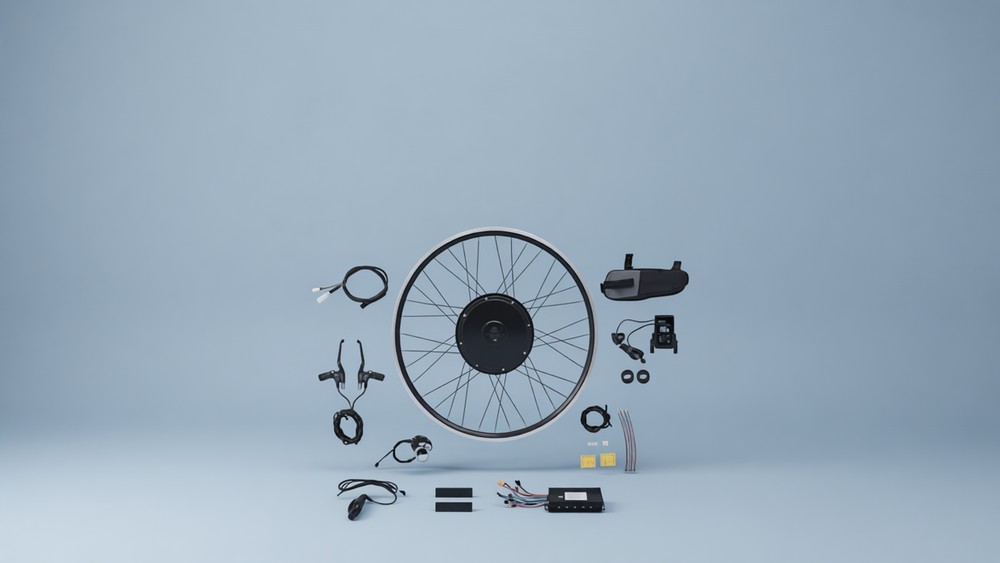
FAQ: the front-or-rear listing, the pedal assist that stalls and the box without a battery
Does the DDYOOK kit fit the front or rear?
The listing will not commit: the title says Front/Rear, the spec table says Front, and the bullet spacing figure is front-fork hardware. Owners have installed it in the rear, including the top-voted report on a 29-inch Huffy and the deep owner's 135mm dropout account. Measure your dropout spacing, confirm the axle width with the seller, and buy the end you actually need.
Should I use the pedal assist?
Only if you accept its limits. The deepest report in the record describes a cadence sensor implementation that often will not restart after you stop pedaling, sometimes for ten or more crank revolutions, and the vendor has acknowledged the behavior. Throttle-only riders rate the kit highly. If pedal assist is the reason you are buying, this is the wrong kit until the controller changes.
How fast does it go?
Owners report 25 to 30 mph on flat ground, one with a 28 mph cap, against a listing claim of 45 to 55 km/h. Treat the claim's top as a no-load figure. Real speed will depend on your battery voltage, your weight, and how much spoke maintenance you are willing to do.
What comes in the box, and what do I add?
The kit ships the motor wheel, controller, display, throttle and brake levers per the listing's accessory claims, with a recommended 48V 13Ah or larger battery sold separately. Owners confirm the battery is on you, and the deep report adds three things the box lacks: a torque arm, an XT60 mating connector, and the full settings manual, which you must request from the vendor.