Snow is where most budget conversions give up. A road tire spins on packed powder, a small hub bogs in slush, and the whole build sits in the garage until spring. Fat tires fix most of that, which is why fat-bike frames have become the base of choice for winter builds.
What makes this particular kit hard to judge isn't the engineering. It's the paperwork. GOSHET sells this motor in four variants, and the page can't settle on how many watts the motor has.
The variant name says 1.5KW. A bullet on the same page says up to 1000W. Rating blocks disagree with each other too, and the written record is a single owner report.
So this review starts with the listing and its contradictions, then works through that one report, then the direct-drive design that explains the torque complaint inside it. The last sections cover what the build costs beyond the box and who should meter their way in rather than trusting the label.
The short verdict: the GOSHET 26-inch 48V fat snow conversion kit is a mid-pack-priced rear hub whose own listing cannot state its wattage, backed by one written owner report that likes almost everything except the torque. It earns a look for the price and the fat-snow format. It does not yet earn trust, because nobody has written down range, real top speed, or how it behaves after a winter.
A rating that depends on where you look
Amazon shows three different ratings for this listing, and a buyer sees whichever one renders. The block at the top of the page reads 4.2 out of 5 from 11 ratings.
An embedded histogram on the same page reads 4.6 from 3 global ratings. The reviews page says 1 customer review and prints a histogram of 65 percent 5-star and 35 percent 4-star. None of the three blocks explains which of the four variants the 11 ratings cover.
This matters because the variants are not the same product. The listing splits into a 20-inch front wheel at 1KW, a 20-inch rear wheel, and two 26-inch rear wheels at 1.5KW. Our review covers the 26-inch rear fat snow kit.
A rating earned by the 1000W front wheel tells you little about the 1500W rear one, and the listing gives no way to separate them.
Treat any star figure on this page as a family number, not a verdict on the wheel you'd actually receive. The specs box beside this article renders the live figure, and the written record is more honest about its own size, because it is exactly one report long.
What the one owner wrote
The single written review is a confirmed purchase, posted in October 2025 on the style1 26-inch rear variant, and one person has found it helpful. Its verdict is mostly warm. The owner calls the kit great so far, reports it isn't too loud, and says it accelerates well.
Then comes the sentence that matters: the owner reports nothing in the realm of torque, and floats a controller swap as the thing that might fix it. That single complaint is the entire negative record on this listing. There's nothing about range, nothing about top speed with a rider aboard, nothing about waterproofing, and no install account.
Nobody has described how the kit behaves on ice, in slush, or after a month of road salt.
The rest of the text is really about the owner's own project. They built on an older 26-inch Mongoose fat tire bike and replaced its cheap cabled disc brakes with a hydraulic setup after a lot of trouble. Read it as a useful warning about the rest of a budget build: the hub is one part, and the brakes you trust with it deserve as much scrutiny.
1500W on the variant, up to 1000W in the bullet
The listing argues with itself about the one number the kit is named for. The 26-inch variants are labeled 1.5KW.
Bullet two says the motor is a brushless, gearless unit with up to 1000W of power and more than 82 percent usable efficiency. Both statements sit on the same page.
The gap isn't cosmetic. At 48 volts, a 1,500-watt draw is about 31 amps and a 1,000-watt draw is about 21, and that difference decides what your battery's BMS must tolerate. Since the kit ships no battery, the buyer is the one who has to size around an unknown.
Ask the seller which figure applies to the variant you're buying before you pair a pack.
The same bullets carry two more tells. Bullet one and bullet three both describe a front wheel motor, on a variant that is a rear wheel, which suggests the copy is recycled across the four variants.
And the claimed no-load speed is 29.82 mph at up to 500 rpm. A no-load figure is the motor spinning free, and with a rider and a fat tire on snow, expect less. No owner has reported any speed at all, so treat 29.82 as the ceiling of a claim, not a measurement.
Why direct drive trades punch for simplicity
Gearless direct-drive hubs like this one have a known character. Compared with geared hubs they're simple, durable and affordable, but less suited to high speeds and weaker at the low end, where a geared hub's gears multiply torque from a standstill (Wikipedia). The owner's torque complaint fits the design exactly, and the same design is why the listing can advertise no brushes to replace.
Direct drive also carries the hub-motor trade that never shows up in a bullet. The motor lives in the wheel, unsprung, where it takes every hit the tire does and gets less shielding from shock and debris than a frame-mounted motor. On a fat snow build the exposure is worse than usual: a heavy wide rim with a motor in it swings real rotating mass on rough frozen ground.
None of this makes the design wrong for the job. It makes the design a trade, and the one owner in the record has already told us which side of the trade they felt. Our conversion kit comparison table sorts the field by price, and it's the quickest way to see what else the same money buys.
Worth building on only if you will meter the result
The honest case for this kit is narrow, and it's worth stating plainly. At 149 with a buy box when we checked, the kit sits close to the middle of the 191 conversion kits we track by price, and it's one of the few listings aimed at fat snow rims rather than road sizes.
If your build already exists, your frame is a fat bike, and you want a winter toy more than a torque monster, the price and the format make sense.
The case against is the paperwork. You'd be building around a motor whose wattage the listing states two ways, whose rating you can't trace to a variant, and whose single owner report flags the exact weakness a direct-drive design implies.
So meter your way in. Buy the battery and controller pairing deliberately, ask the seller which wattage applies, and expect to swap the controller if punch at low speed matters to you. The sibling GOSHET 2000W hub kit sits above this one in price and power, and riders wanting a similar 20-inch format with pedal assist can read our Lariden 20-inch 1500W kit review for the closest cross-brand alternative.
FAQ: the combined rating family, the pack you supply yourself and the unproven no-load speed
Which rating on the GOSHET page is the real one?
All of them are real and none of them is a verdict on this variant. The top block reads 4.2 from 11, an embedded node reads 4.6 from 3, and the reviews page carries one written review. Because the listing combines four different motors under one rating family, treat the stars as background noise and read the written record instead.
Does the kit include a battery?
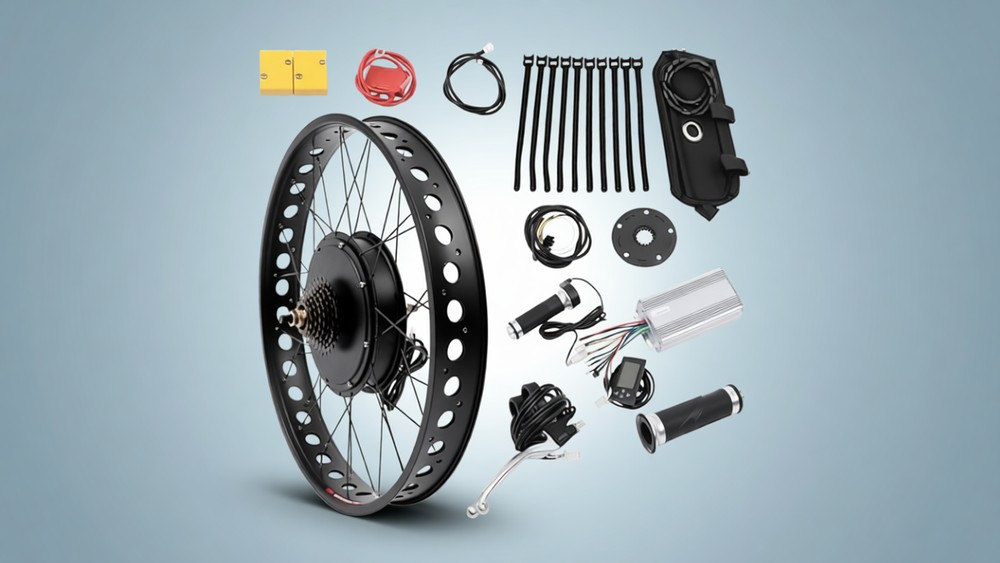
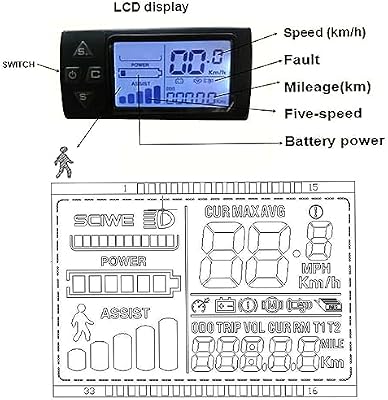
No. The kit ships the motor wheel, controller and LCD display, and you supply a 48V battery. That's standard for kits at this price, but it means the true cost of the build is the kit plus a pack, and the pack choice decides how much of the claimed wattage ever reaches the wheel. Our conversion kit table notes which listings ship with a battery and which don't.
Will it fit my frame?
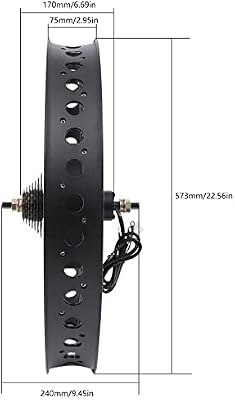
The 26-inch rear variants are built for fat-bike frames with wide dropouts. A standard mountain bike frame with narrower spacing won't take the wide hub without modification, so measure your dropouts before ordering. The written report confirms a 26-inch fat tire frame as the base.
How fast will it go?
The listing claims up to 29.82 mph at no load from a motor spinning at up to 500 rpm. Nobody has reported a real speed, and no-load claims always land above what a rider sees. Plan for less than the claim, more in ideal conditions, and treat any speed target on snow as unproven until you meter it yourself.